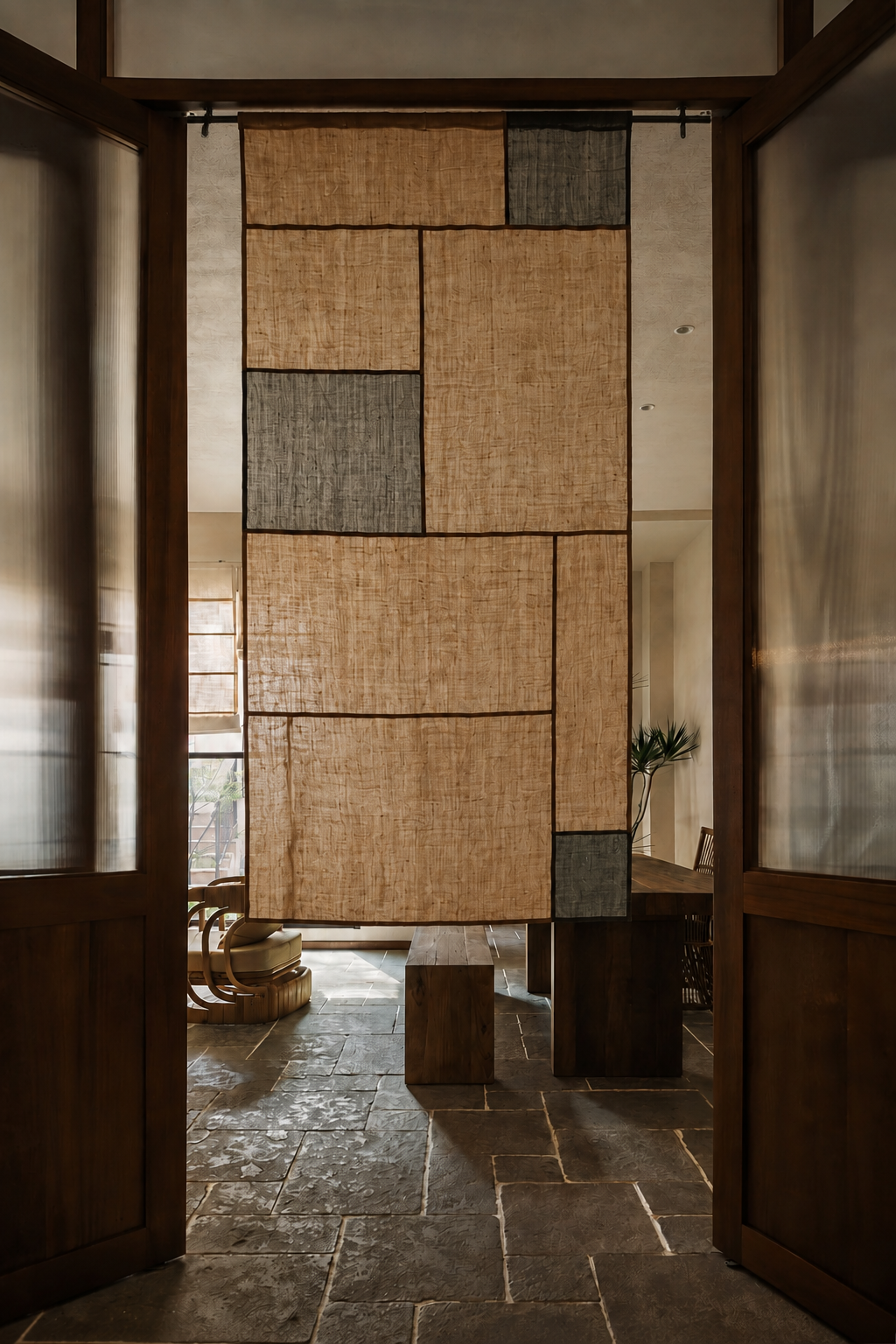
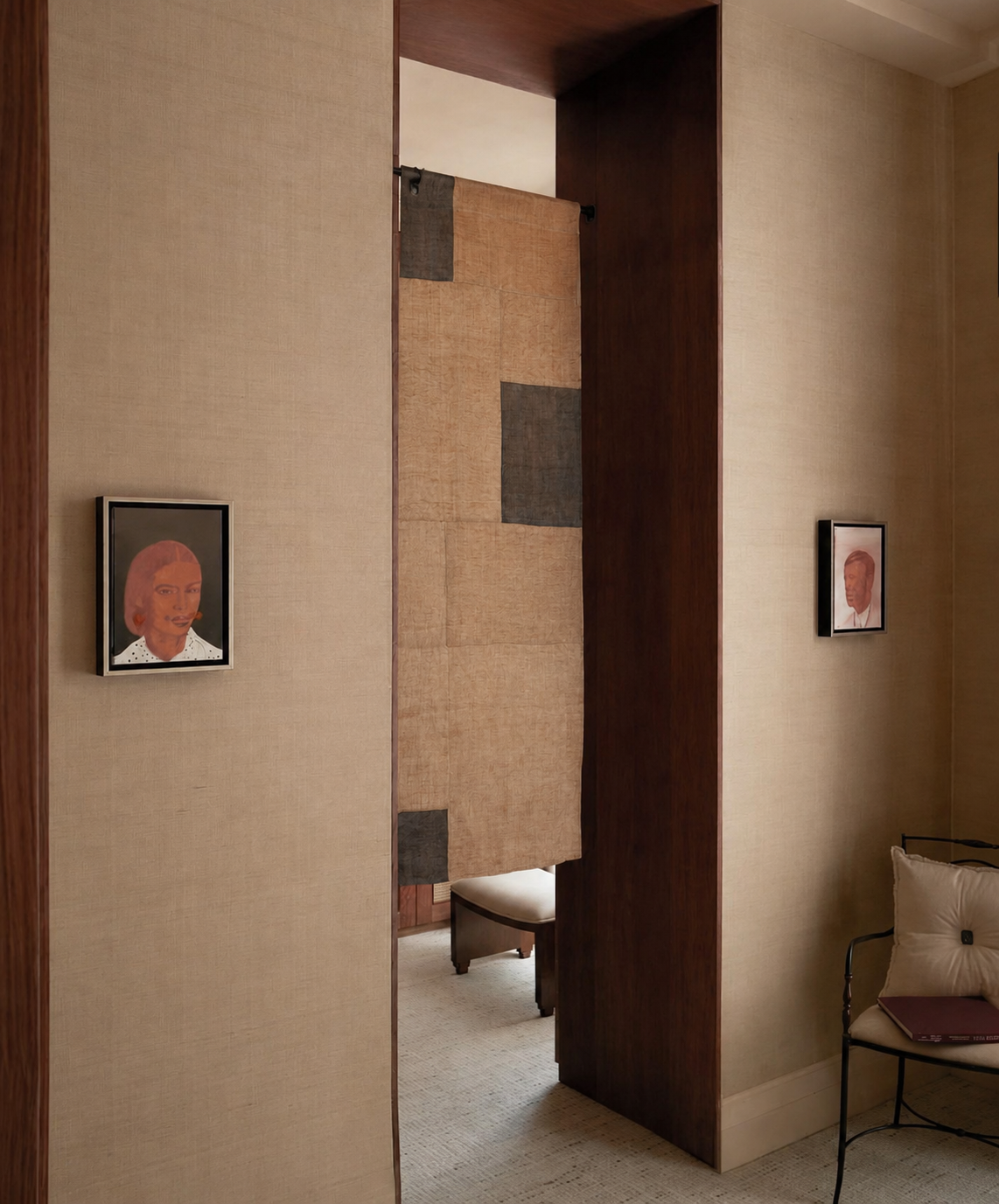
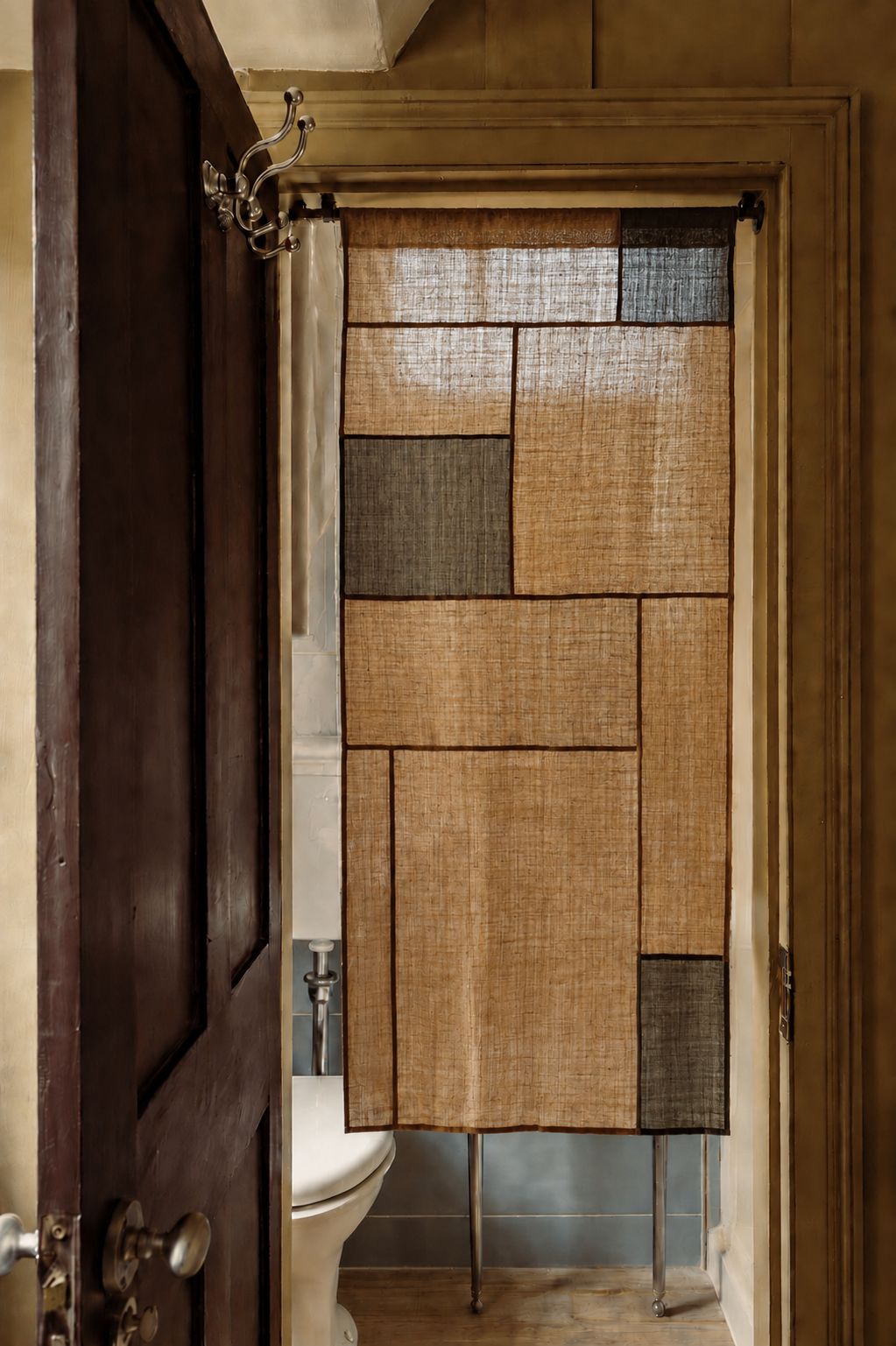
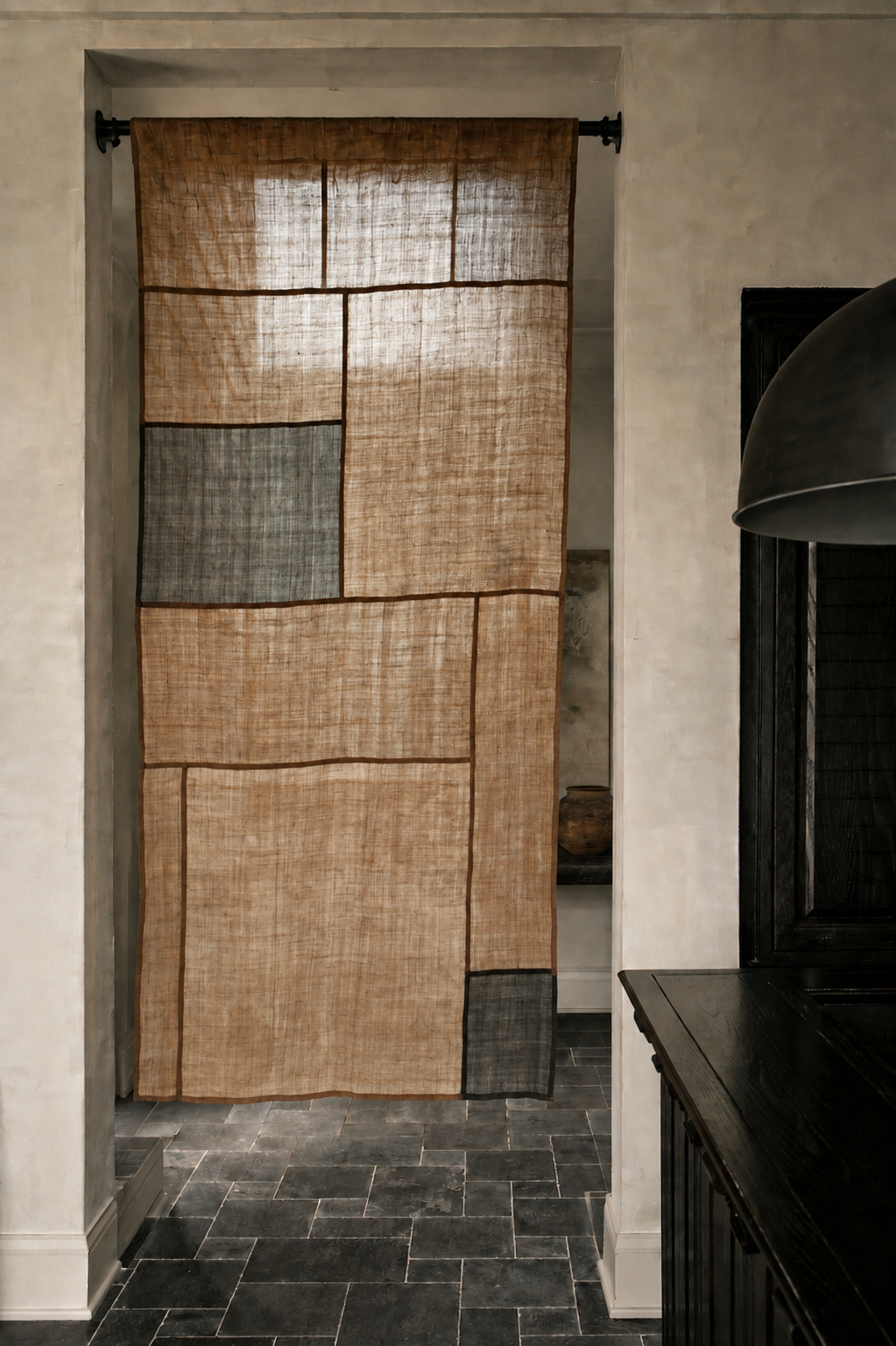
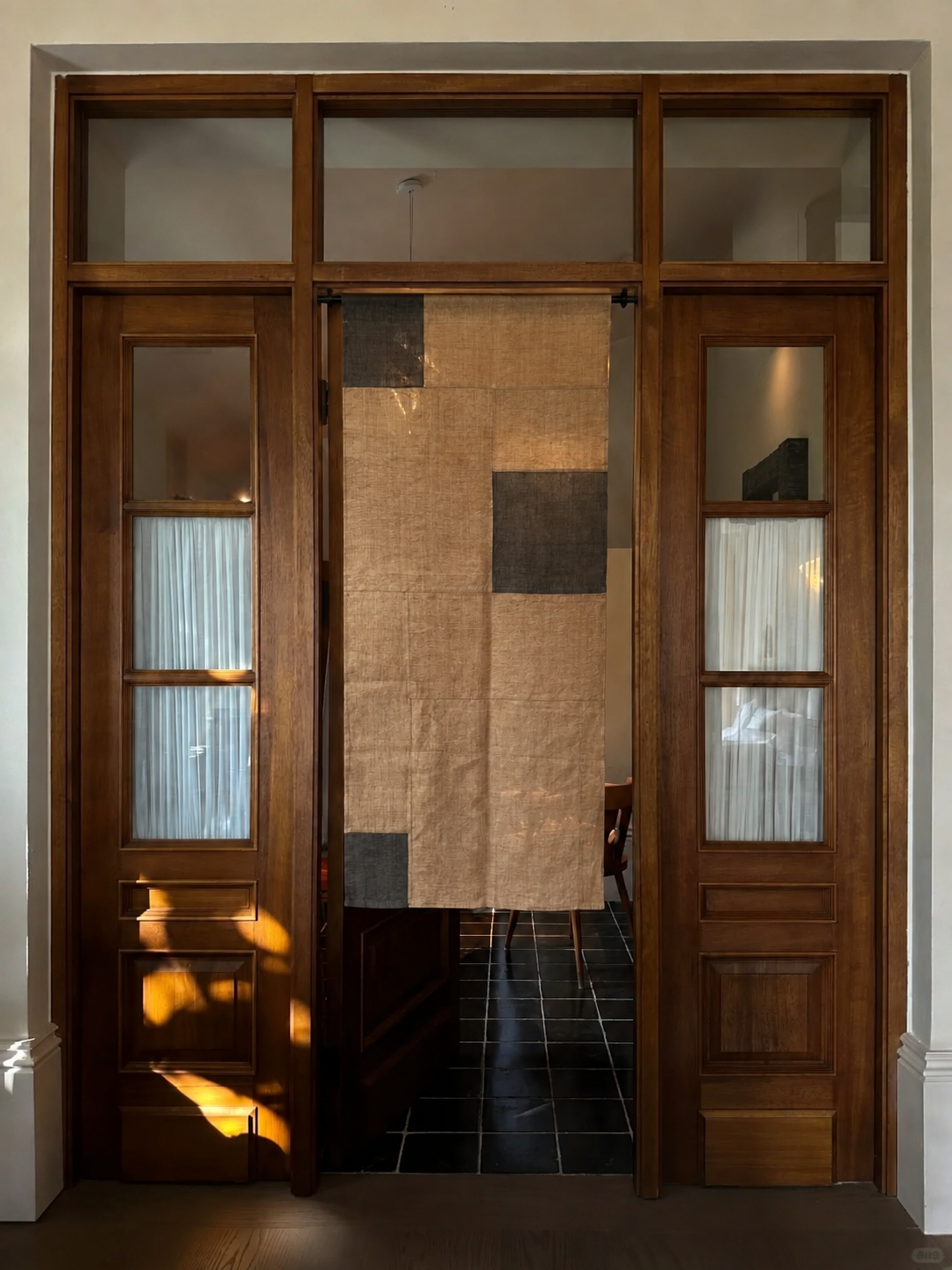
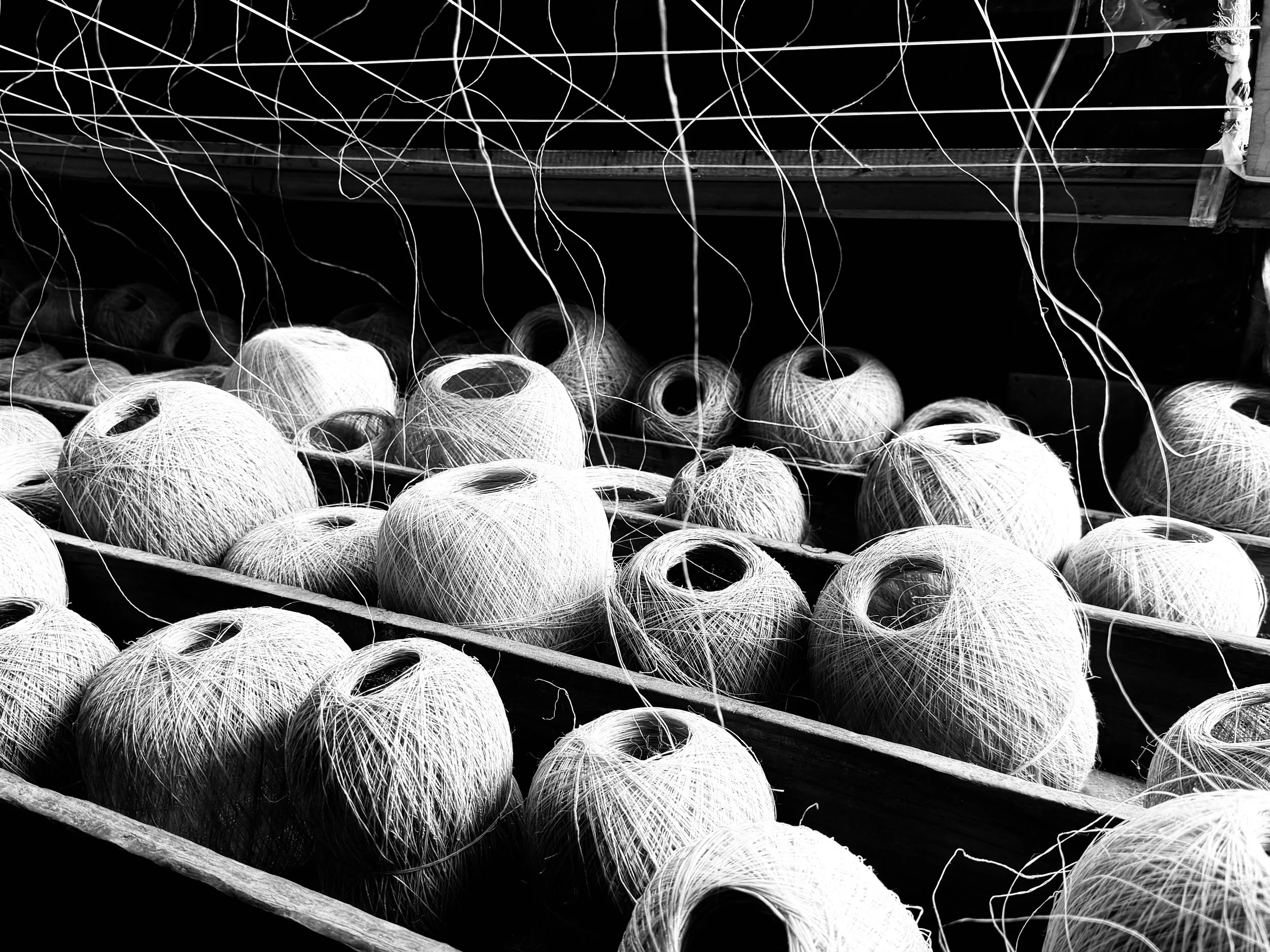
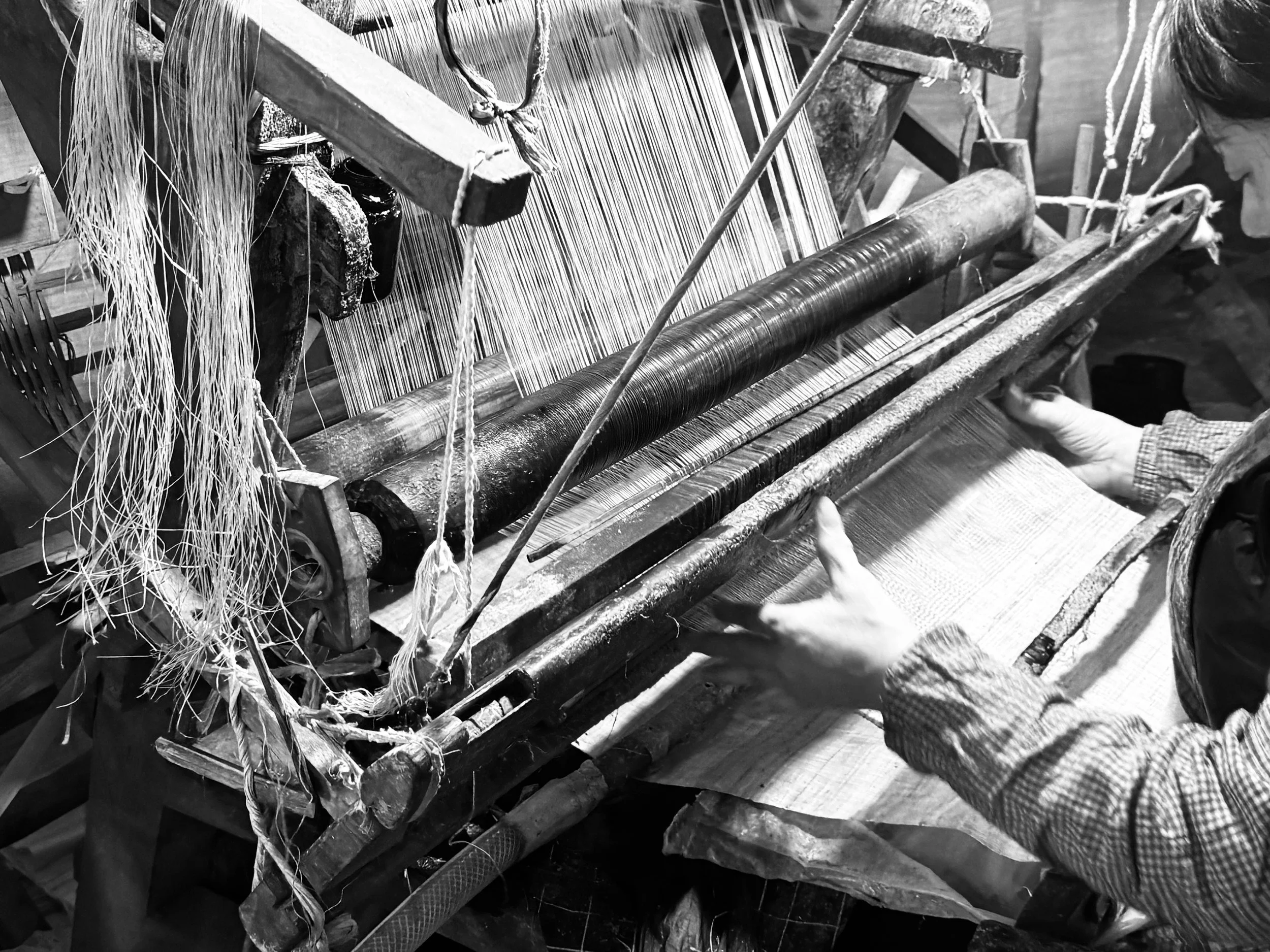
A handmade patchwork noren shaped by botanical color, natural ramie, and an irregular architectural rhythm.
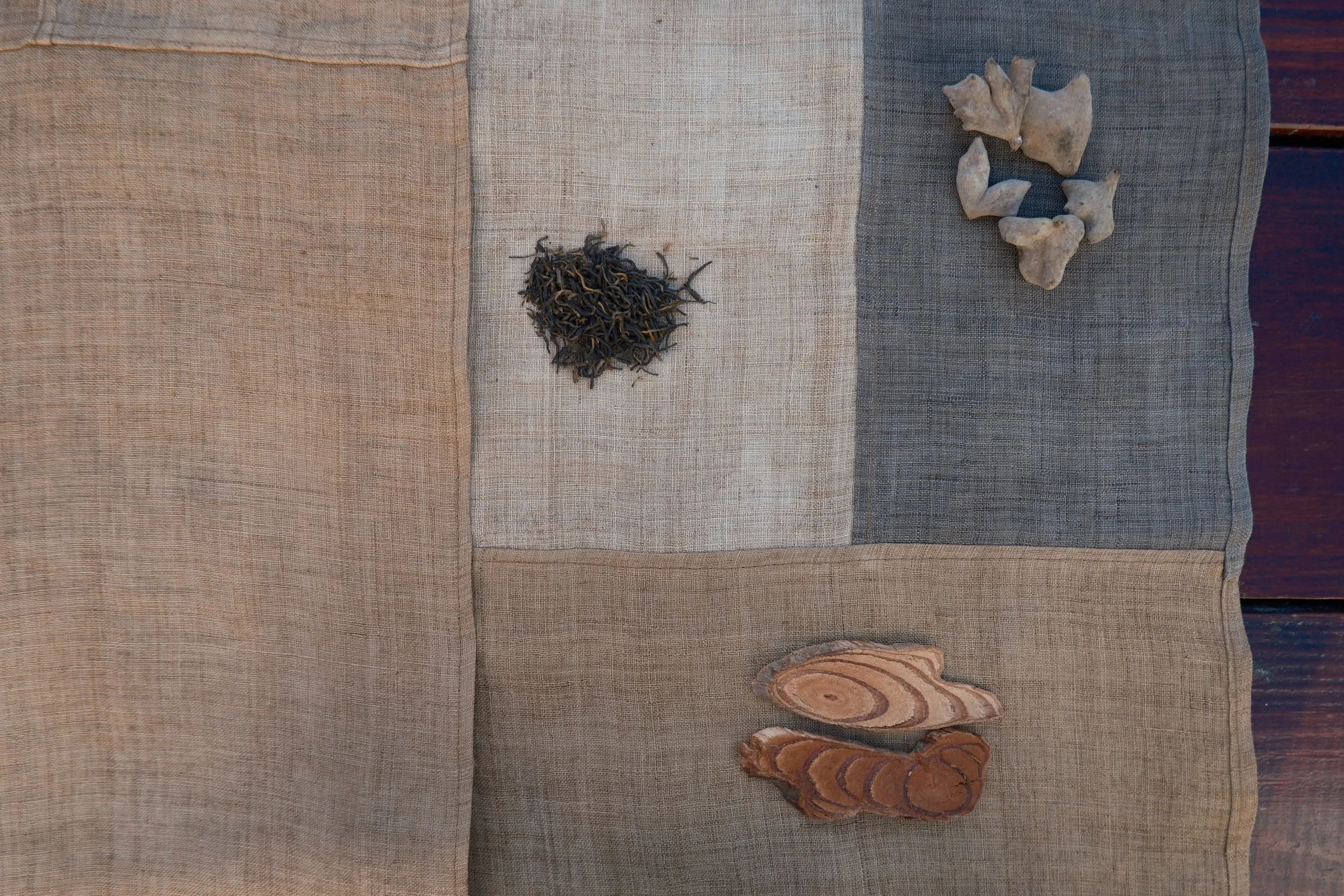
Muted charcoal, gray-brown, and warm tea-brown tones shift quietly from one fabric section to another, giving the composition depth without appearing overly decorative.
Individual pieces of ramie are composed and joined by hand. Their visible seams, changing proportions, and subtle tonal differences create a restrained geometric language that feels both textile-based and architectural.
The design draws from Japanese boro traditions, in which cloth was repeatedly pieced, patched, and repaired to extend its useful life. Historically associated with rural communities, boro textiles transformed practical necessity into layered surfaces marked by visible seams and improvised geometry.
This contemporary noren carries that spirit of resourcefulness and material respect without attempting to reproduce an antique boro textile.
When daylight passes through the open ramie weave, the patches become softly luminous while the seams remain dark and graphic. The resulting grid resembles an architectural elevation or hand-drawn plan, with each section transmitting light and color differently.
The ramie remains breathable and semi-sheer, softening the view between spaces while preserving airflow. Its crisp natural structure gives the curtain definition without making it feel rigid or heavy.
Designed for Custom Openings
Patchwork construction allows the proportions of the curtain to be adjusted more freely than a design made from one continuous width of cloth.
Fabric sections can be added, resized, or rearranged to accommodate a wide range of requested widths and lengths, including tall doorways, broad openings, storefronts, room dividers, and unusual architectural dimensions.
Each custom size receives an individual composition. The seams are not simply construction lines; they become part of the visual design.
Suggested Uses
Place it at a kitchen, pantry, bedroom, bathroom, dressing area, closet, laundry room, studio, or hallway opening.
For larger interiors, use it across a wide passageway, open-plan room, workspace, restaurant, or hospitality entrance where a lighter alternative to a permanent divider is preferred.
Its backlit quality is especially effective near windows, glass doors, bright corridors, galleries, retail storefronts, and restaurant entrances.
When not used in an opening, it may be displayed as a wall textile or suspended architectural panel.
Installation
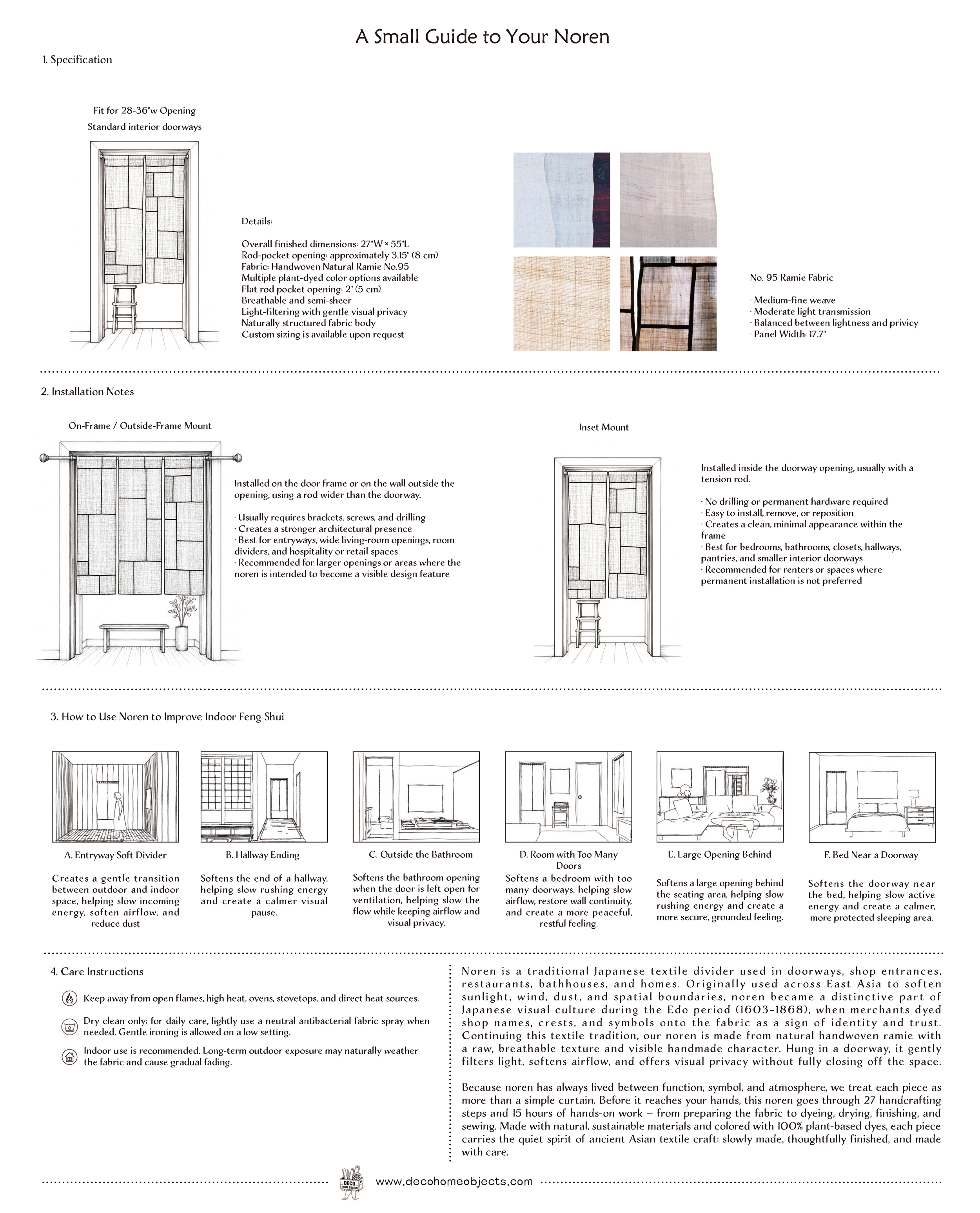
For a minimal, no-drill installation, place the noren inside the opening using a tension rod.
For wider coverage or a stronger architectural presentation, mount a rod above or outside the doorway.
The flat straight rod pocket has an approximately 3-inch (8 cm) opening.
Rod and installation hardware are not included.
Details
Overall size: 30"W × 30"L across both panels
Measurements refer to the complete curtain, not each individual panel
Two-panel split design
Approximately 15"W per panel
Handwoven natural ramie
Hand-composed and hand-joined patchwork
Inspired by Japanese boro textile traditions
Botanical-dyed earth-tone palette
Muted charcoal, gray-brown, and warm tea-brown tones
Flexible construction for custom widths and lengths
Each custom size receives an individual patch layout
Backlighting reveals graphic, architectural seam lines
Flat straight rod pocket
Rod-pocket opening: approximately 3" (8 cm)
Breathable, semi-sheer, and light-filtering
Provides partial visual privacy
Crisp, naturally structured fabric body
Natural variations in color, weave, seams, edges, and proportions
Size Tolerance
Because each piece is handwoven, hand-dyed, pieced, and individually finished, slight dimensional variation is normal.
Width tolerance: ±0.5"
Length tolerance: ±1"
These variations are part of the handmade character of the textile and do not affect normal installation or use.
Custom Options
Custom widths, lengths, panel counts, and selected botanical-dyed colors are available.
Production generally requires approximately 5–8 weeks.
The number, placement, and proportion of the patches will be developed according to the requested dimensions, so each custom curtain will have its own composition.
Care
Professional dry clean only.
Do not machine wash, tumble dry, scrub, or use chemical detergents.
Avoid bleach, alcohol, disinfecting sprays, and strong fabric treatments.
Remove surface dust gently and iron only on a low setting.
Keep away from open flame and high heat.
Handmade Character
Variations in dye depth, weave, stitching, seam alignment, patch proportions, natural edges, panel shape, and finished dimensions are inherent to the handmade process.
These irregularities create the curtain’s structural rhythm and individual character.
Each Patchwork Ramie Noren is individually made and one of a kind.
A handmade patchwork noren shaped by botanical color, natural ramie, and an irregular architectural rhythm.
Muted charcoal, gray-brown, and warm tea-brown tones shift quietly from one fabric section to another, giving the composition depth without appearing overly decorative.
Individual pieces of ramie are composed and joined by hand. Their visible seams, changing proportions, and subtle tonal differences create a restrained geometric language that feels both textile-based and architectural.
The design draws from Japanese boro traditions, in which cloth was repeatedly pieced, patched, and repaired to extend its useful life. Historically associated with rural communities, boro textiles transformed practical necessity into layered surfaces marked by visible seams and improvised geometry.
This contemporary noren carries that spirit of resourcefulness and material respect without attempting to reproduce an antique boro textile.
When daylight passes through the open ramie weave, the patches become softly luminous while the seams remain dark and graphic. The resulting grid resembles an architectural elevation or hand-drawn plan, with each section transmitting light and color differently.
The ramie remains breathable and semi-sheer, softening the view between spaces while preserving airflow. Its crisp natural structure gives the curtain definition without making it feel rigid or heavy.
Designed for Custom Openings
Patchwork construction allows the proportions of the curtain to be adjusted more freely than a design made from one continuous width of cloth.
Fabric sections can be added, resized, or rearranged to accommodate a wide range of requested widths and lengths, including tall doorways, broad openings, storefronts, room dividers, and unusual architectural dimensions.
Each custom size receives an individual composition. The seams are not simply construction lines; they become part of the visual design.
Suggested Uses
Place it at a kitchen, pantry, bedroom, bathroom, dressing area, closet, laundry room, studio, or hallway opening.
For larger interiors, use it across a wide passageway, open-plan room, workspace, restaurant, or hospitality entrance where a lighter alternative to a permanent divider is preferred.
Its backlit quality is especially effective near windows, glass doors, bright corridors, galleries, retail storefronts, and restaurant entrances.
When not used in an opening, it may be displayed as a wall textile or suspended architectural panel.
Installation
For a minimal, no-drill installation, place the noren inside the opening using a tension rod.
For wider coverage or a stronger architectural presentation, mount a rod above or outside the doorway.
The flat straight rod pocket has an approximately 3-inch (8 cm) opening.
Rod and installation hardware are not included.
Details
Overall size: 30"W × 30"L across both panels
Measurements refer to the complete curtain, not each individual panel
Two-panel split design
Approximately 15"W per panel
Handwoven natural ramie
Hand-composed and hand-joined patchwork
Inspired by Japanese boro textile traditions
Botanical-dyed earth-tone palette
Muted charcoal, gray-brown, and warm tea-brown tones
Flexible construction for custom widths and lengths
Each custom size receives an individual patch layout
Backlighting reveals graphic, architectural seam lines
Flat straight rod pocket
Rod-pocket opening: approximately 3" (8 cm)
Breathable, semi-sheer, and light-filtering
Provides partial visual privacy
Crisp, naturally structured fabric body
Natural variations in color, weave, seams, edges, and proportions
Size Tolerance
Because each piece is handwoven, hand-dyed, pieced, and individually finished, slight dimensional variation is normal.
Width tolerance: ±0.5"
Length tolerance: ±1"
These variations are part of the handmade character of the textile and do not affect normal installation or use.
Custom Options
Custom widths, lengths, panel counts, and selected botanical-dyed colors are available.
Production generally requires approximately 5–8 weeks.
The number, placement, and proportion of the patches will be developed according to the requested dimensions, so each custom curtain will have its own composition.
Care
Professional dry clean only.
Do not machine wash, tumble dry, scrub, or use chemical detergents.
Avoid bleach, alcohol, disinfecting sprays, and strong fabric treatments.
Remove surface dust gently and iron only on a low setting.
Keep away from open flame and high heat.
Handmade Character
Variations in dye depth, weave, stitching, seam alignment, patch proportions, natural edges, panel shape, and finished dimensions are inherent to the handmade process.
These irregularities create the curtain’s structural rhythm and individual character.
Each Patchwork Ramie Noren is individually made and one of a kind.

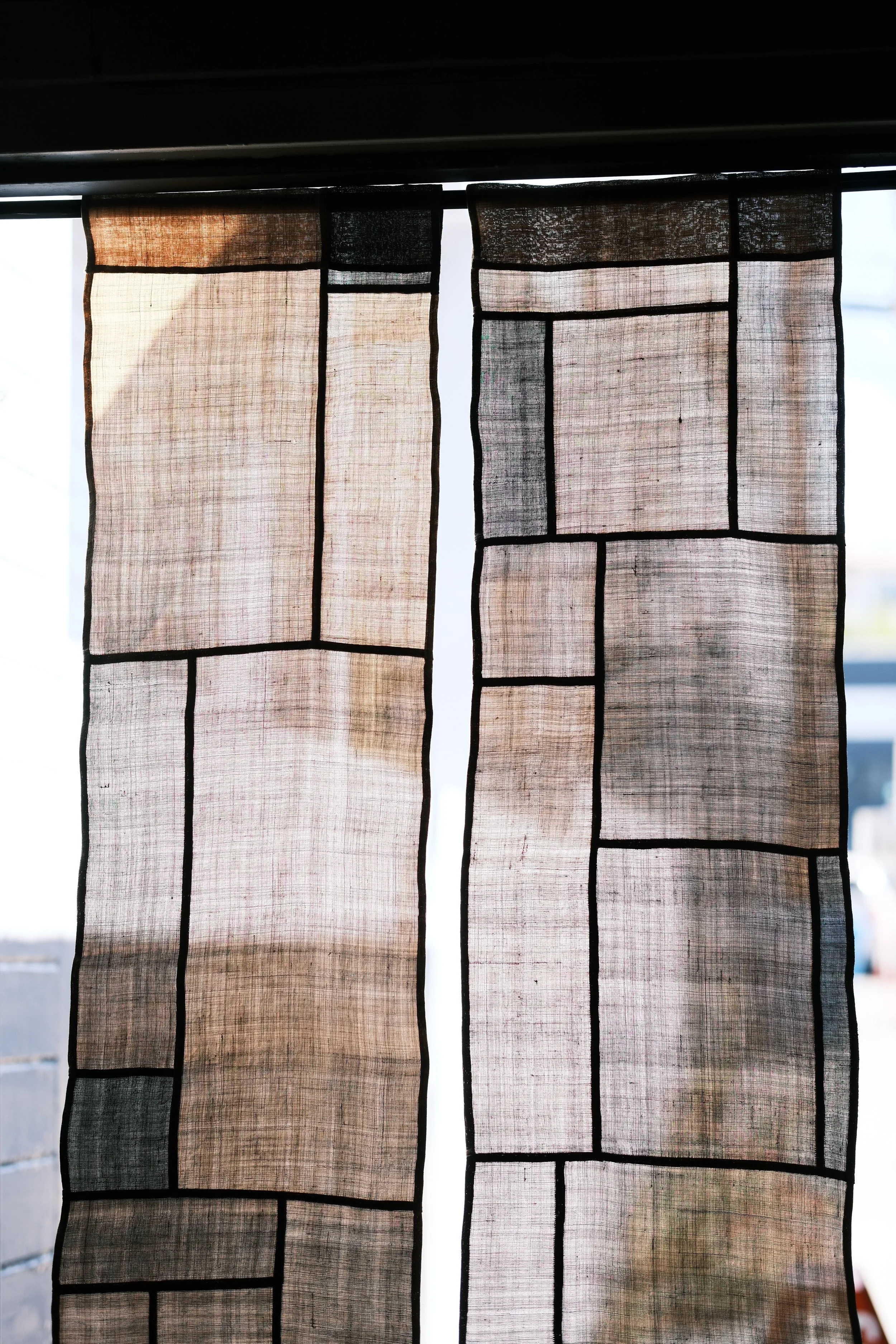 Image 1 of 12
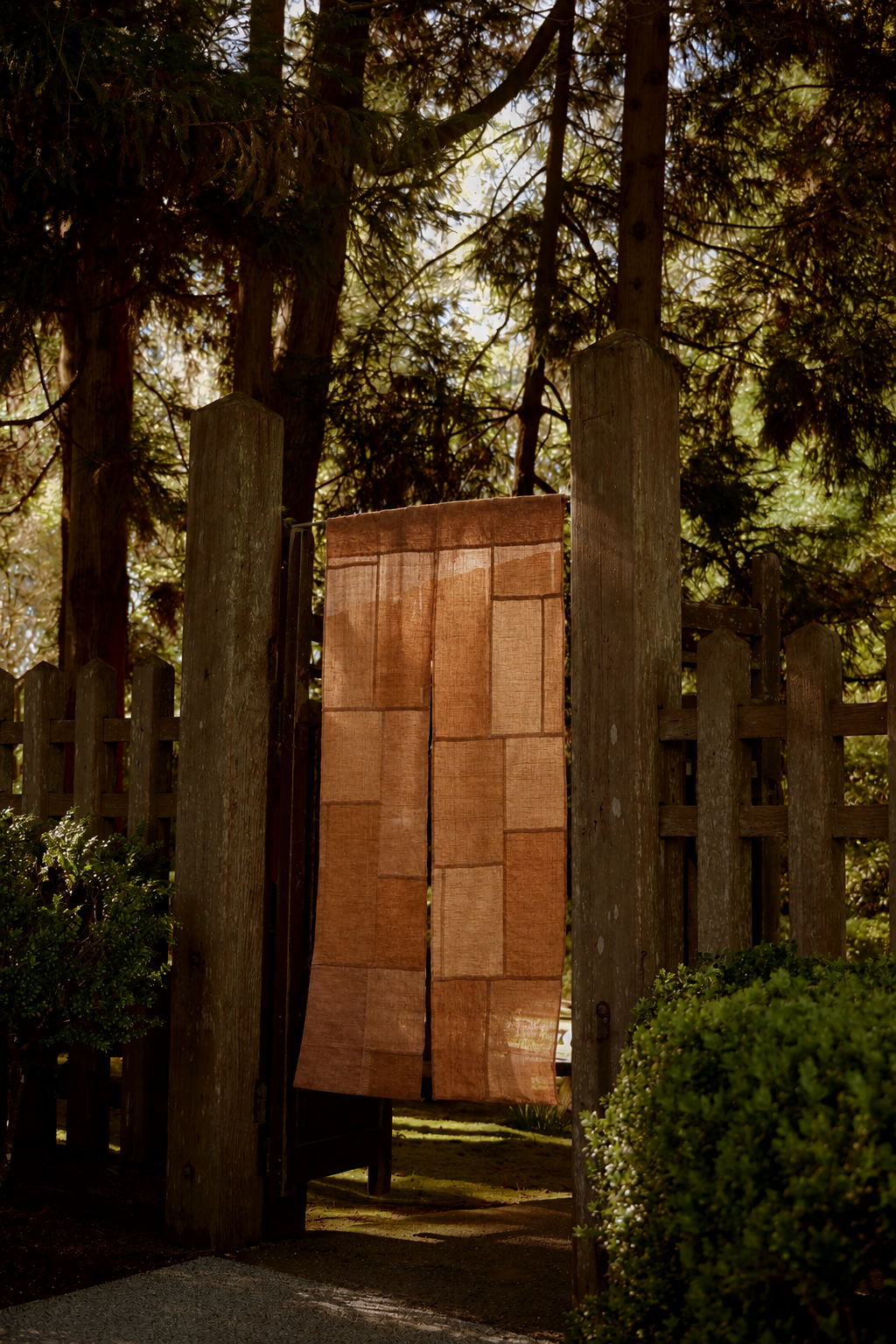 Image 2 of 12
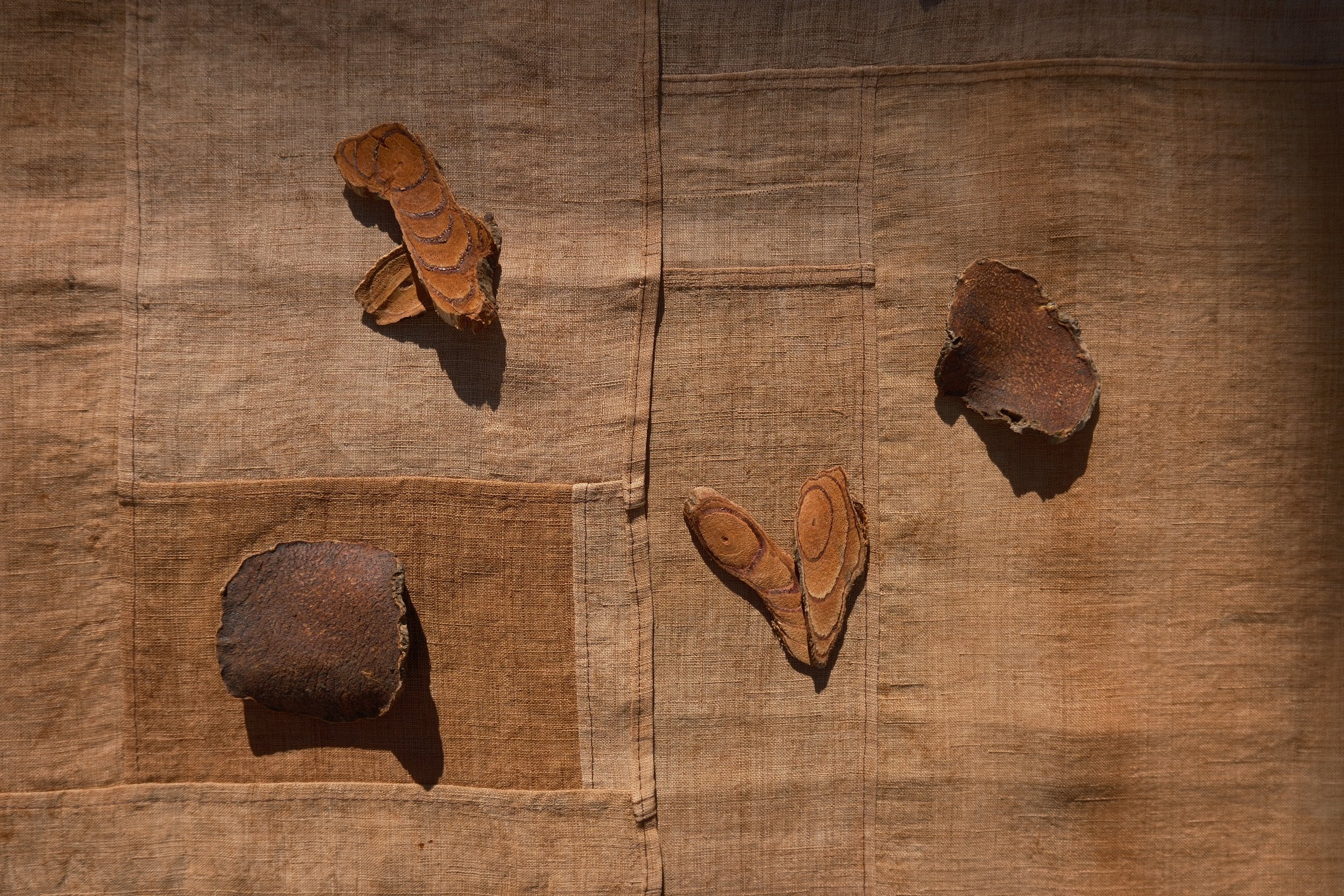 Image 3 of 12
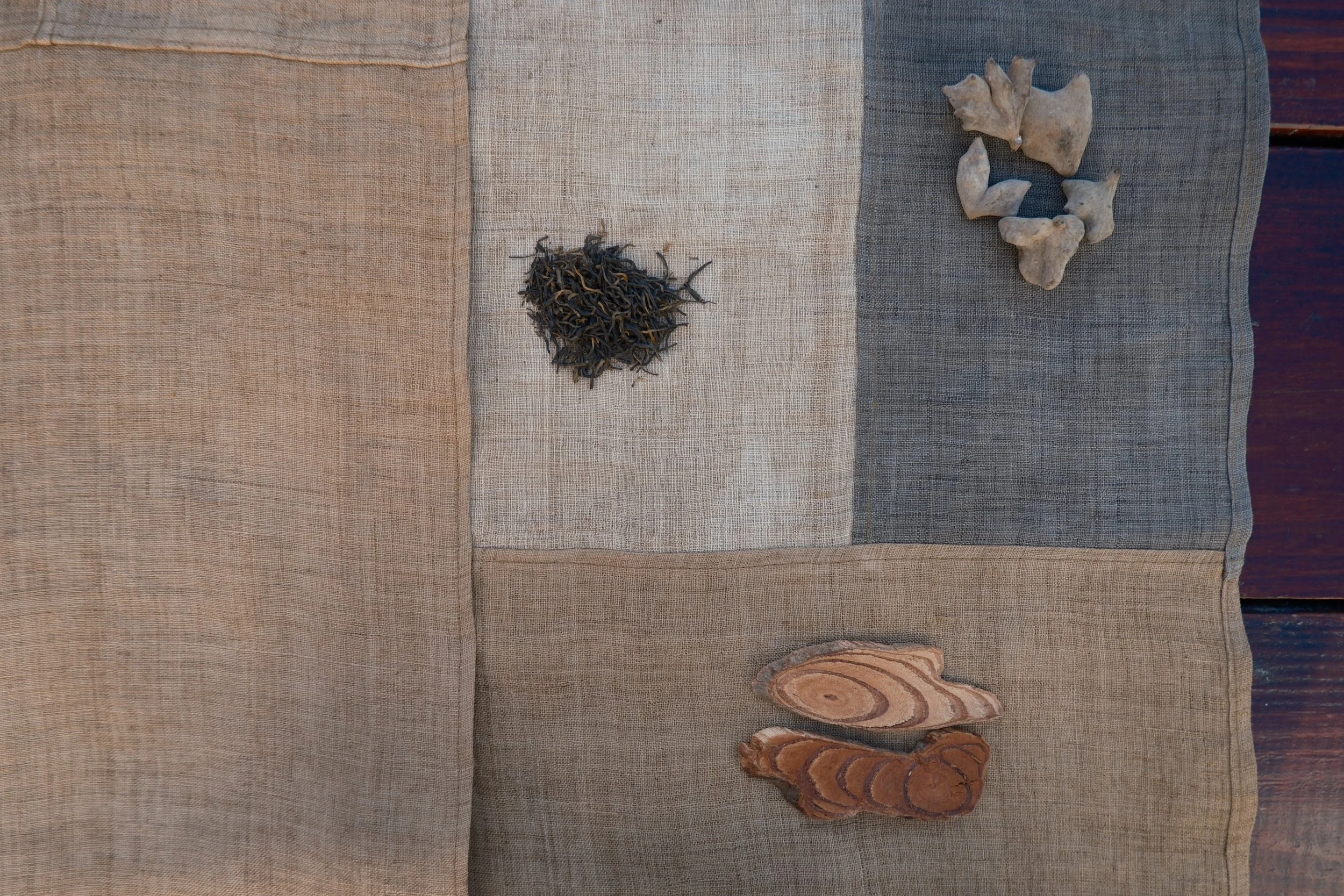 Image 4 of 12
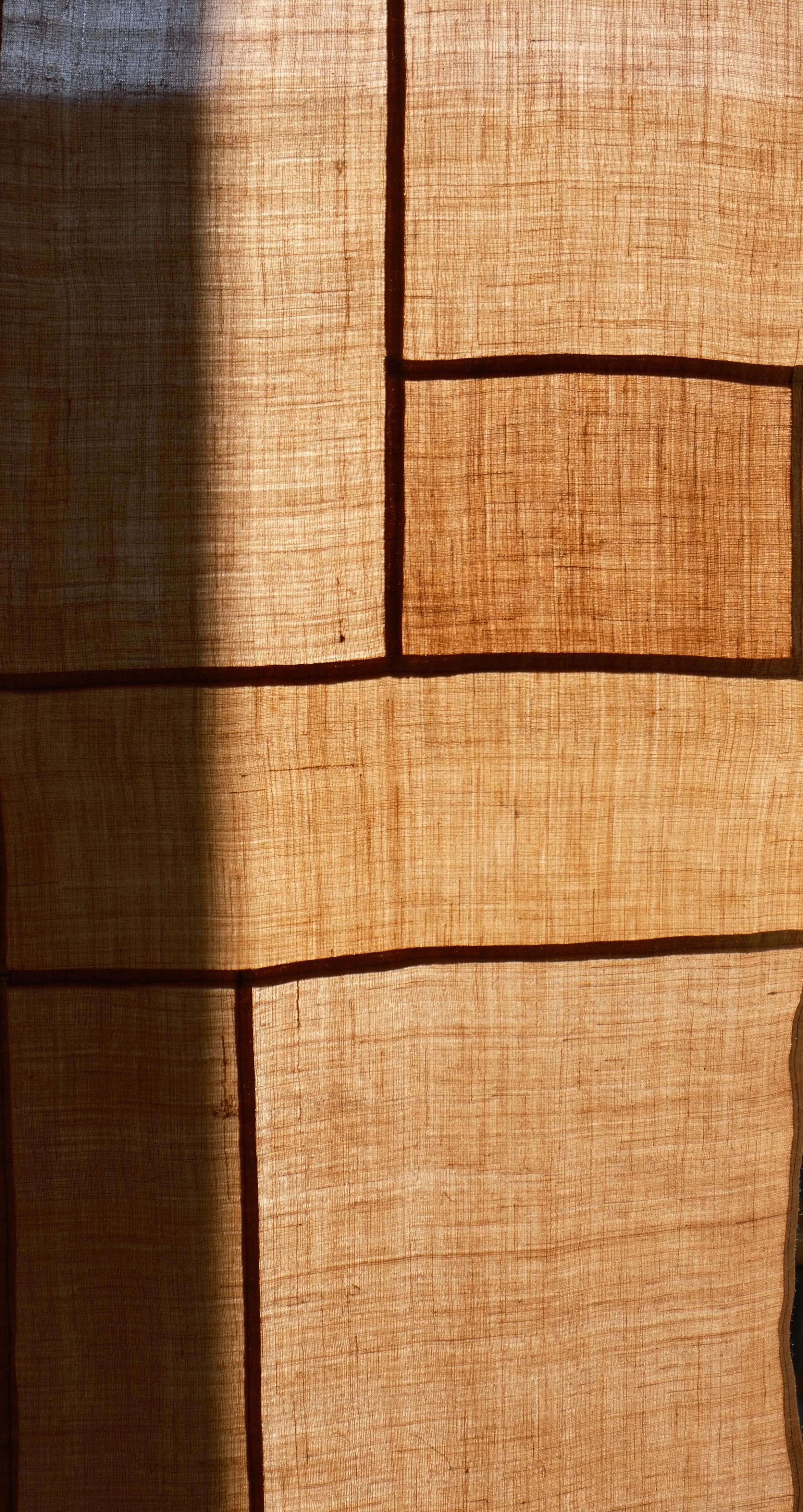 Image 5 of 12
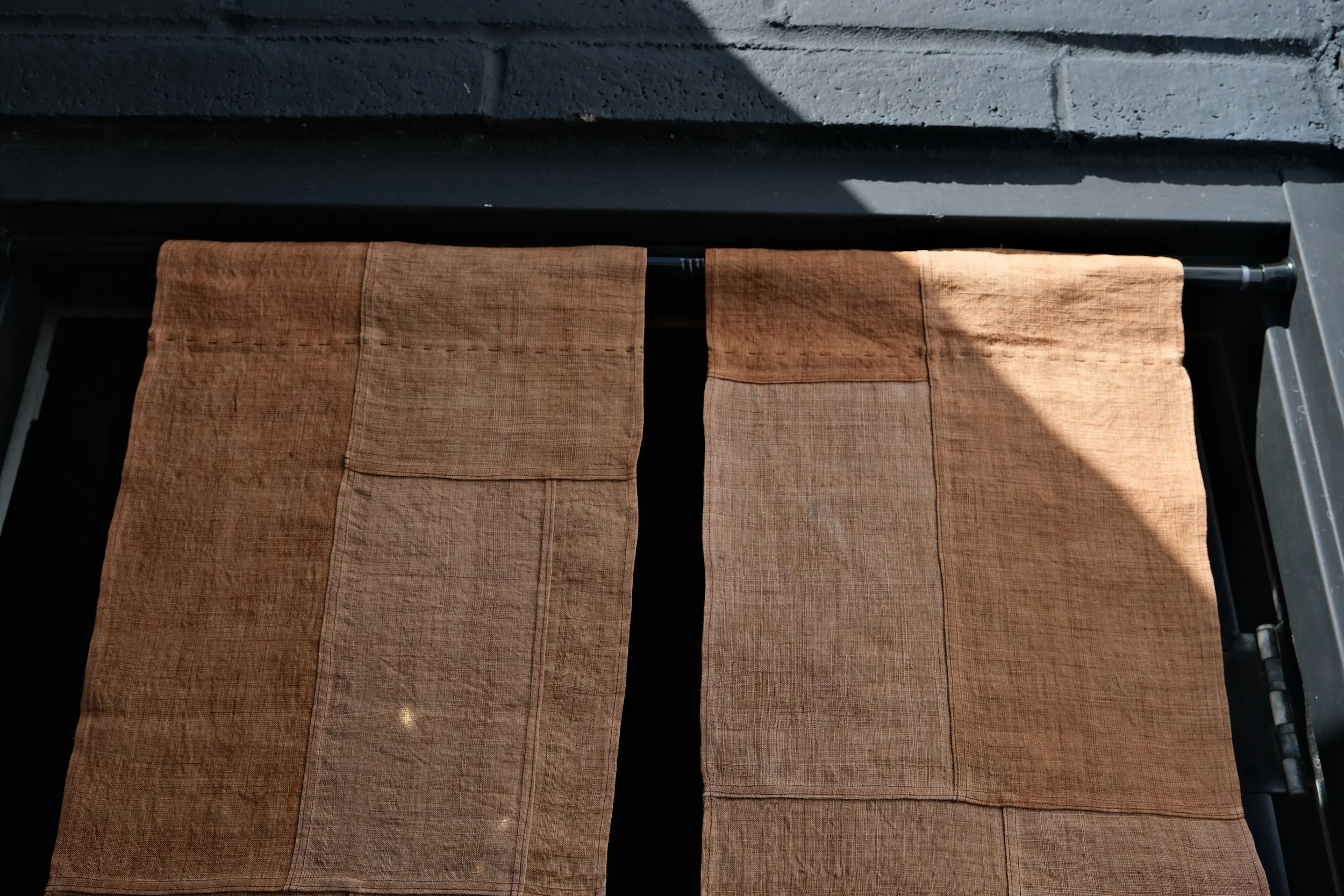 Image 6 of 12
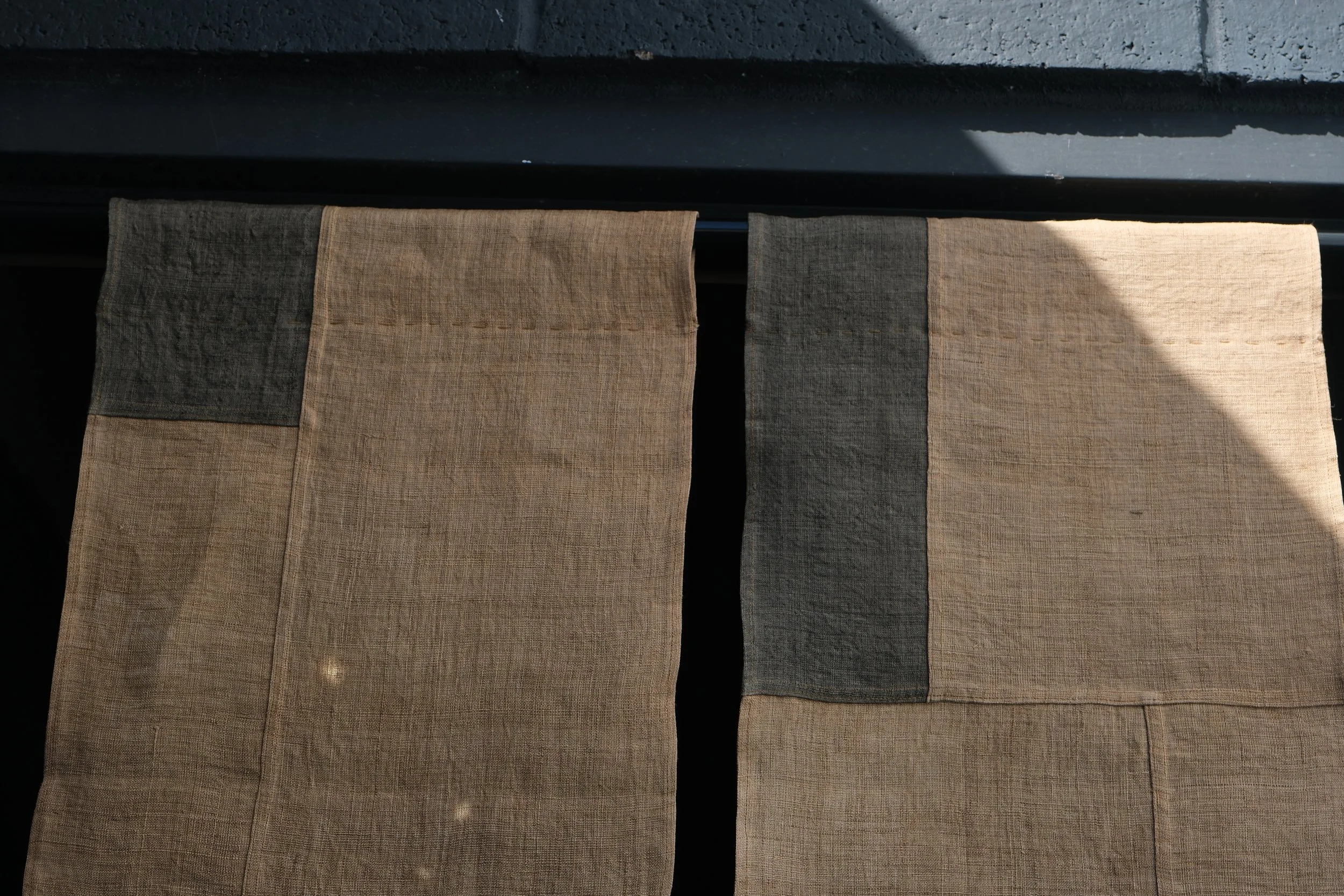 Image 7 of 12
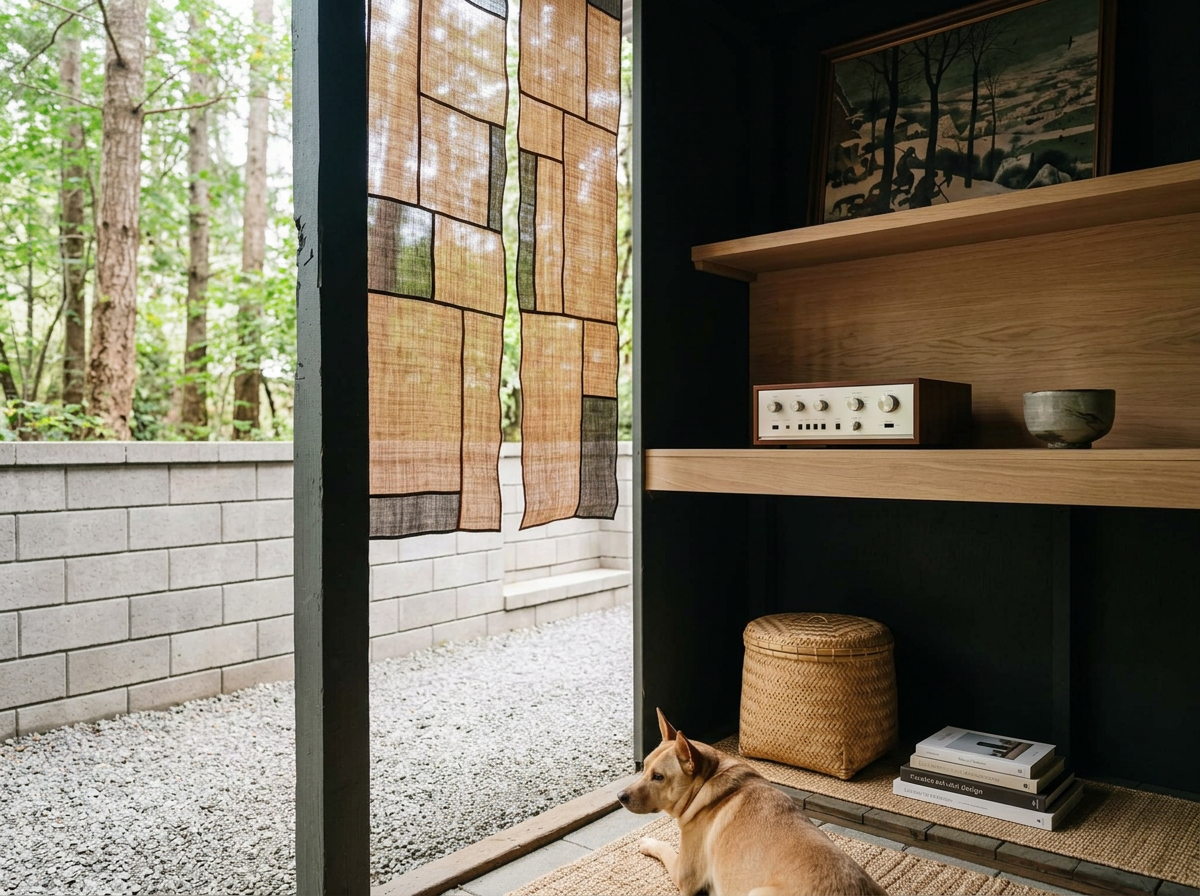 Image 8 of 12
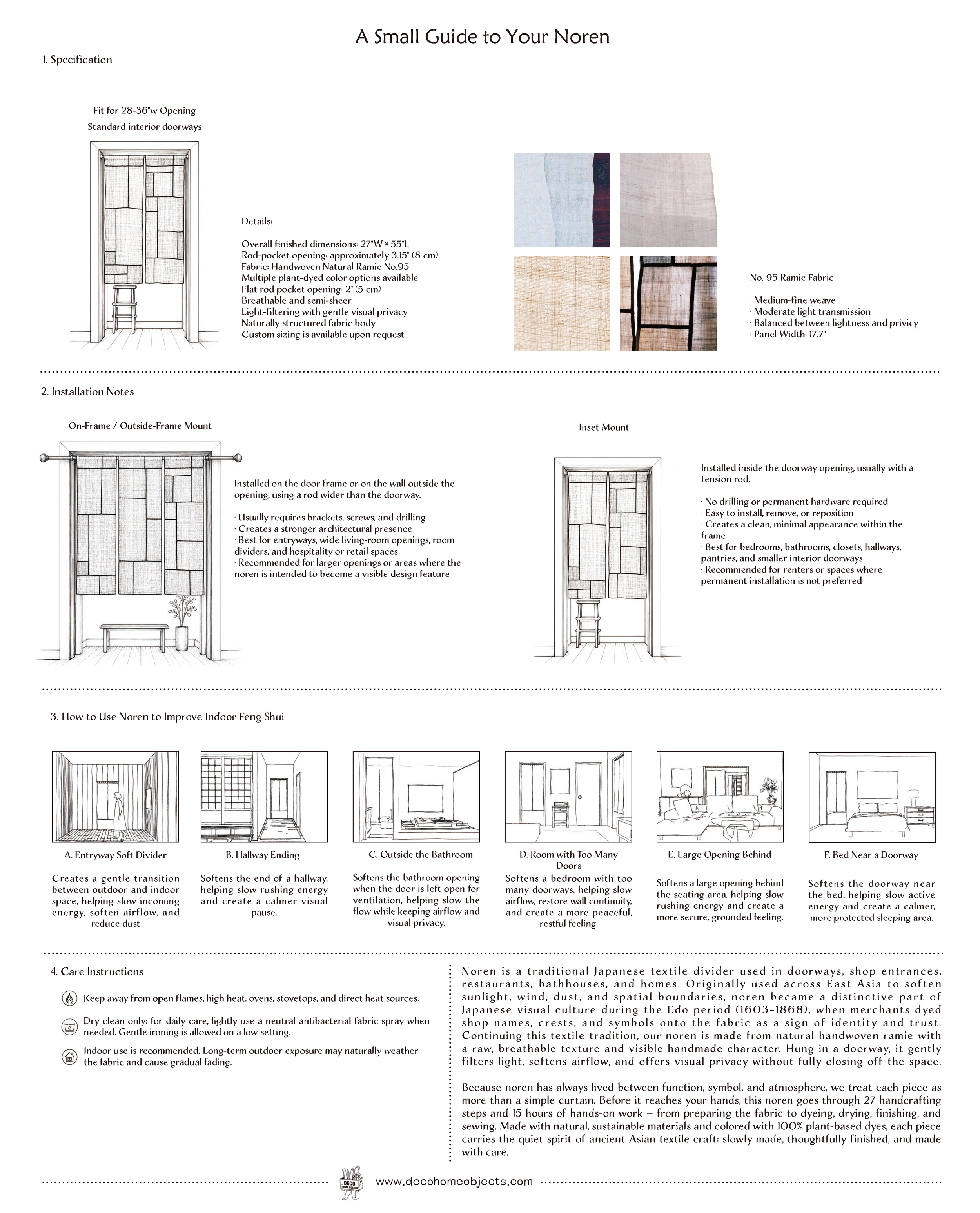 Image 9 of 12
 Image 10 of 12
 Image 11 of 12
 Image 12 of 12