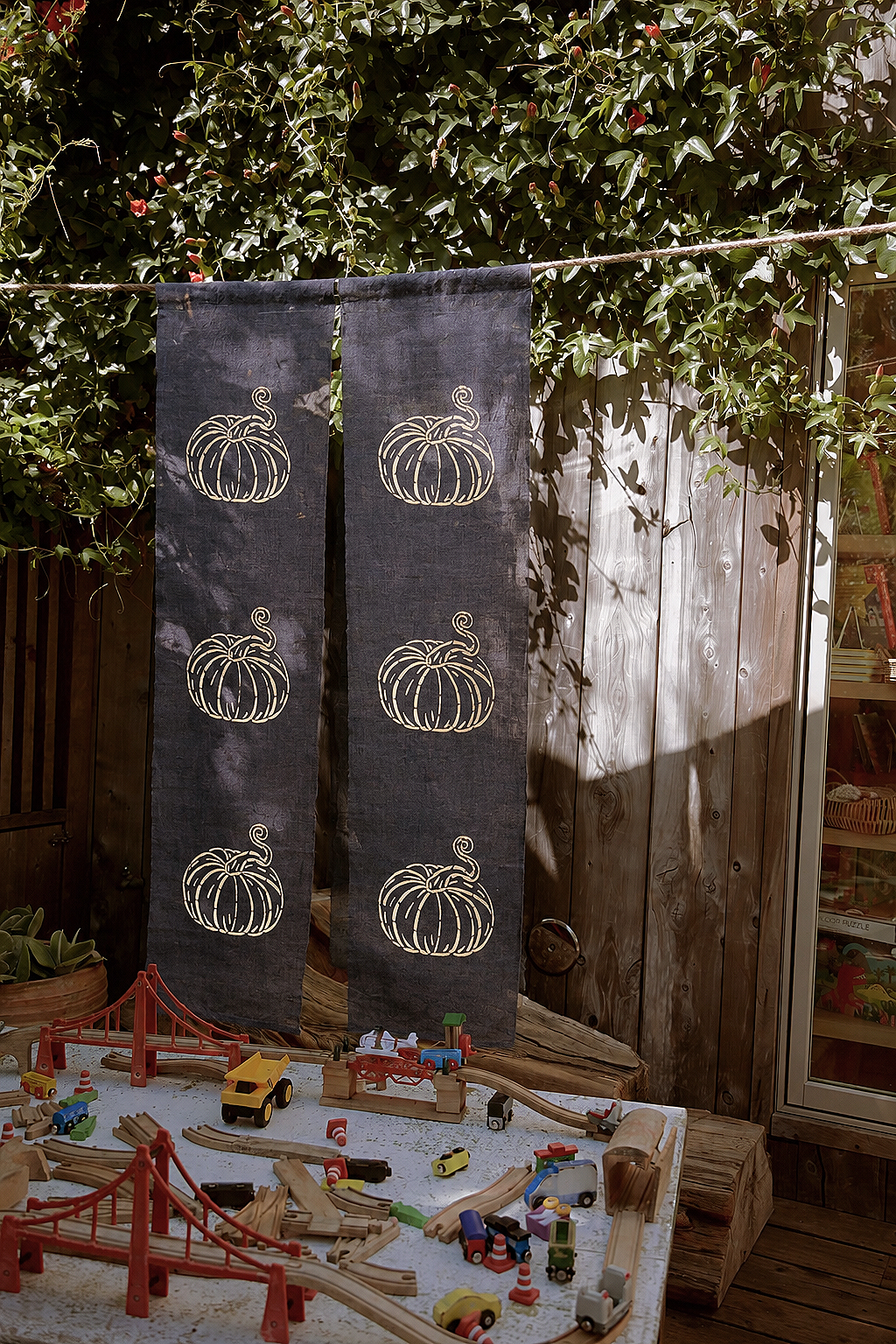
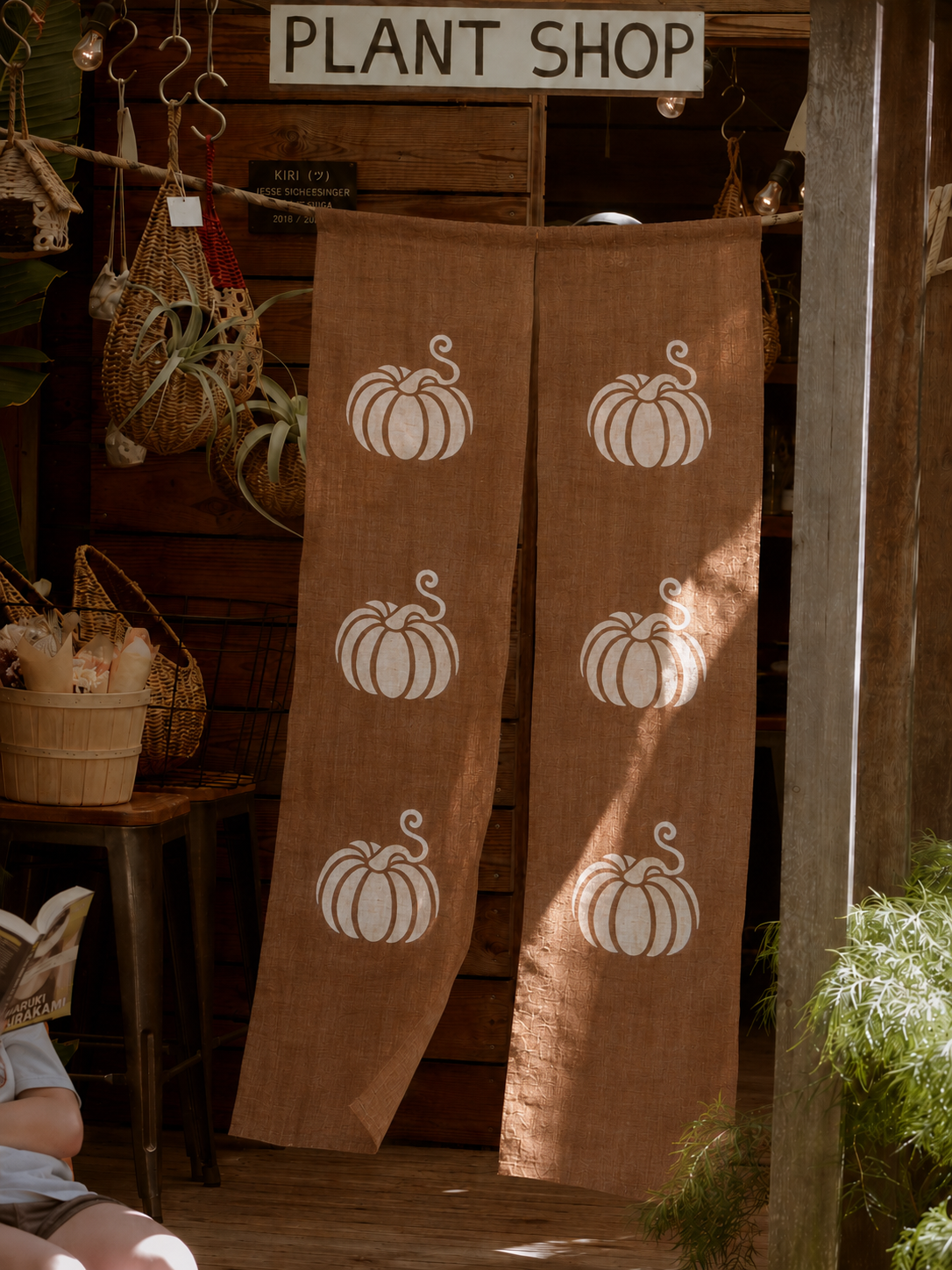
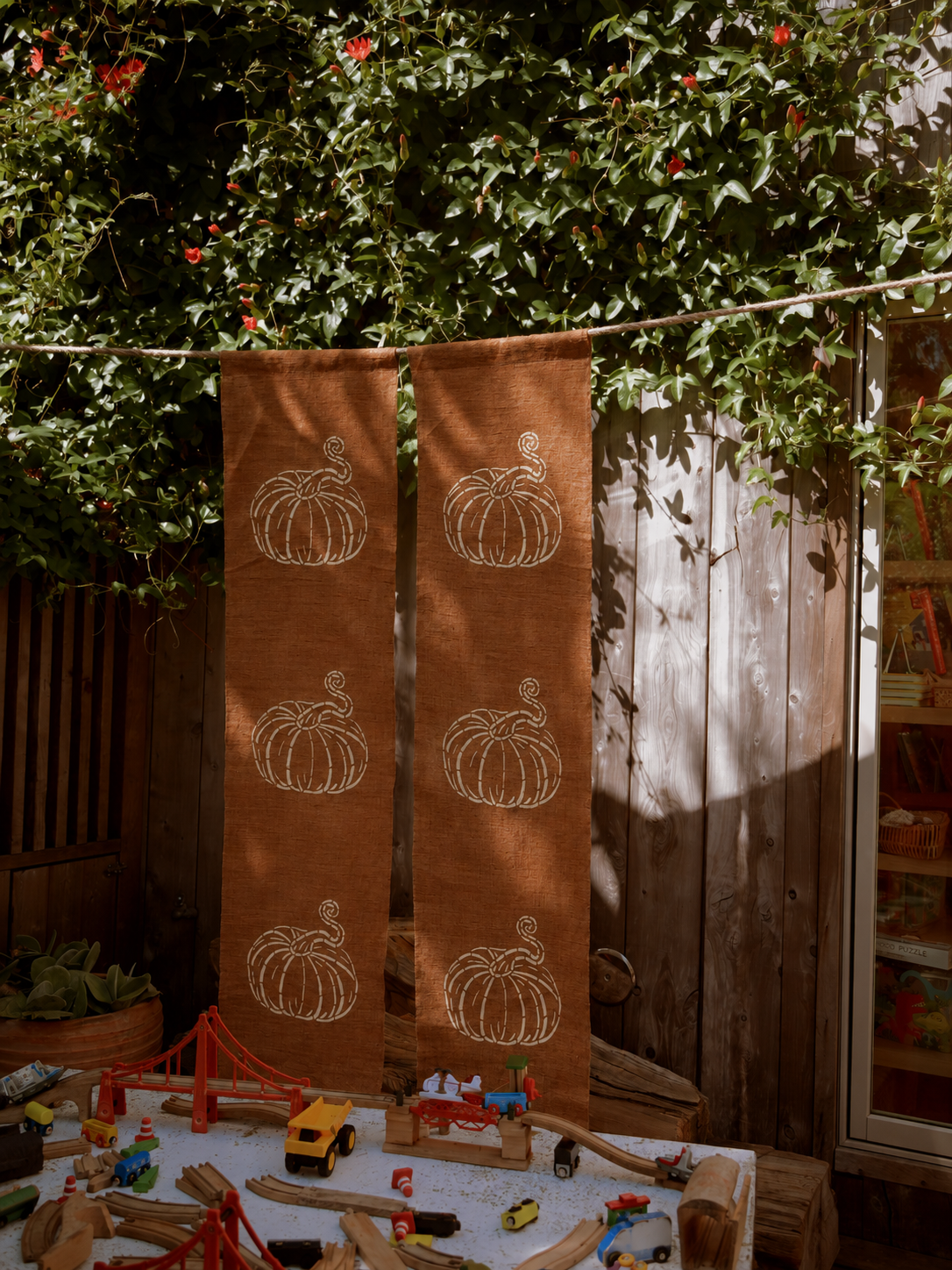
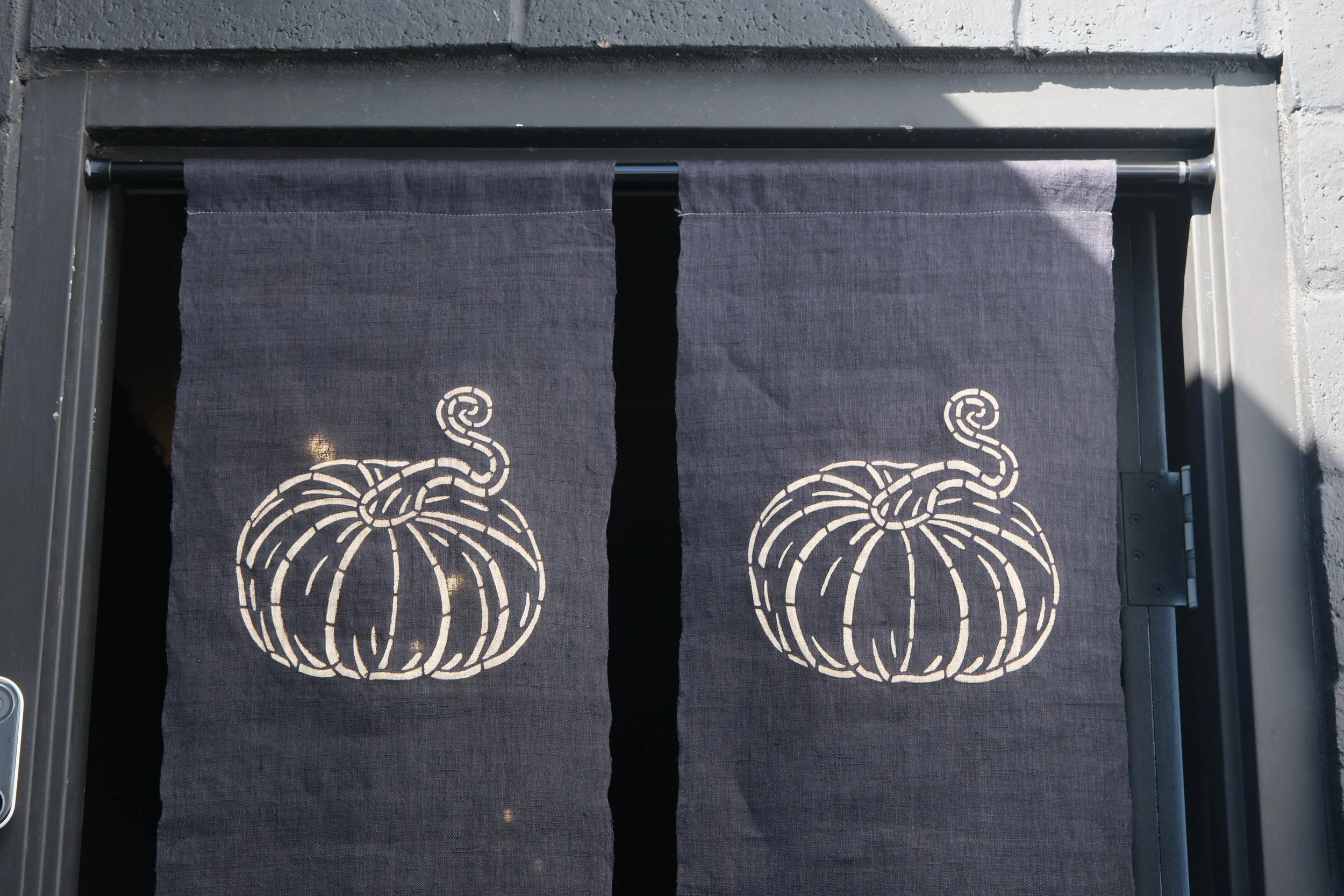
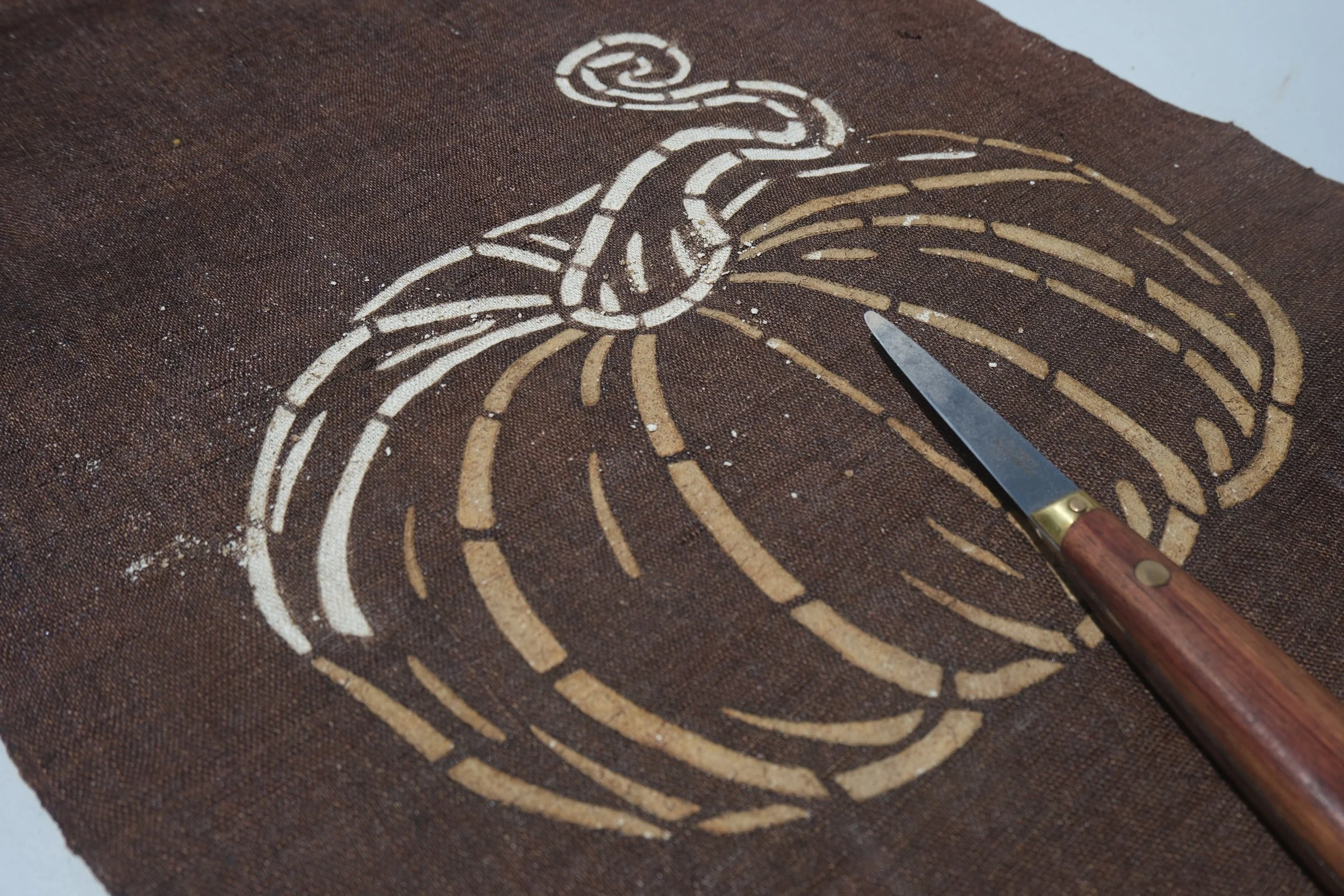
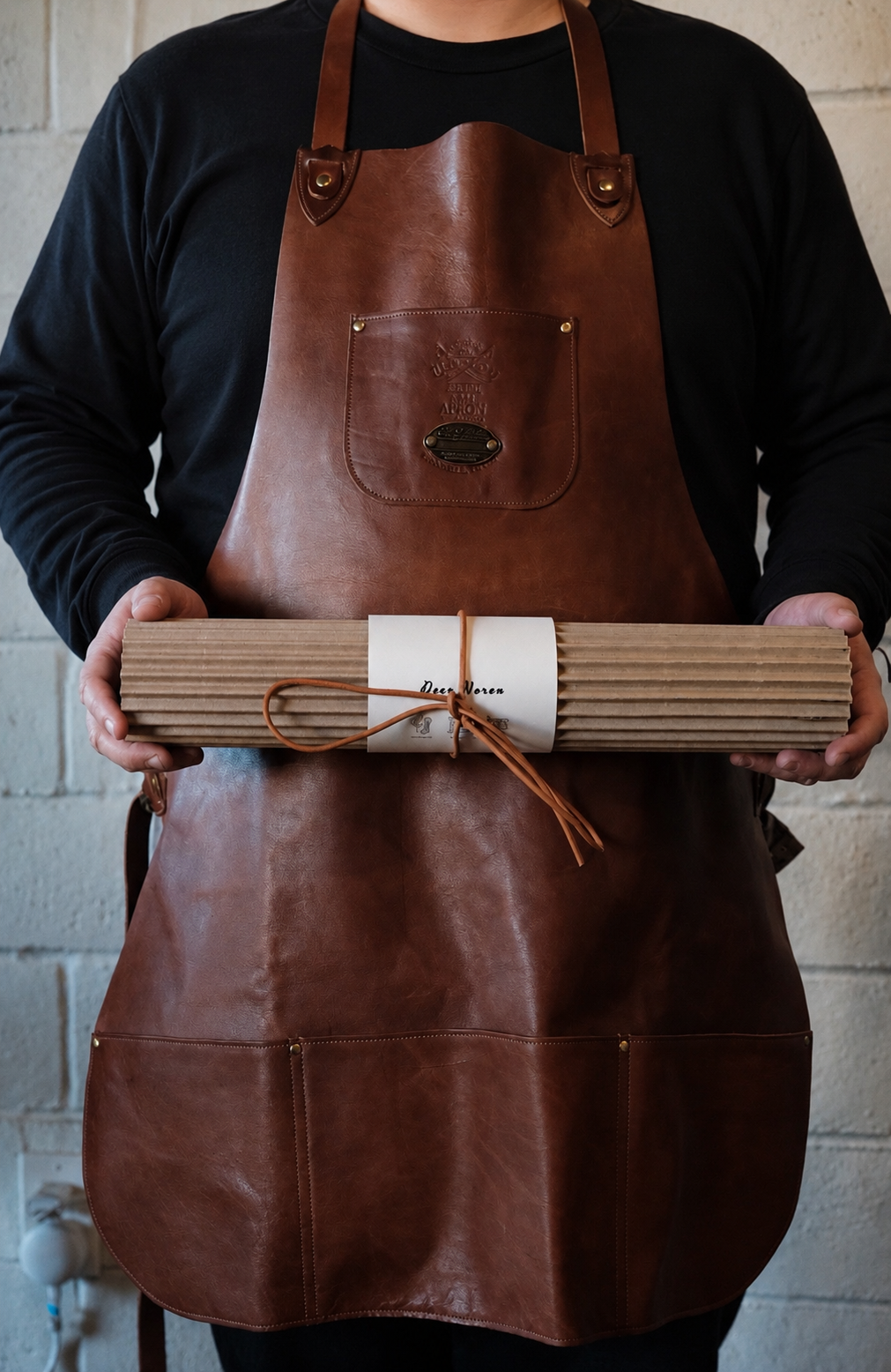
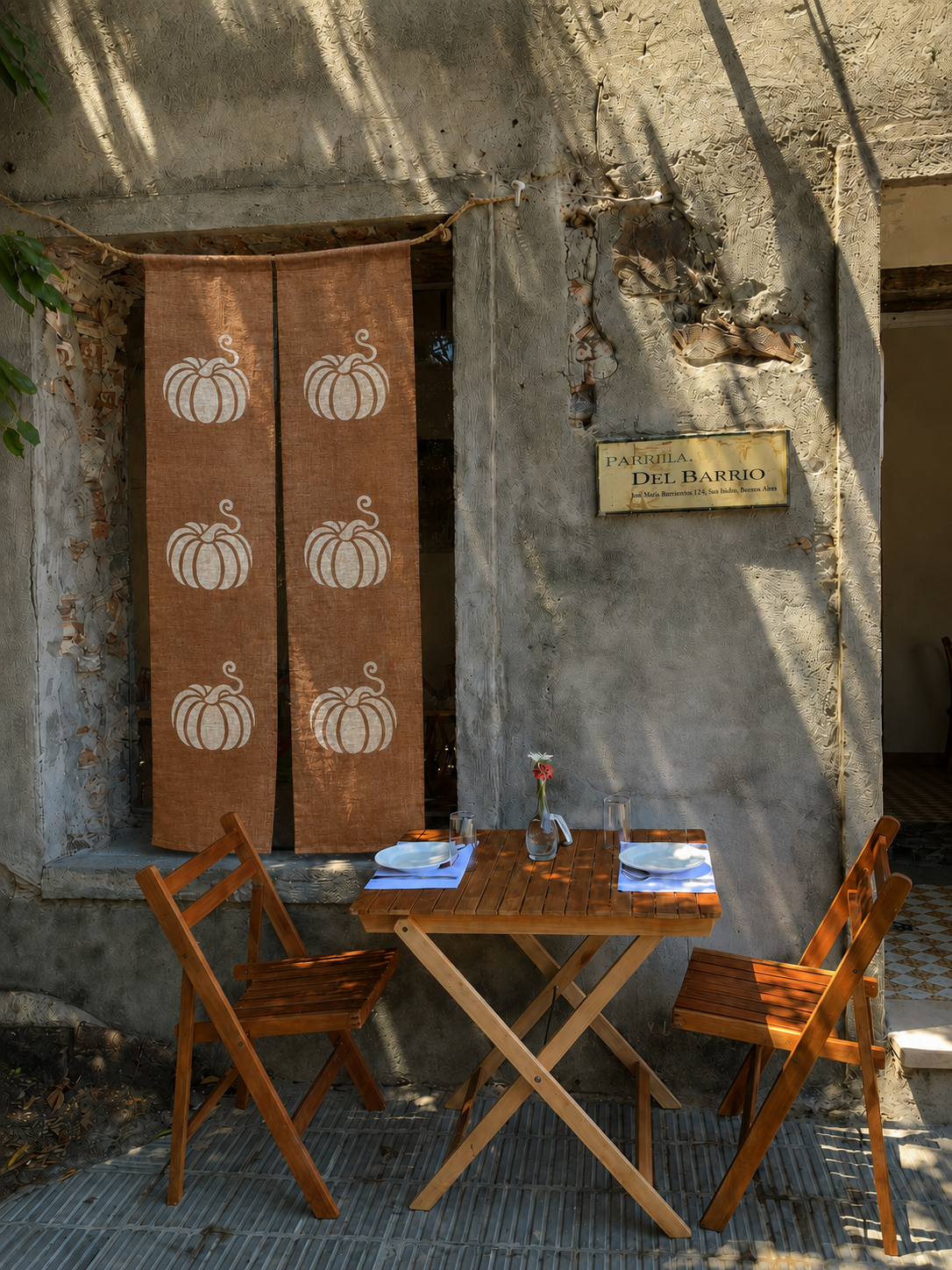
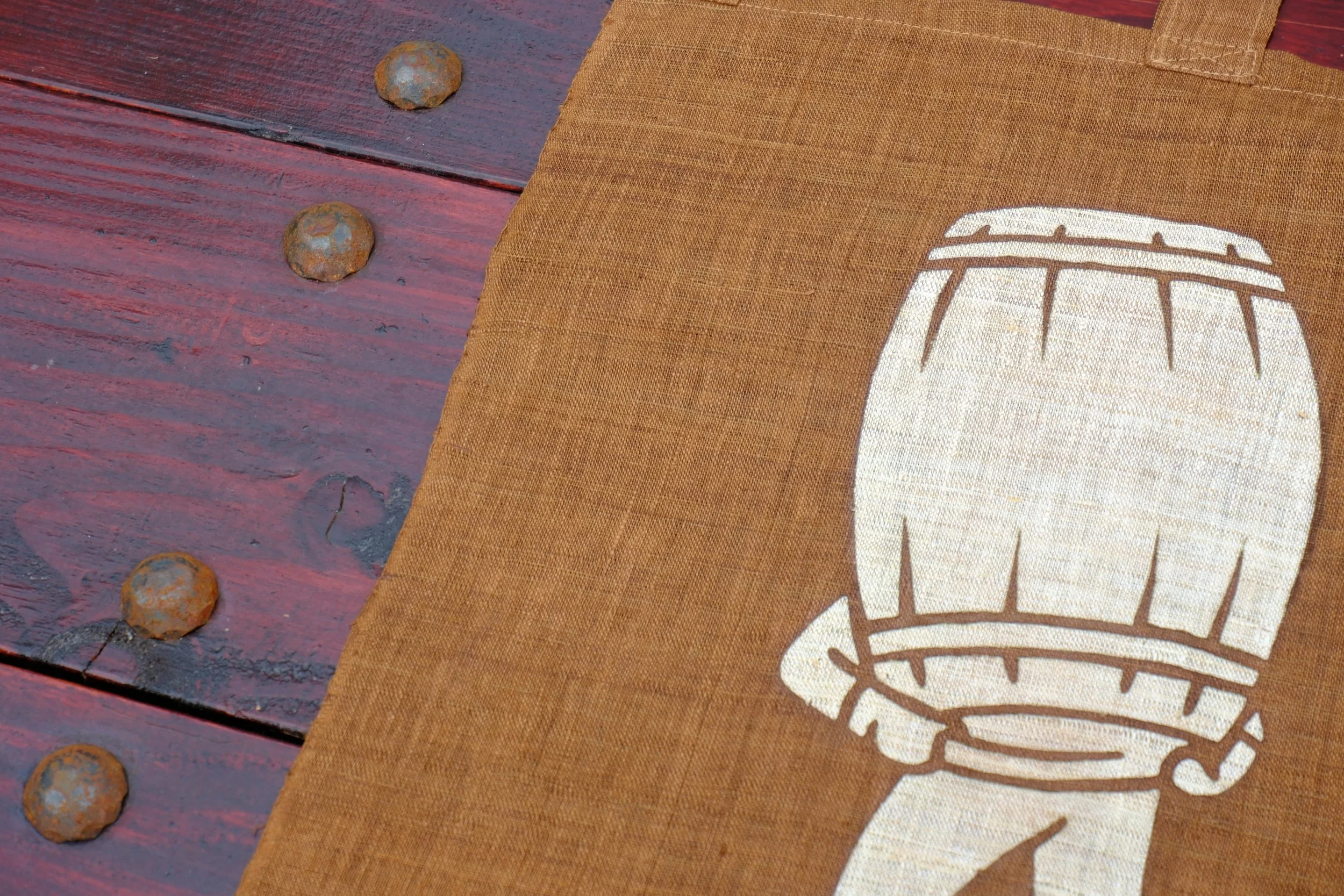
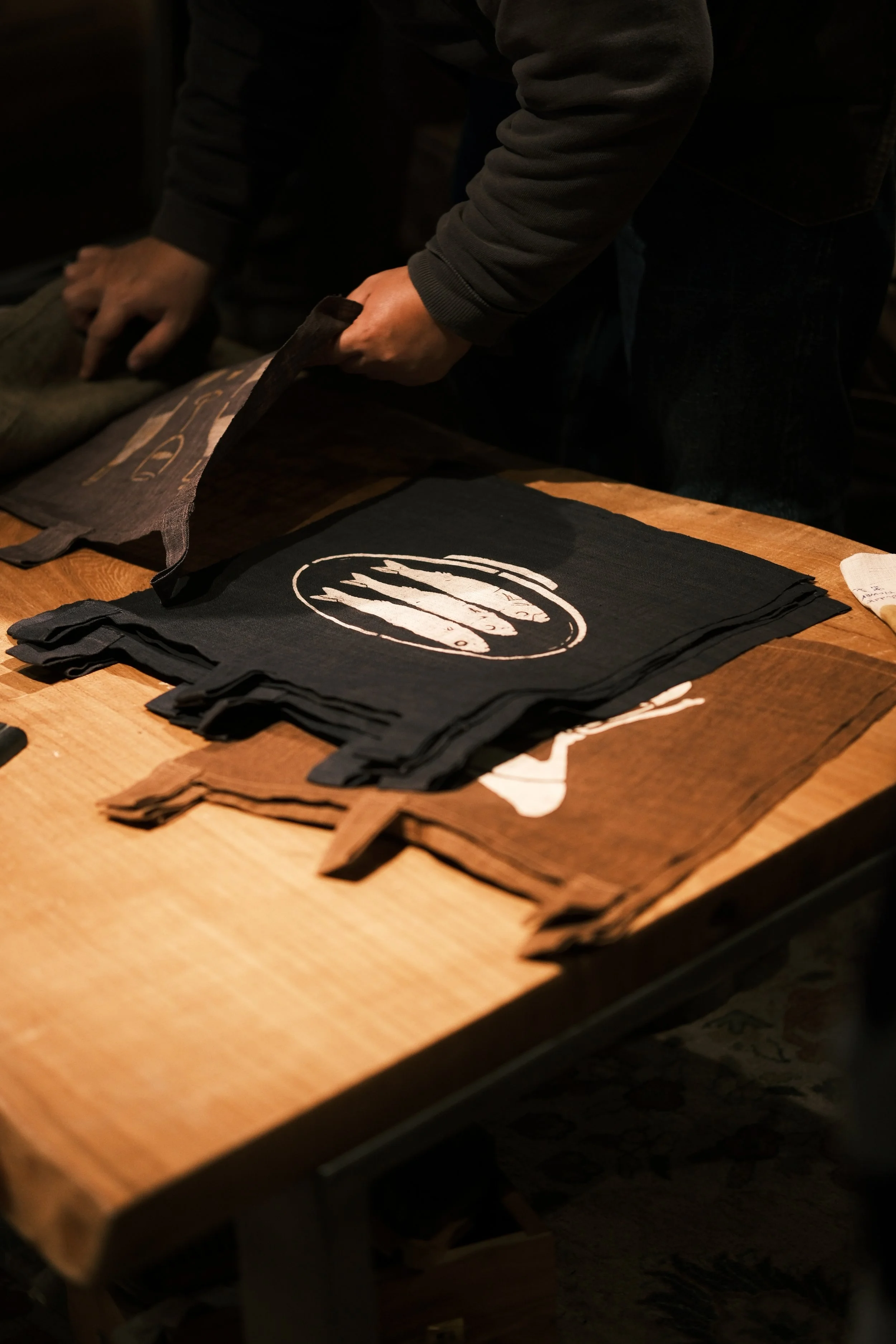
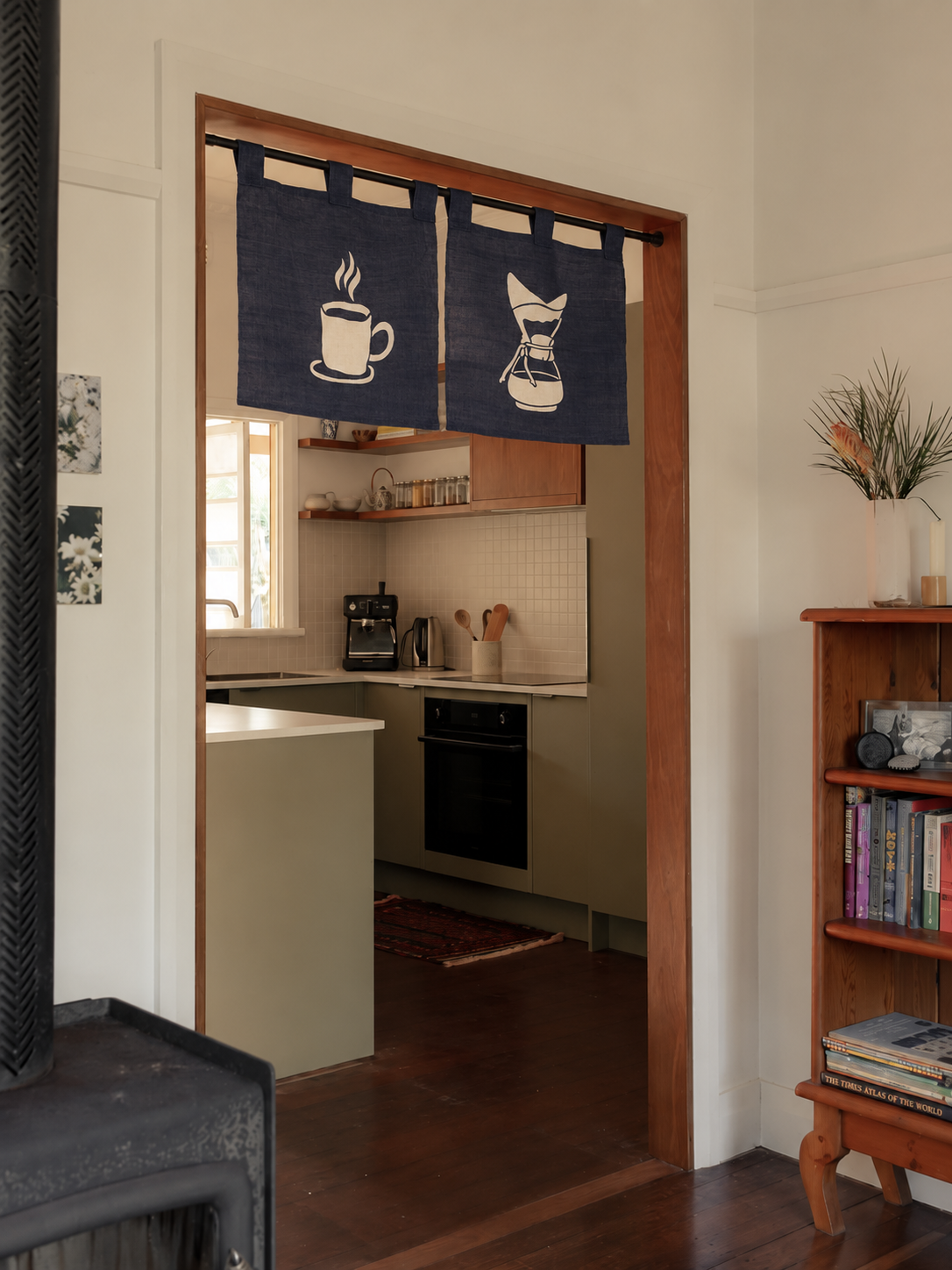
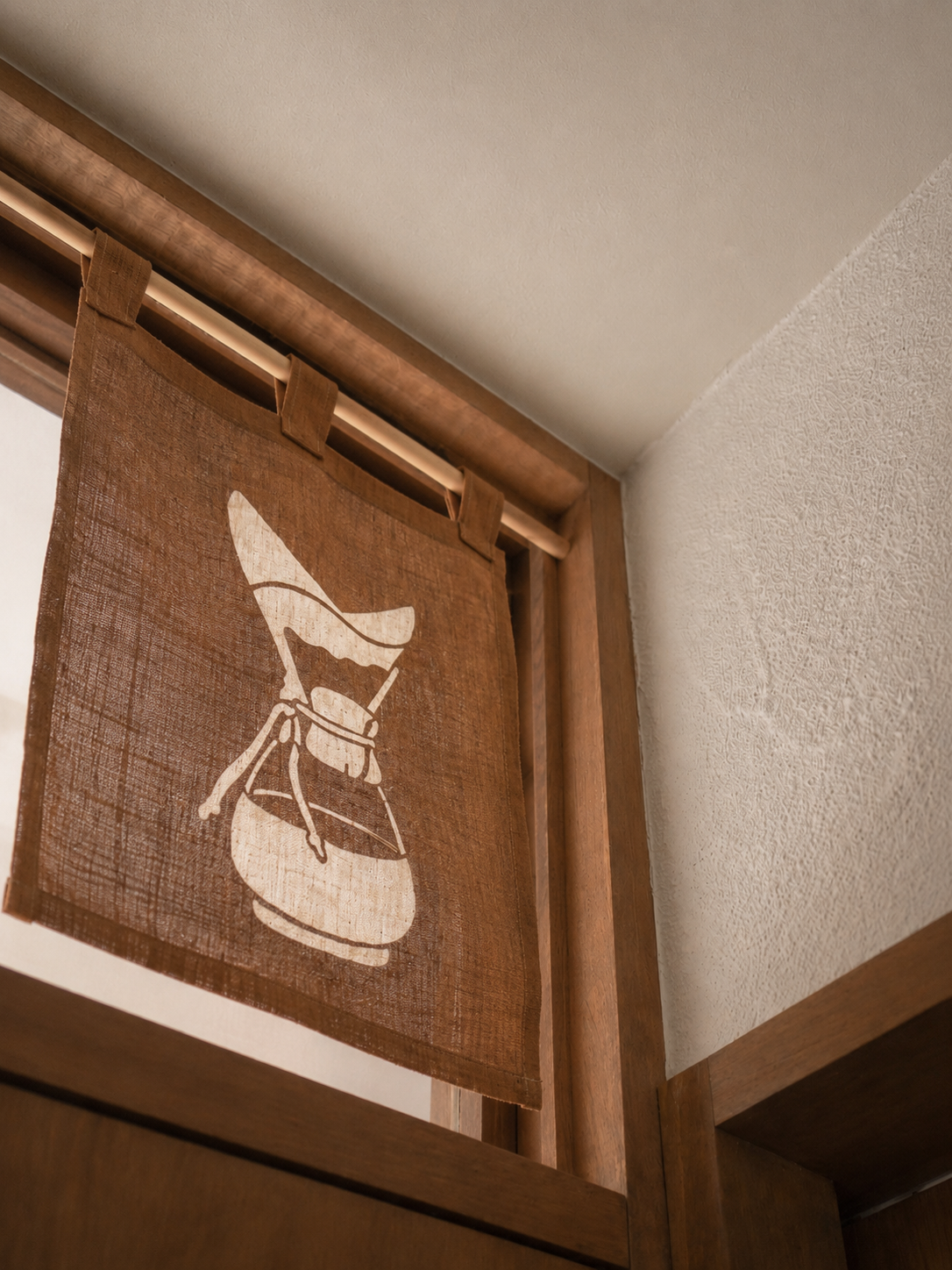
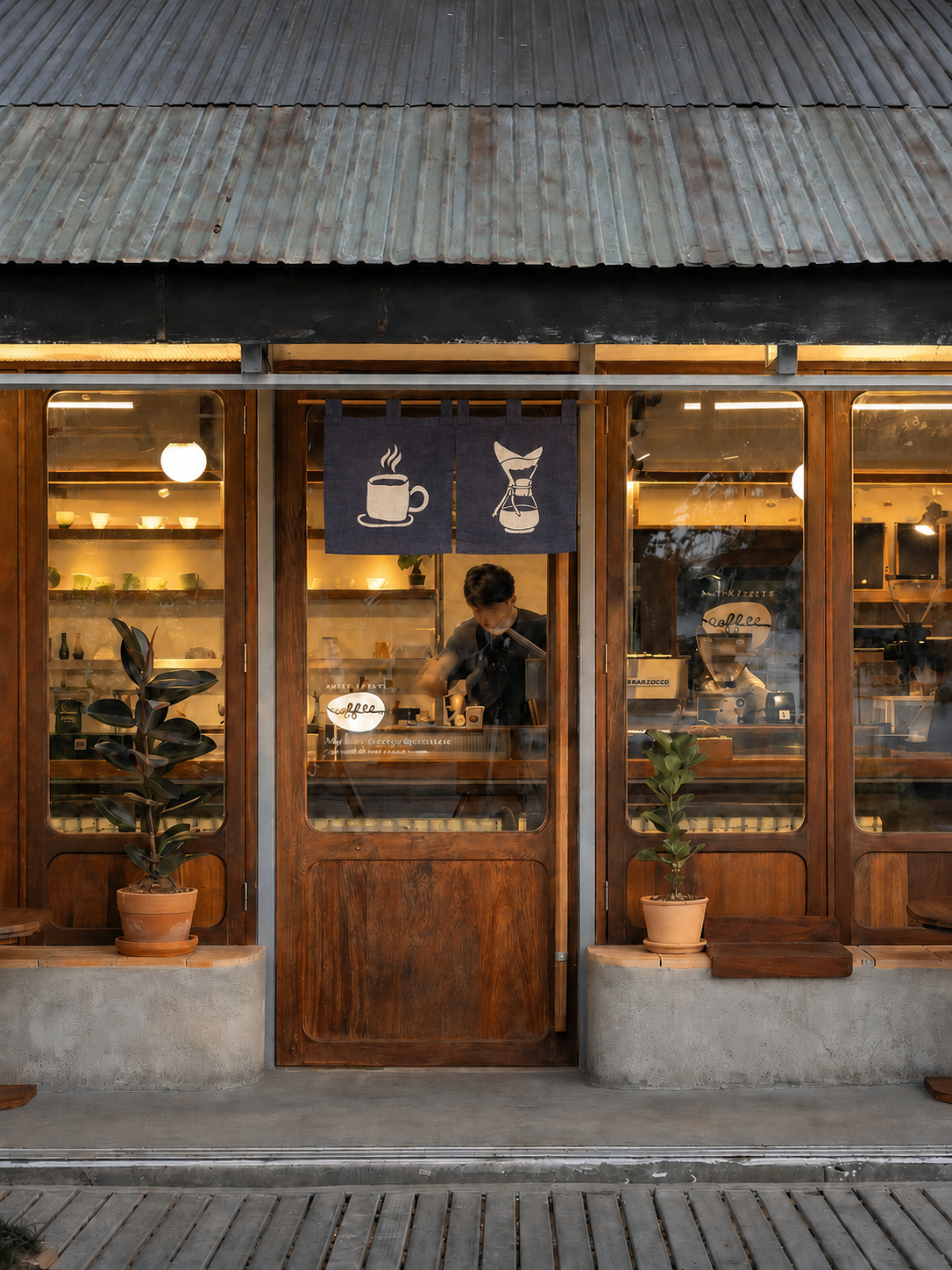
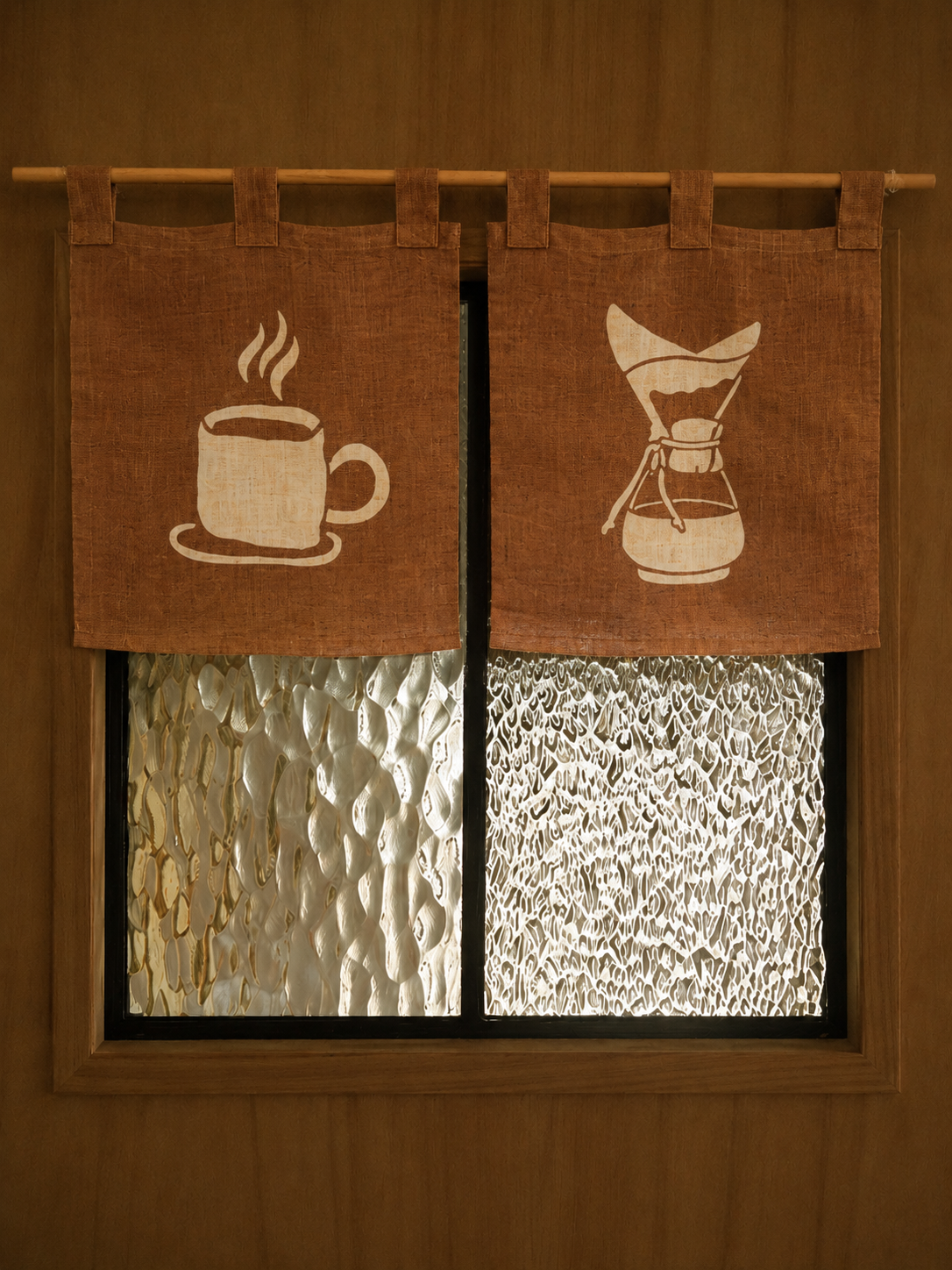
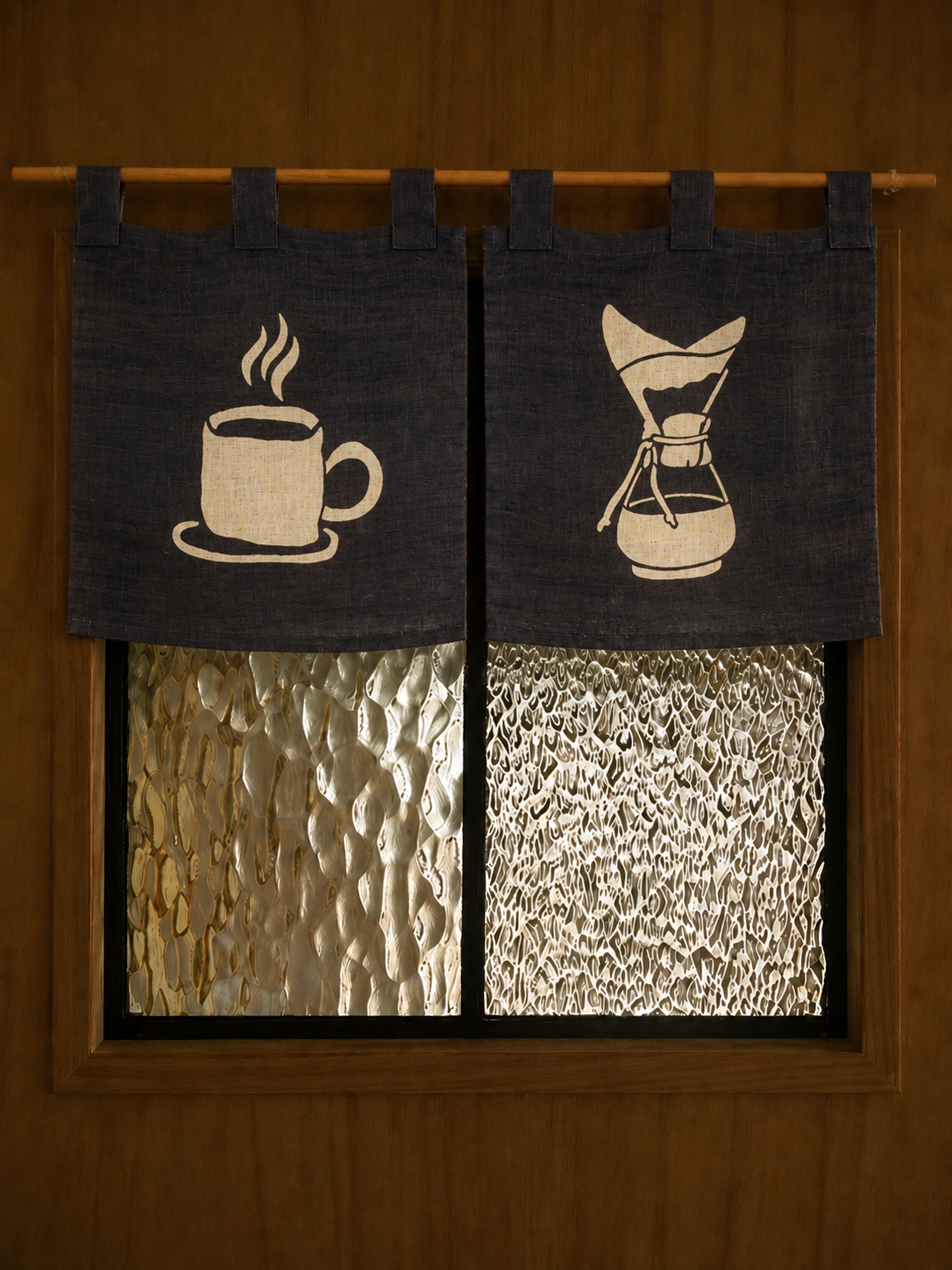
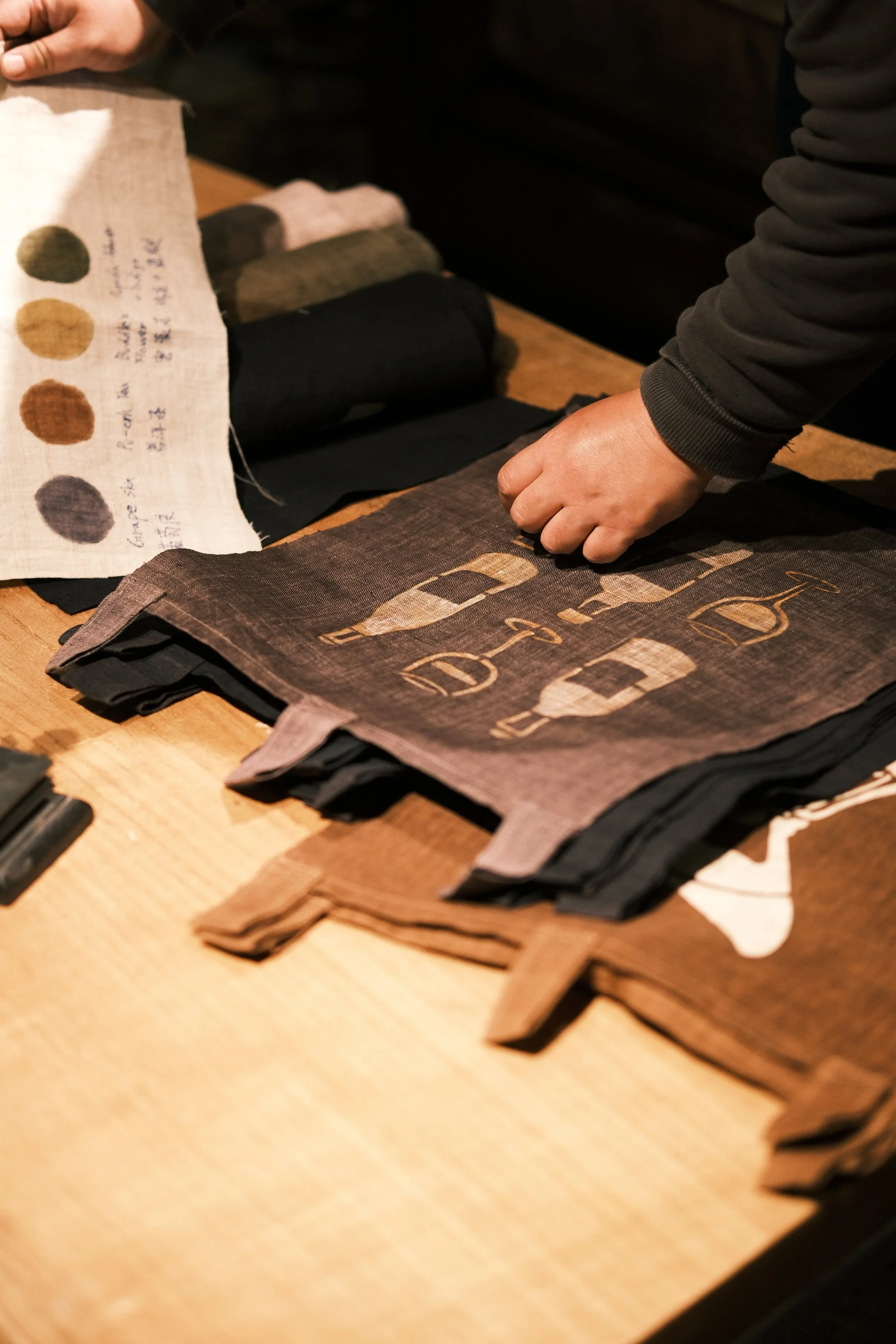
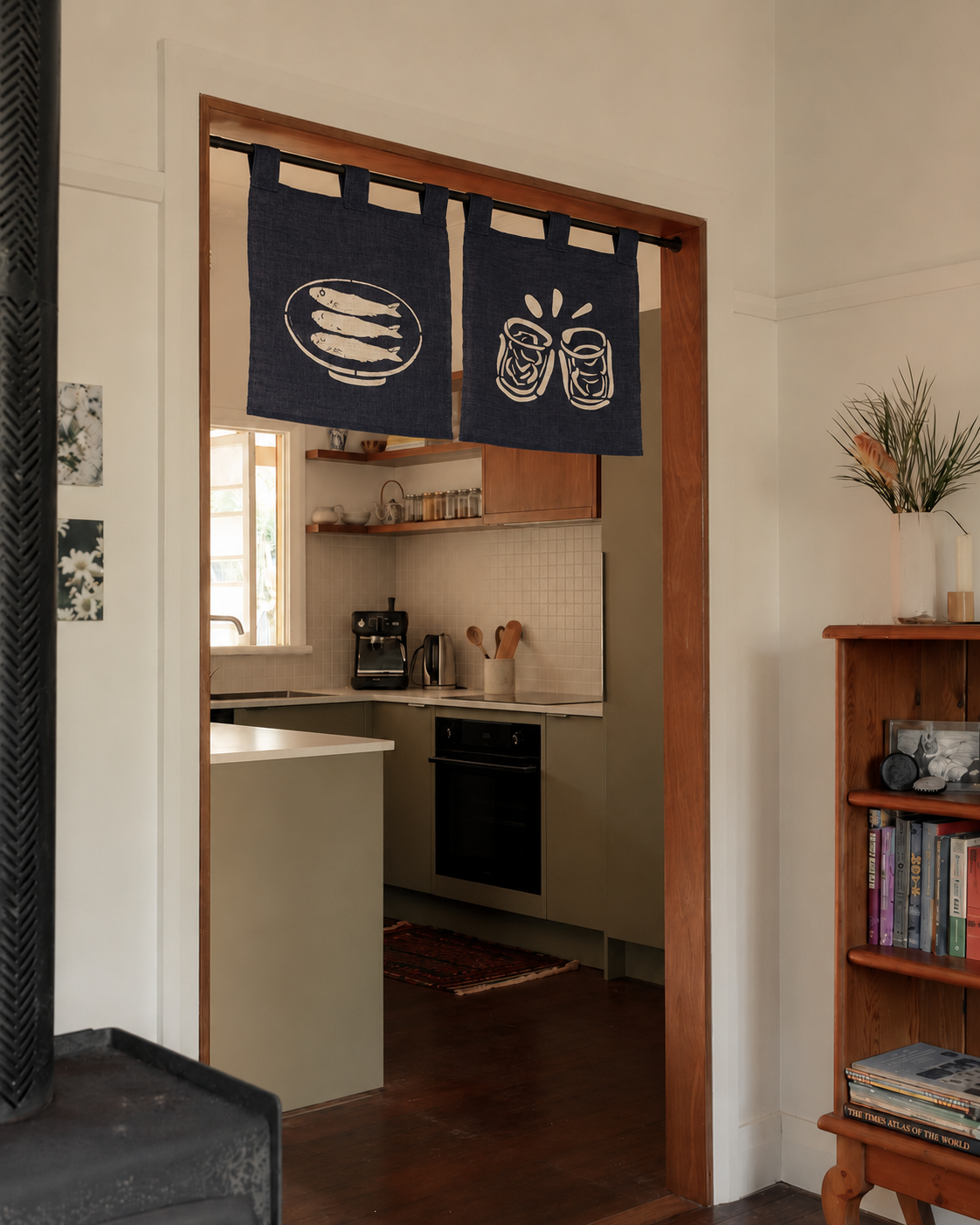
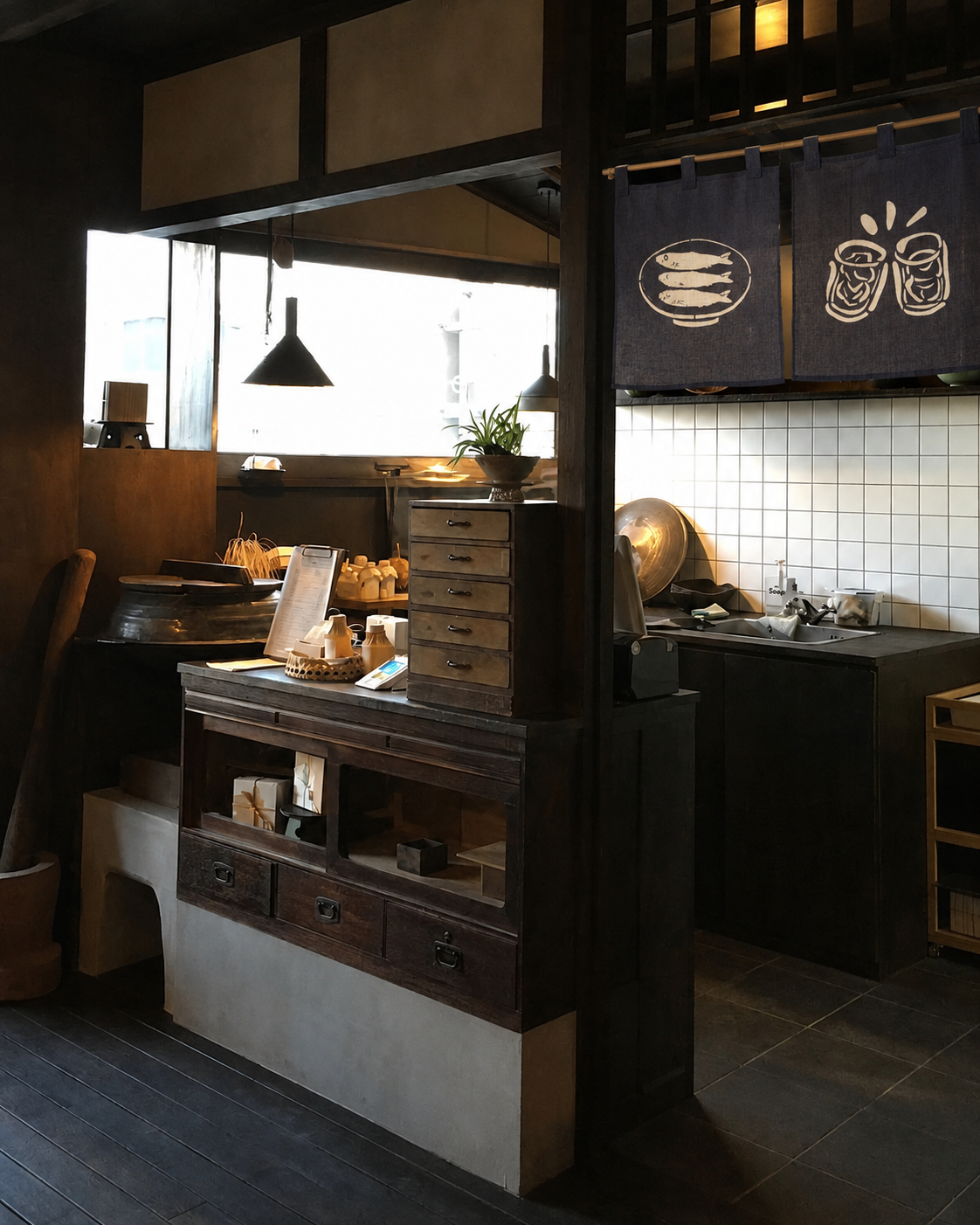
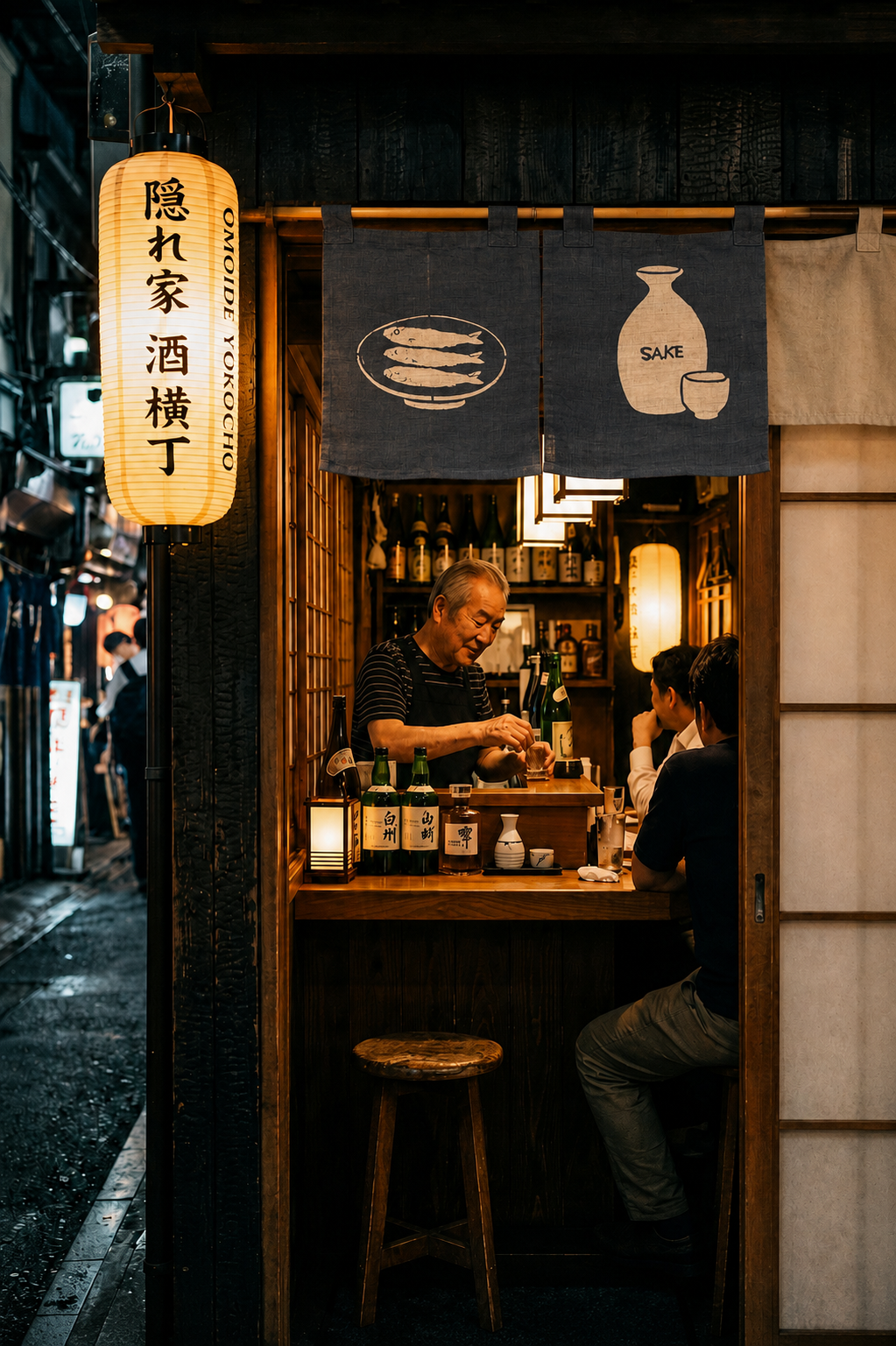
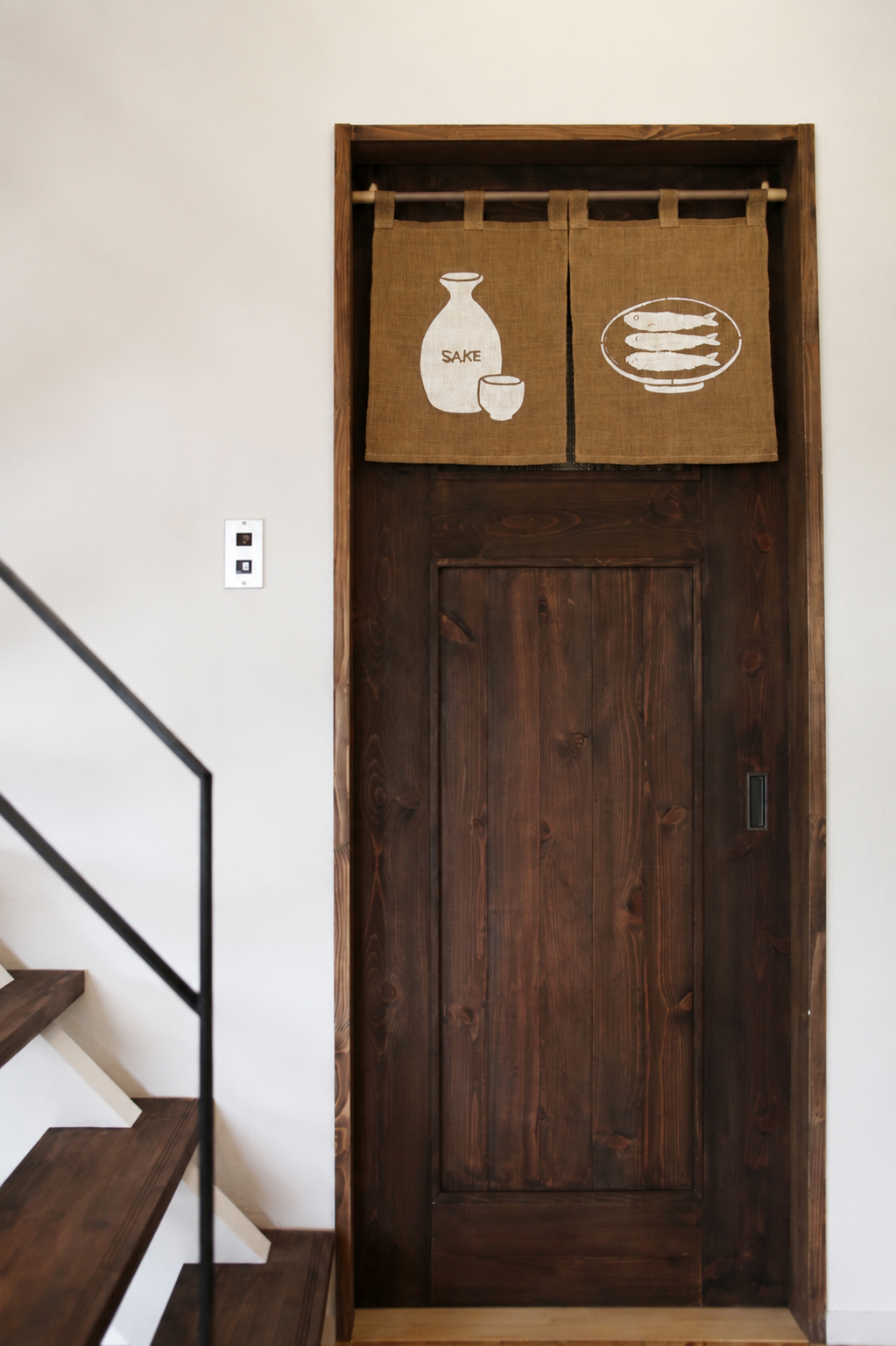
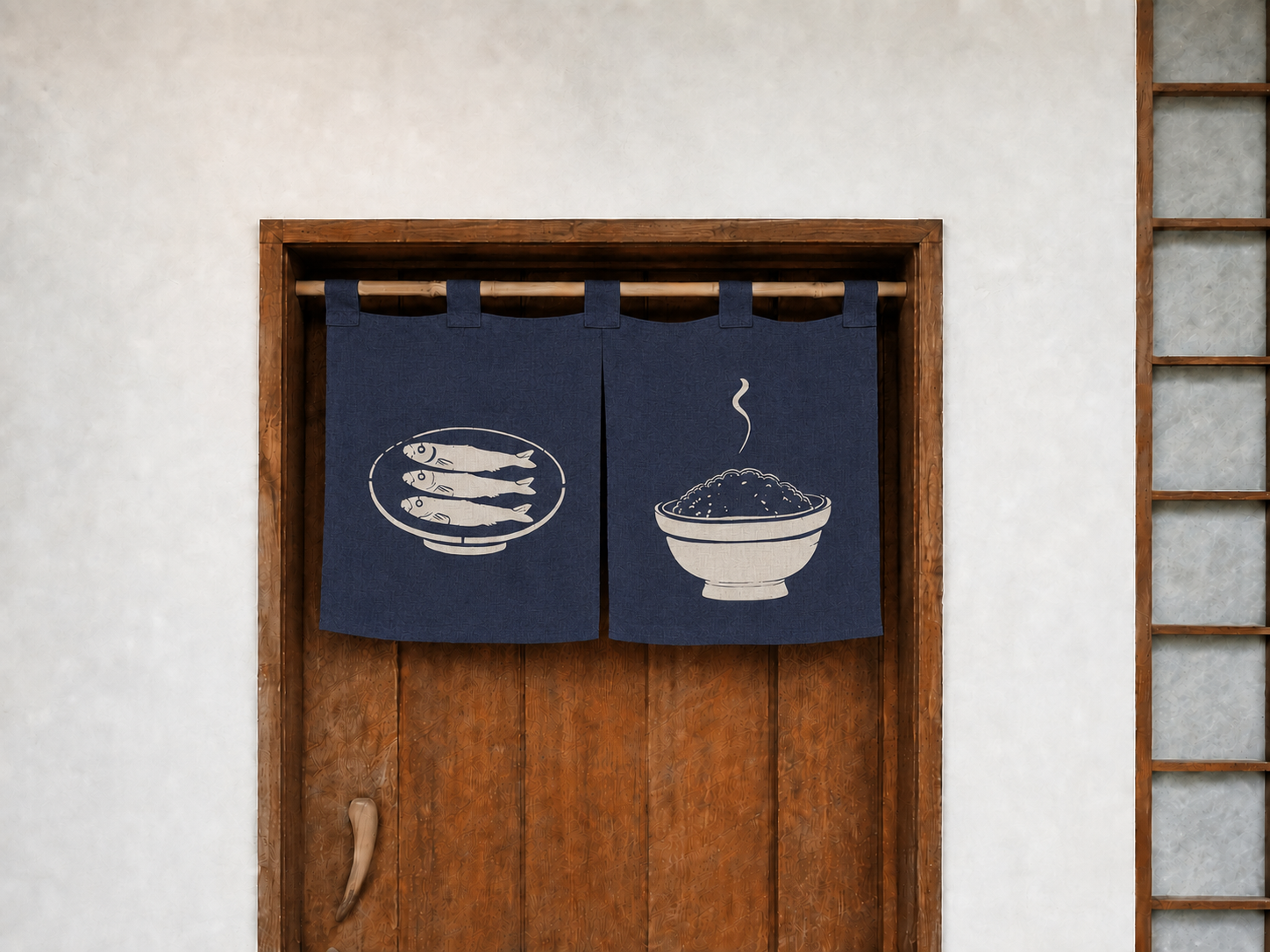
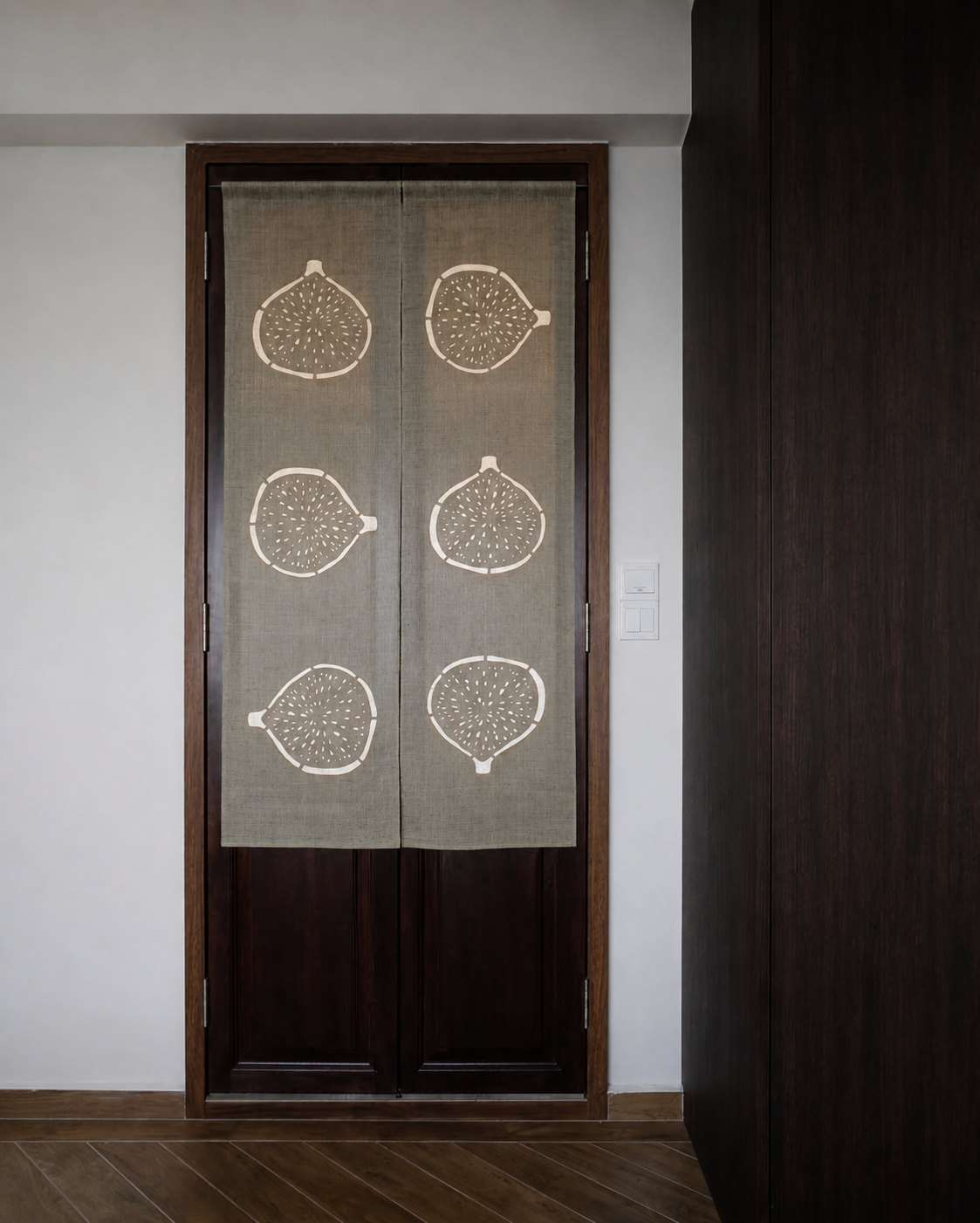
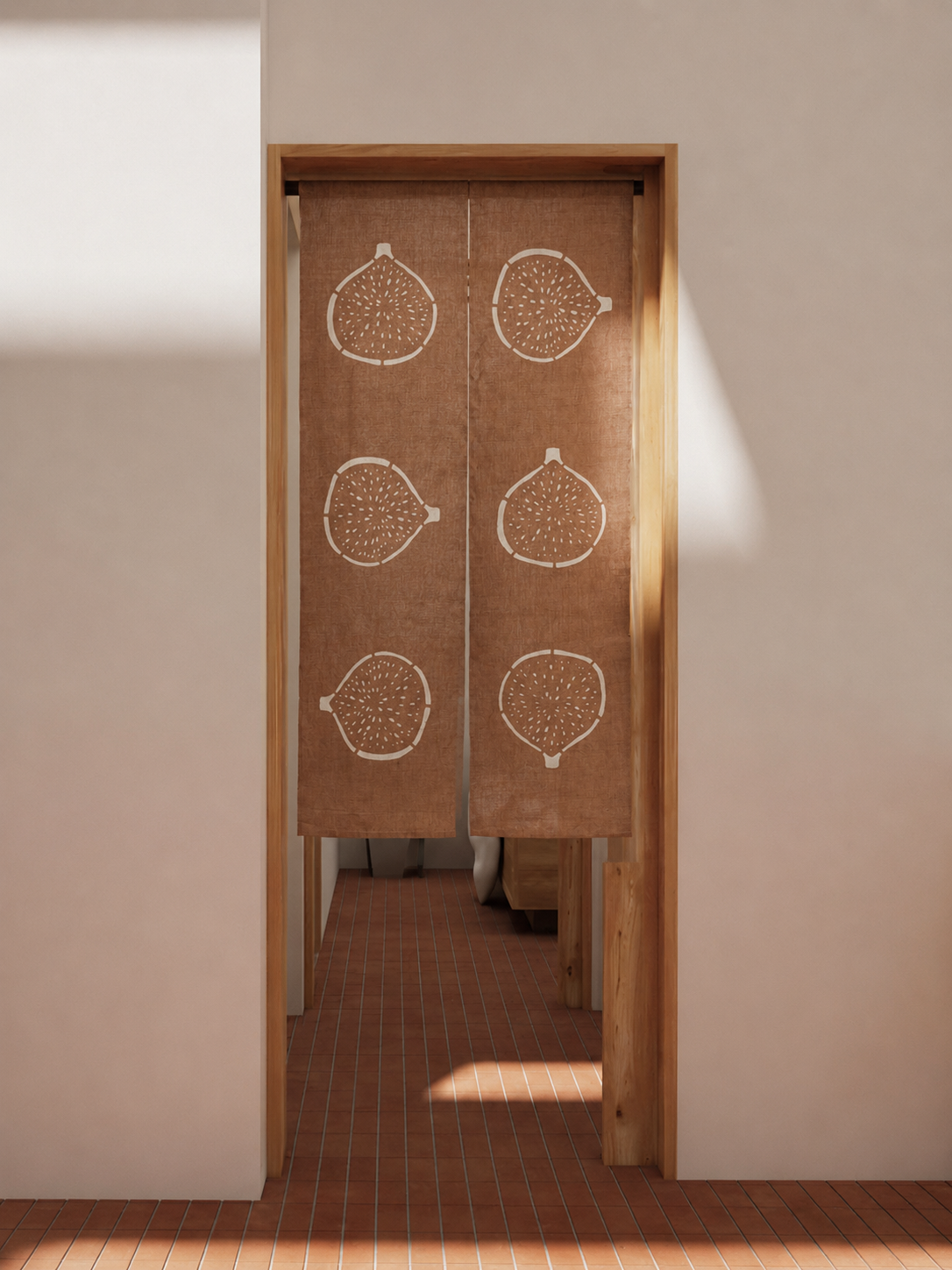
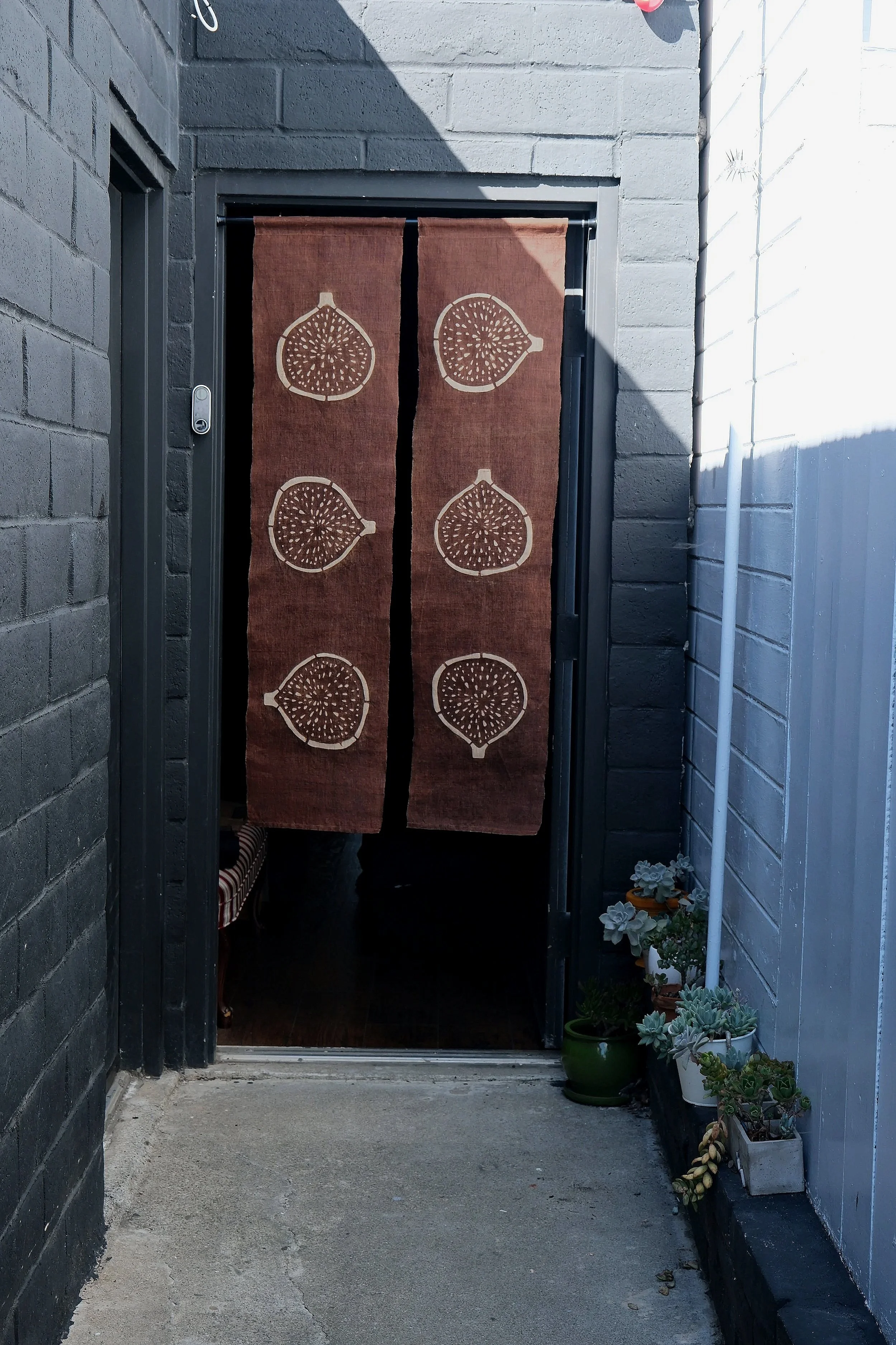
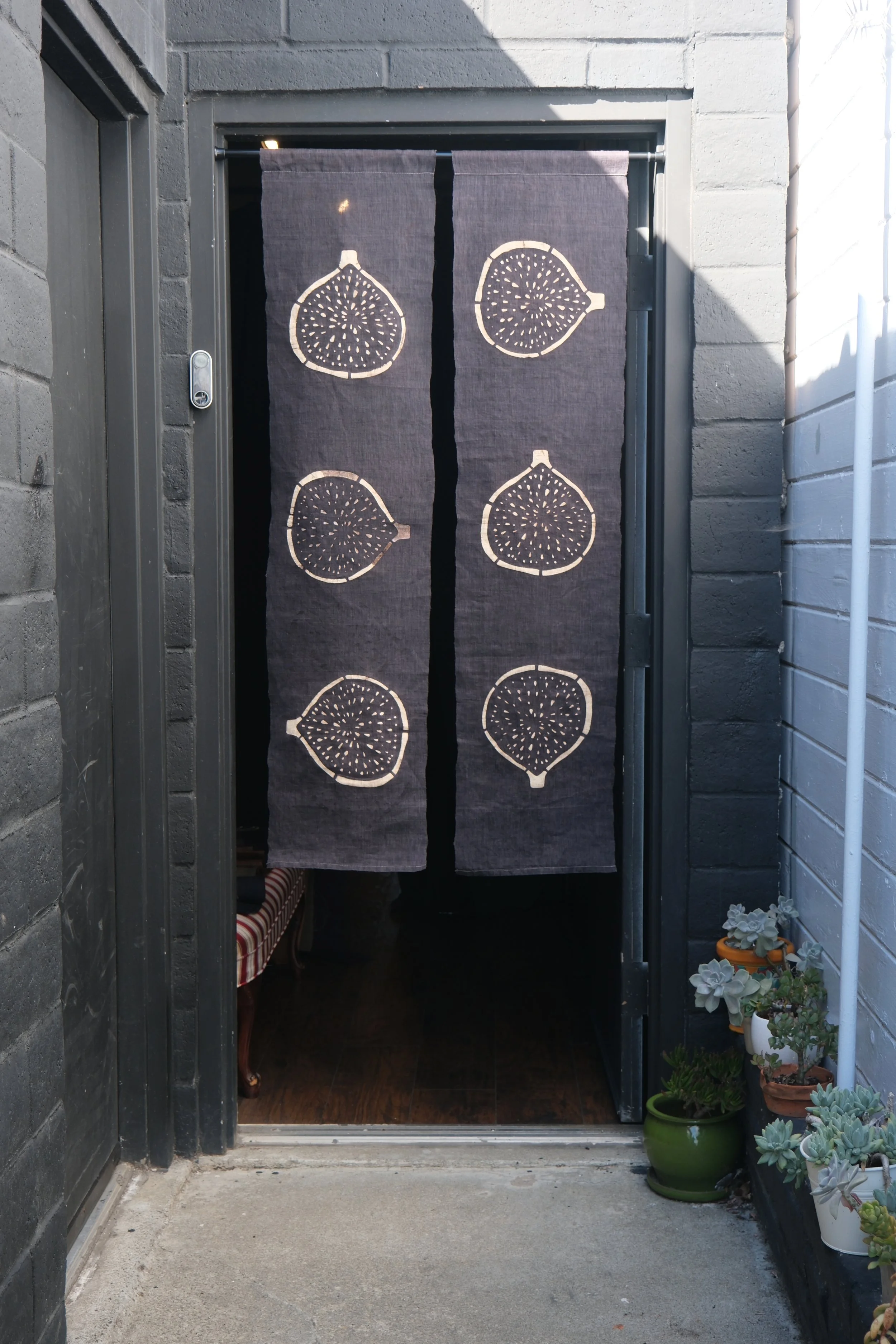
A handmade two-panel noren featuring a garlic motif on handwoven natural ramie.
Inspired by the familiar ingredients and quiet rituals of the kitchen, the repeated garlic form brings a warm, graphic character to a doorway. It works especially well in kitchens, pantries, dining spaces, cafés, and other interiors shaped by food and everyday gathering.
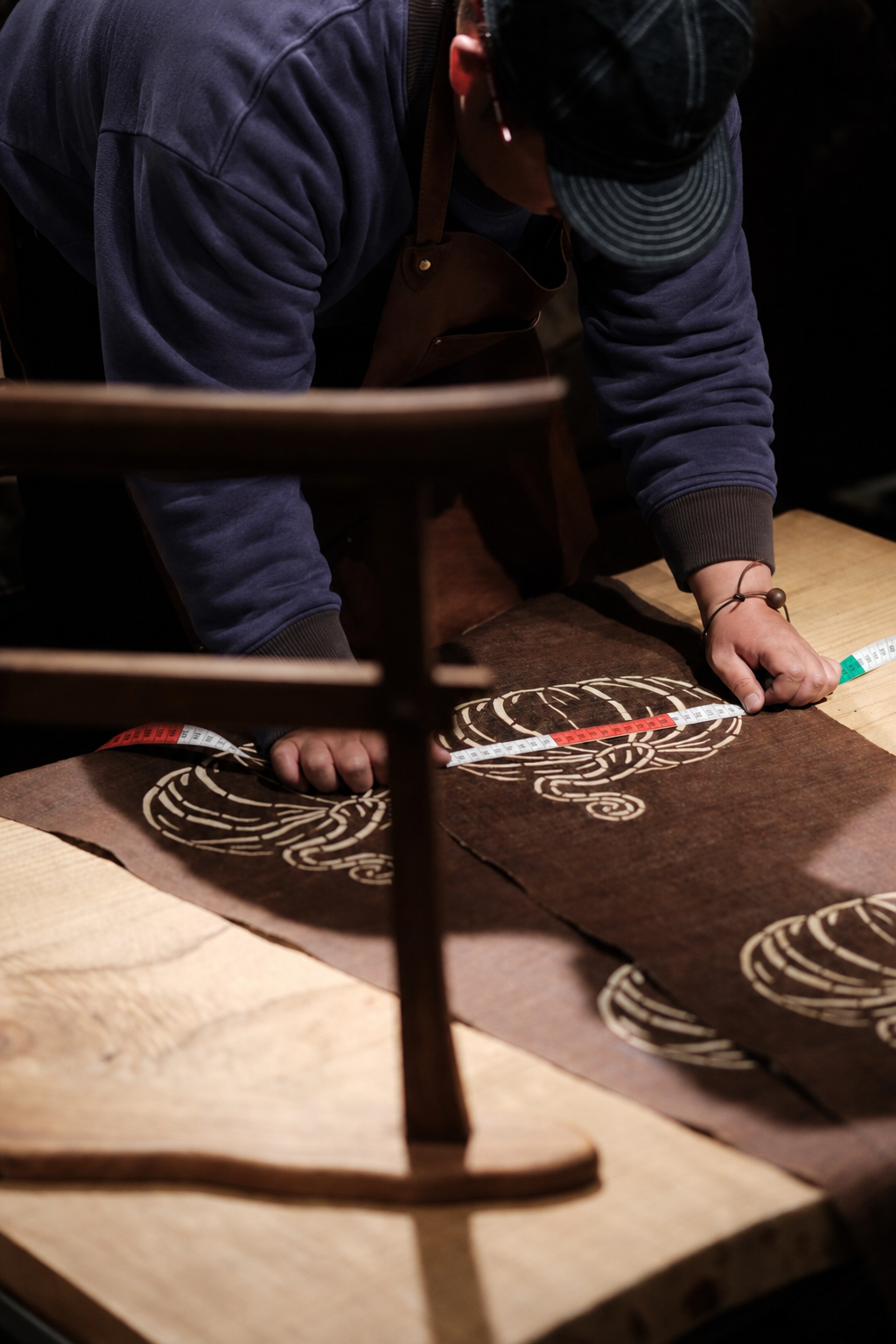
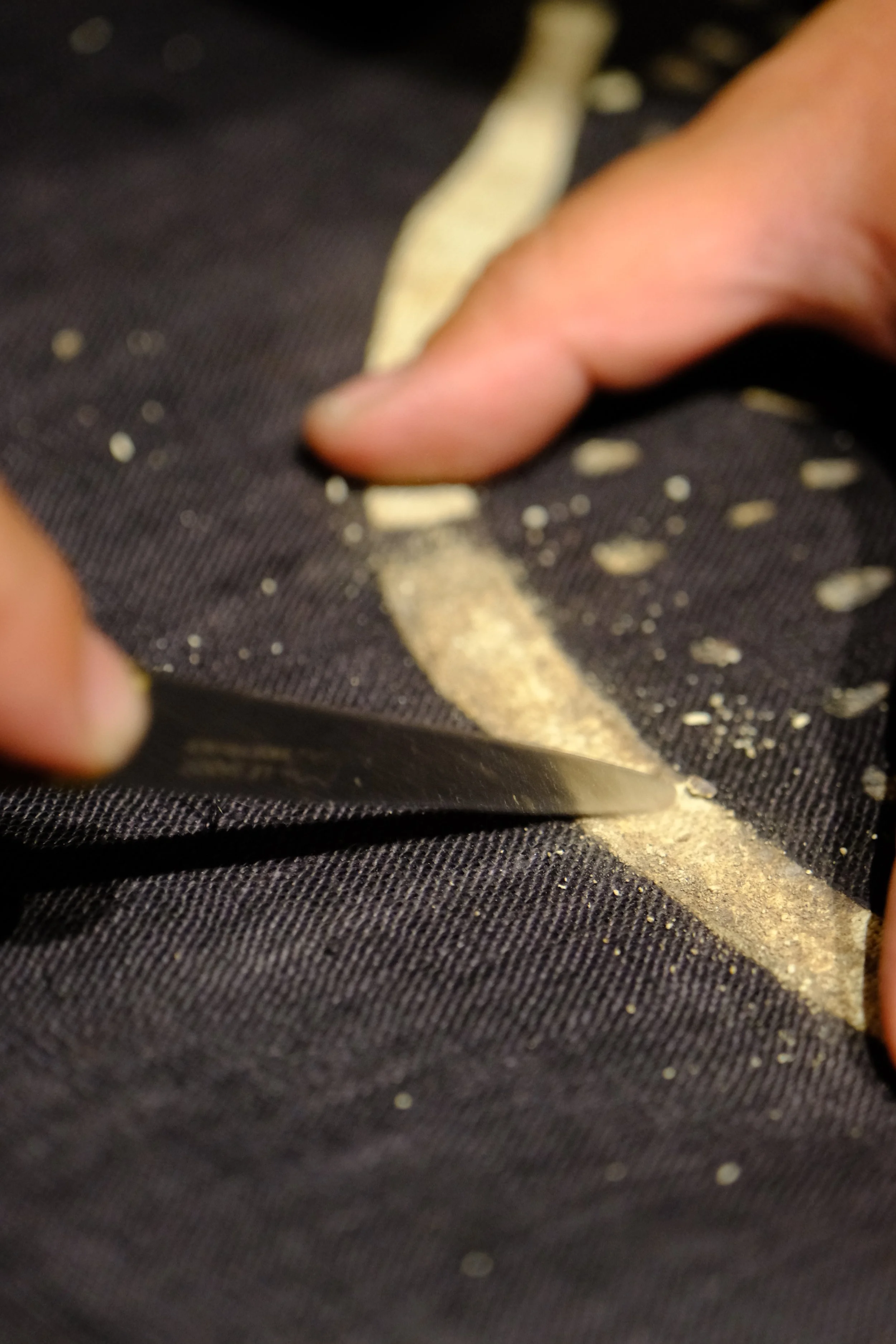
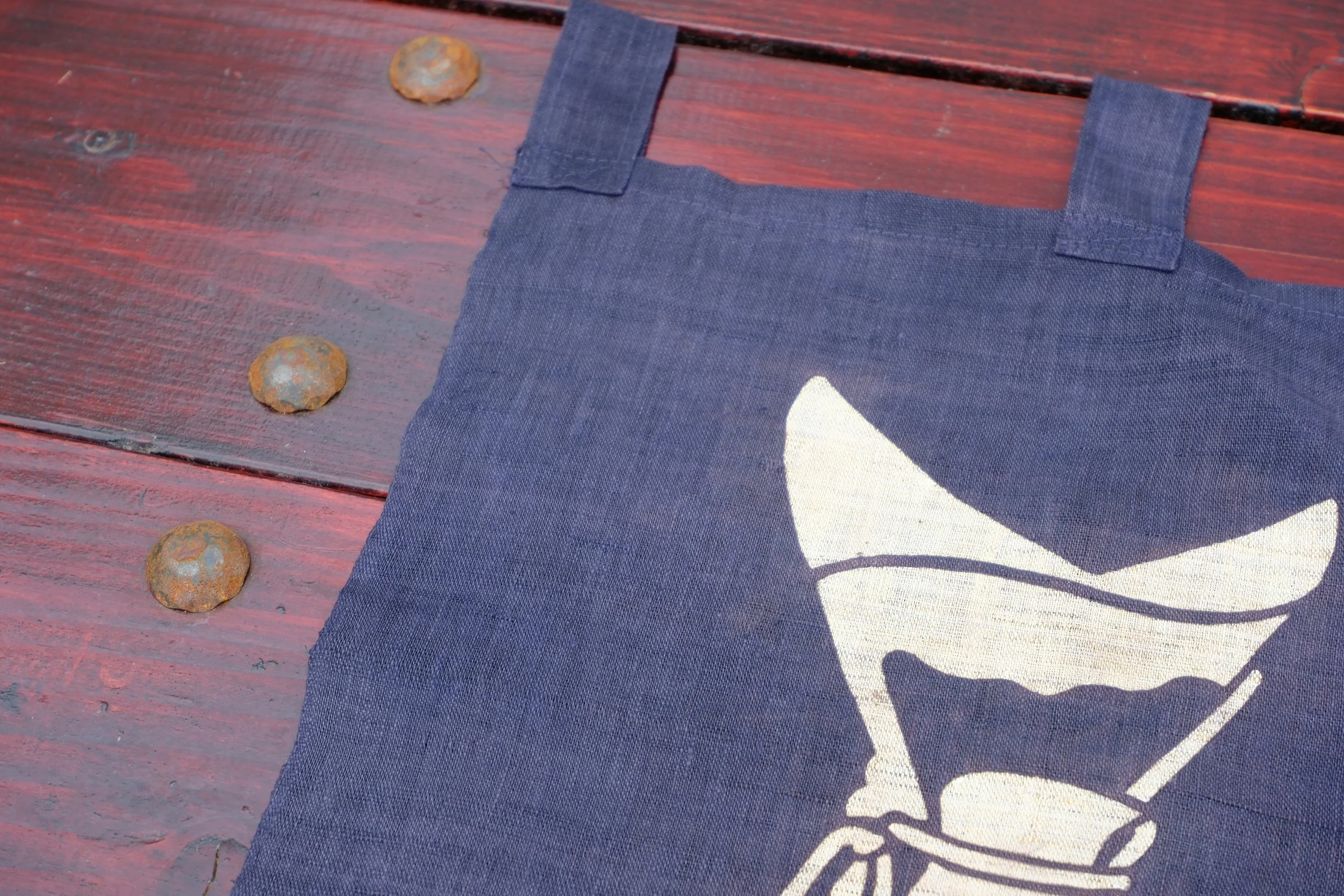
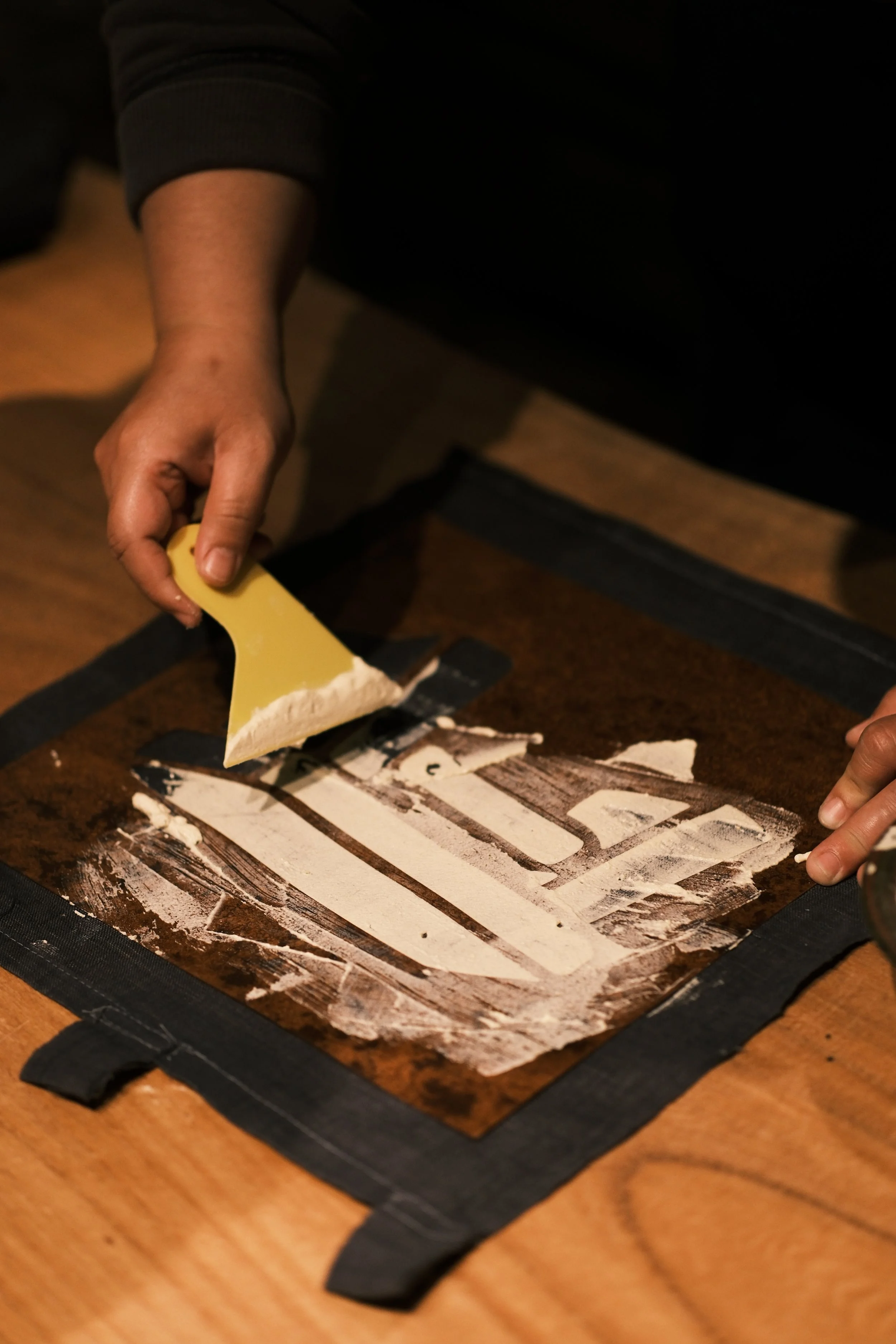
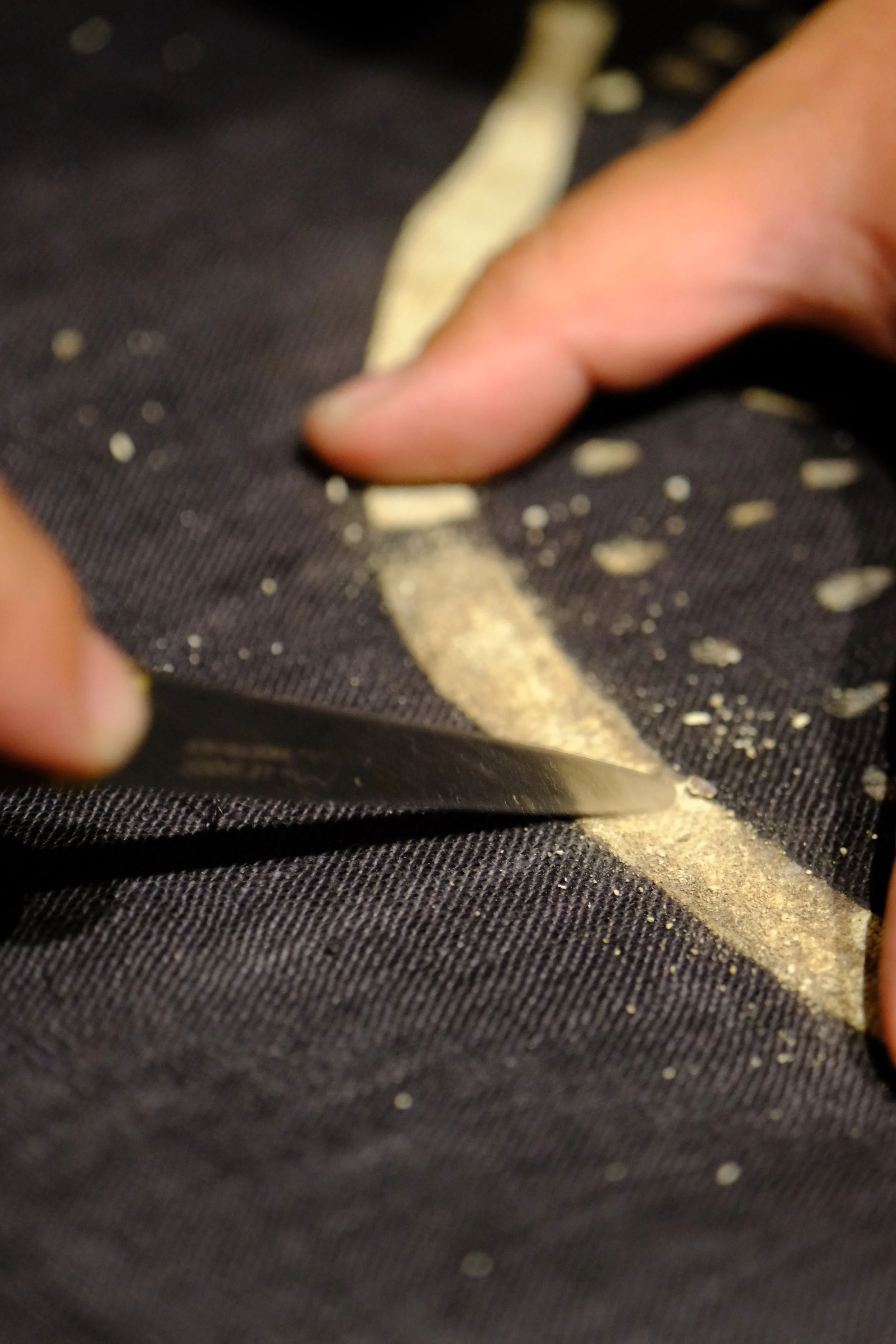
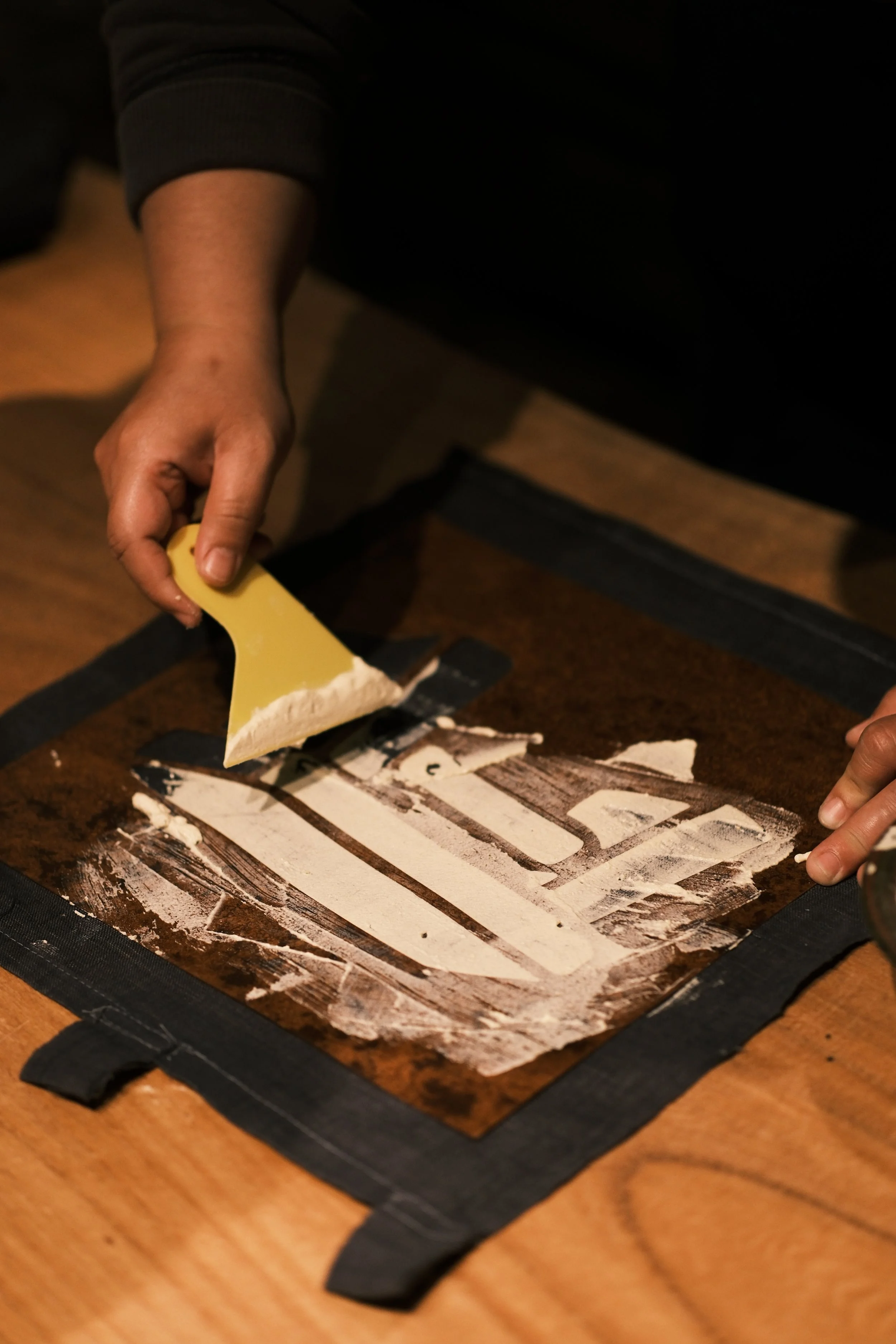
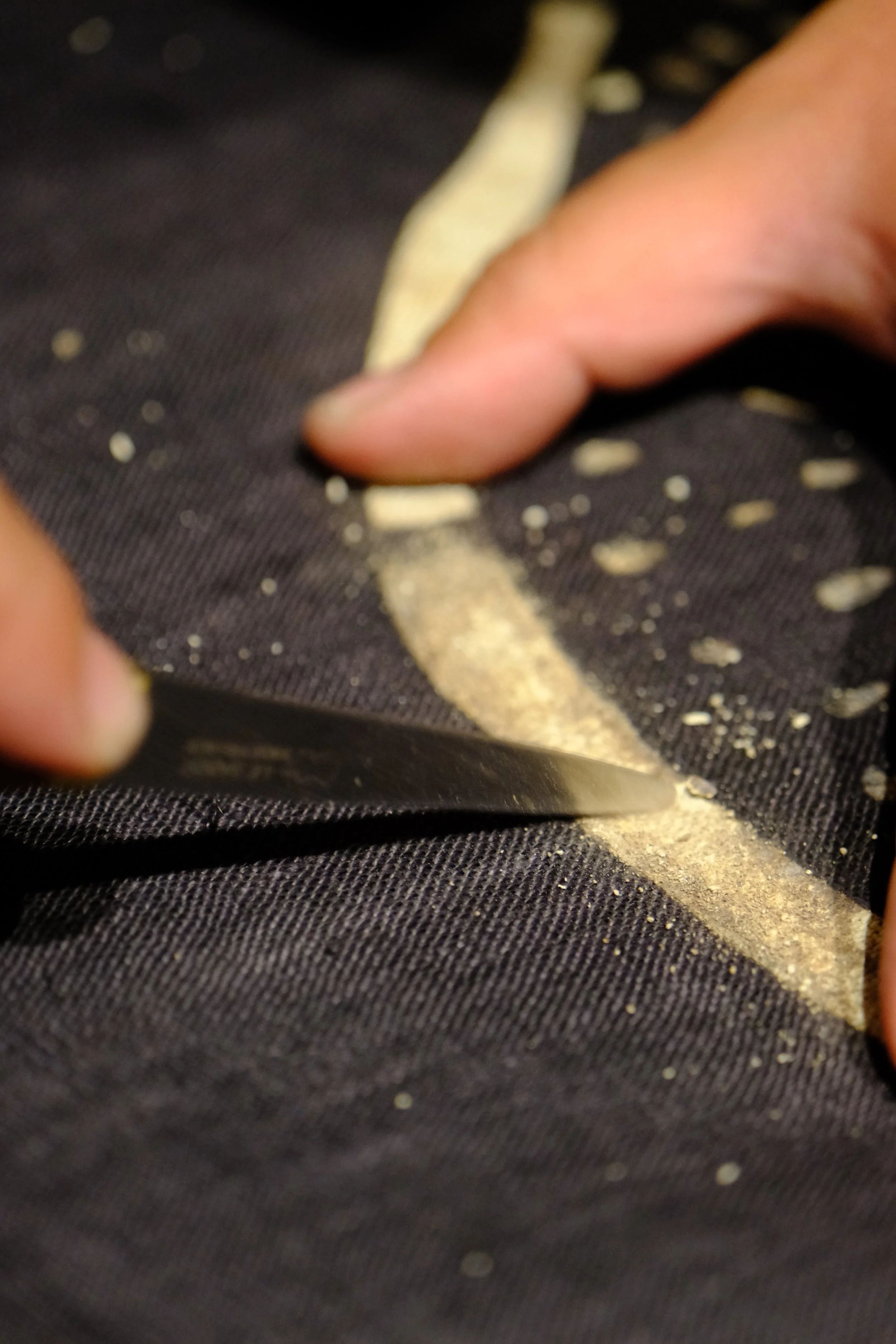
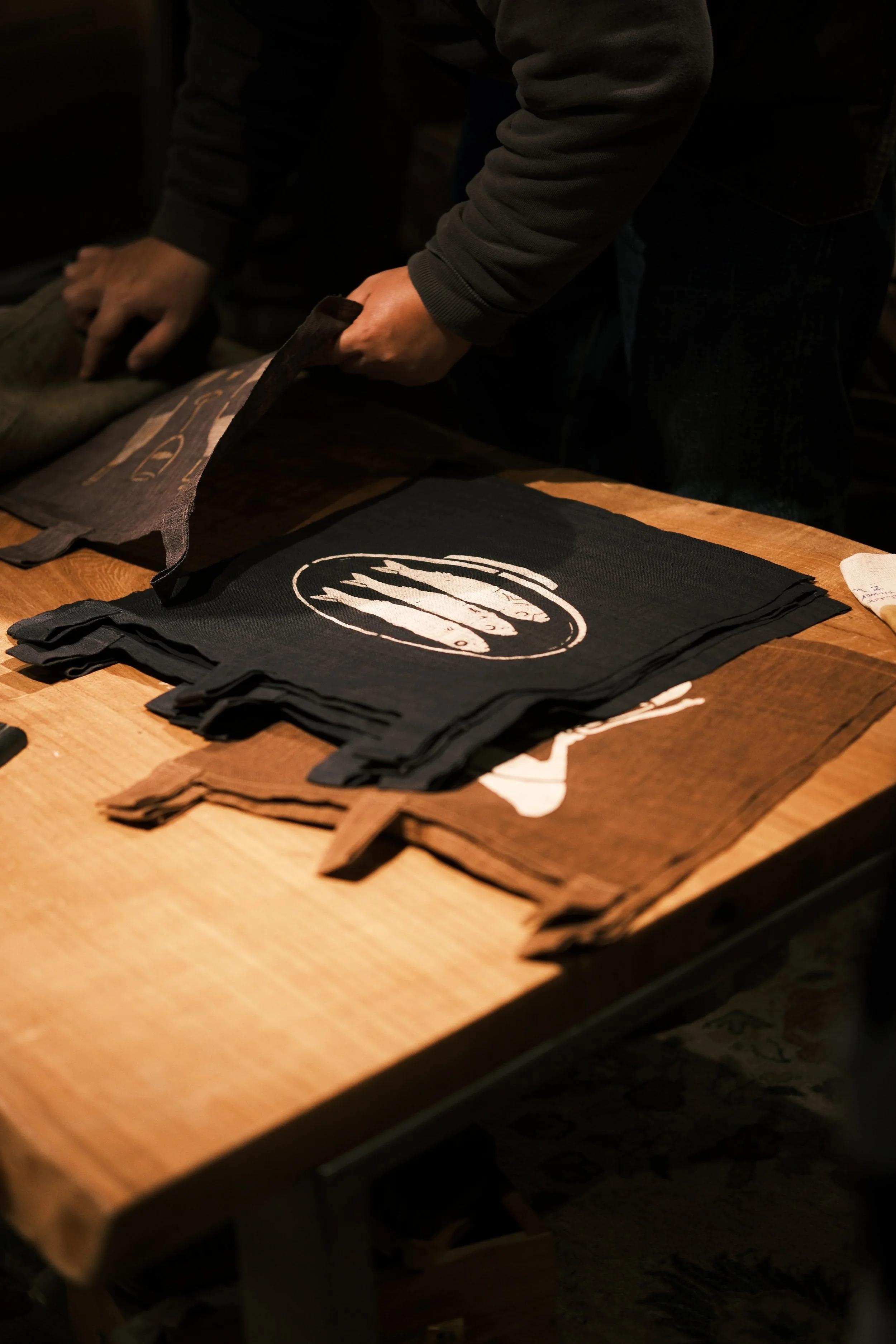
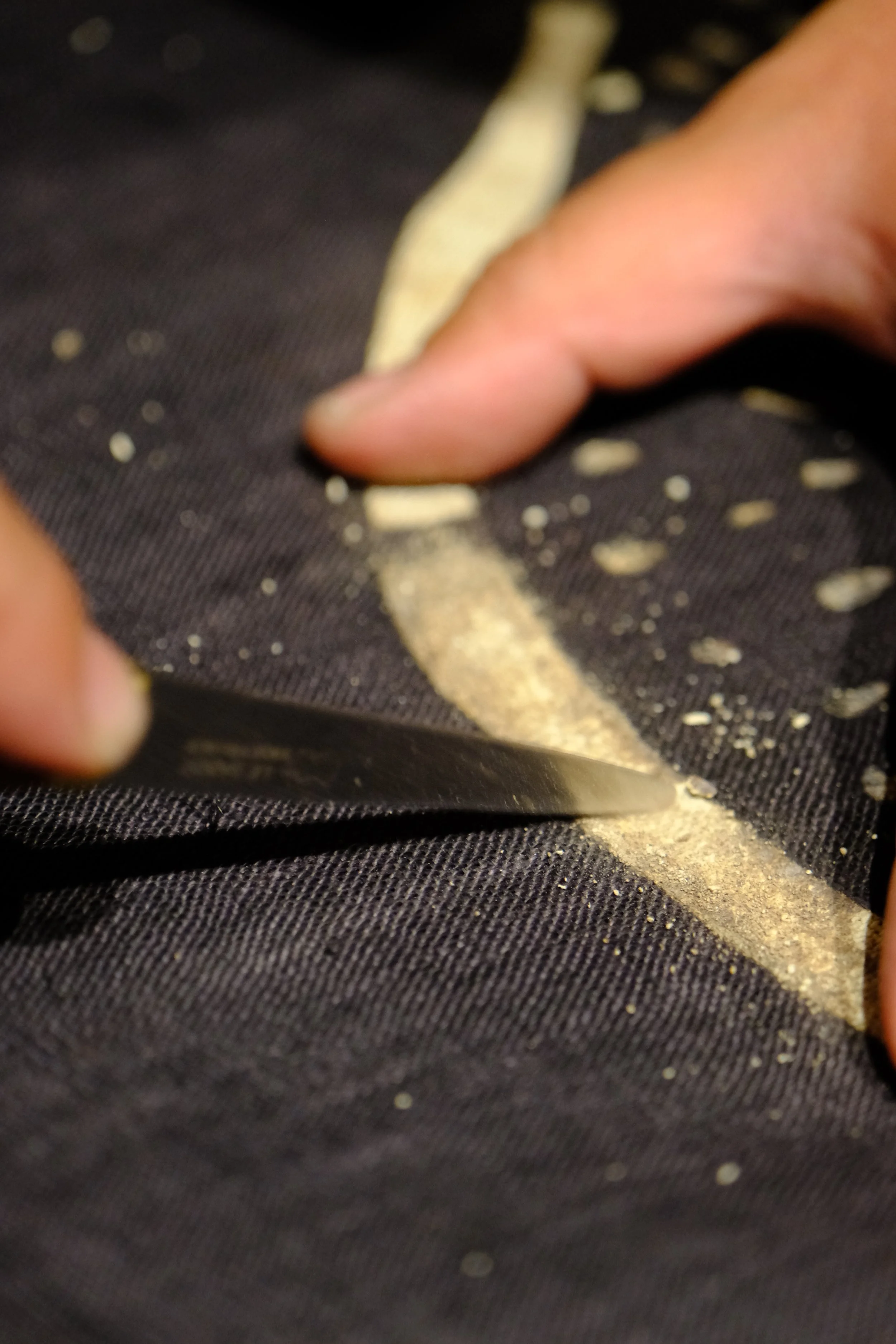
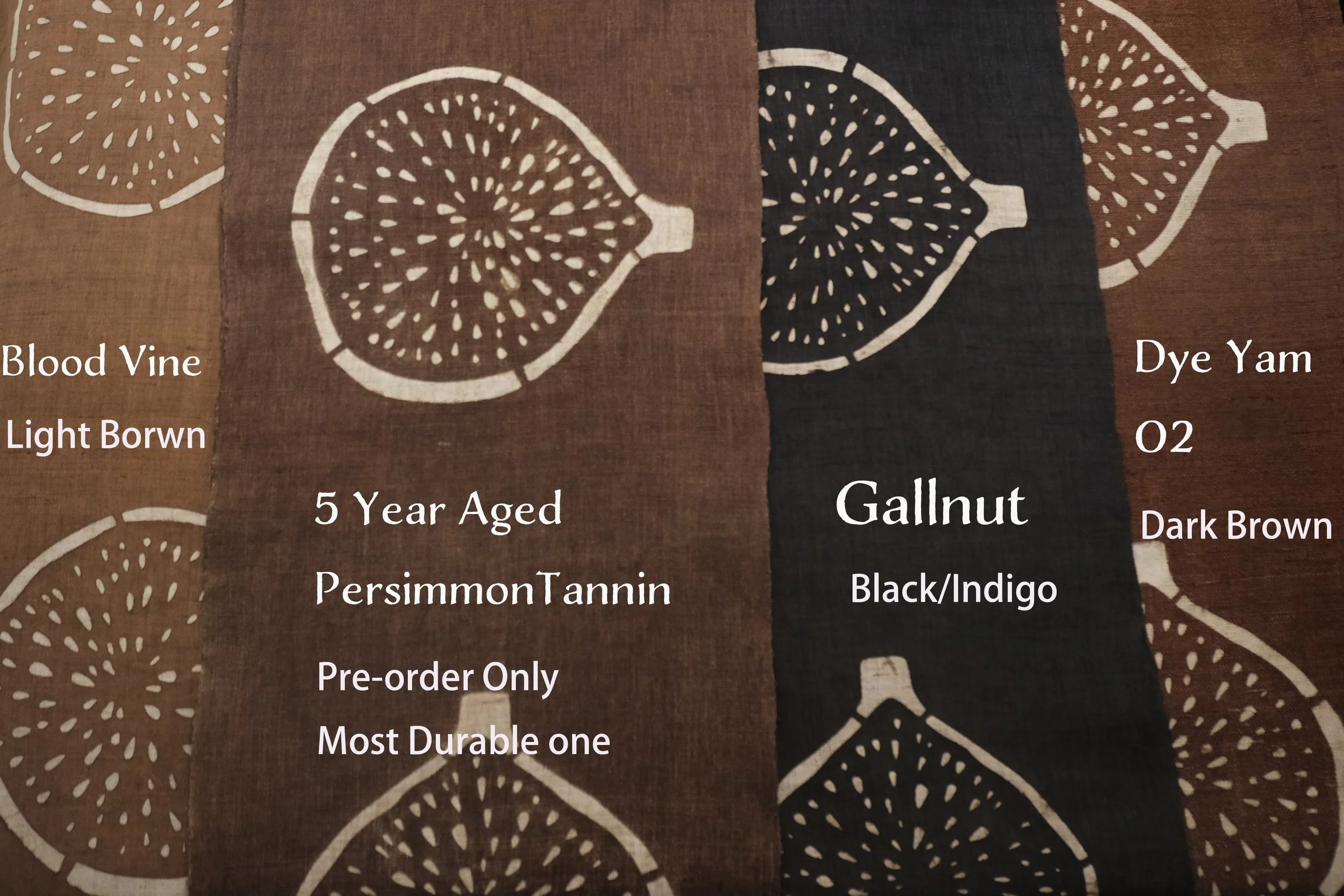
The motif is created through a traditional katazome paste-resist process. Resist paste protects selected areas of the cloth during dyeing, allowing the lighter natural tone and woven texture of the ramie to remain visible against the plant-dyed background.
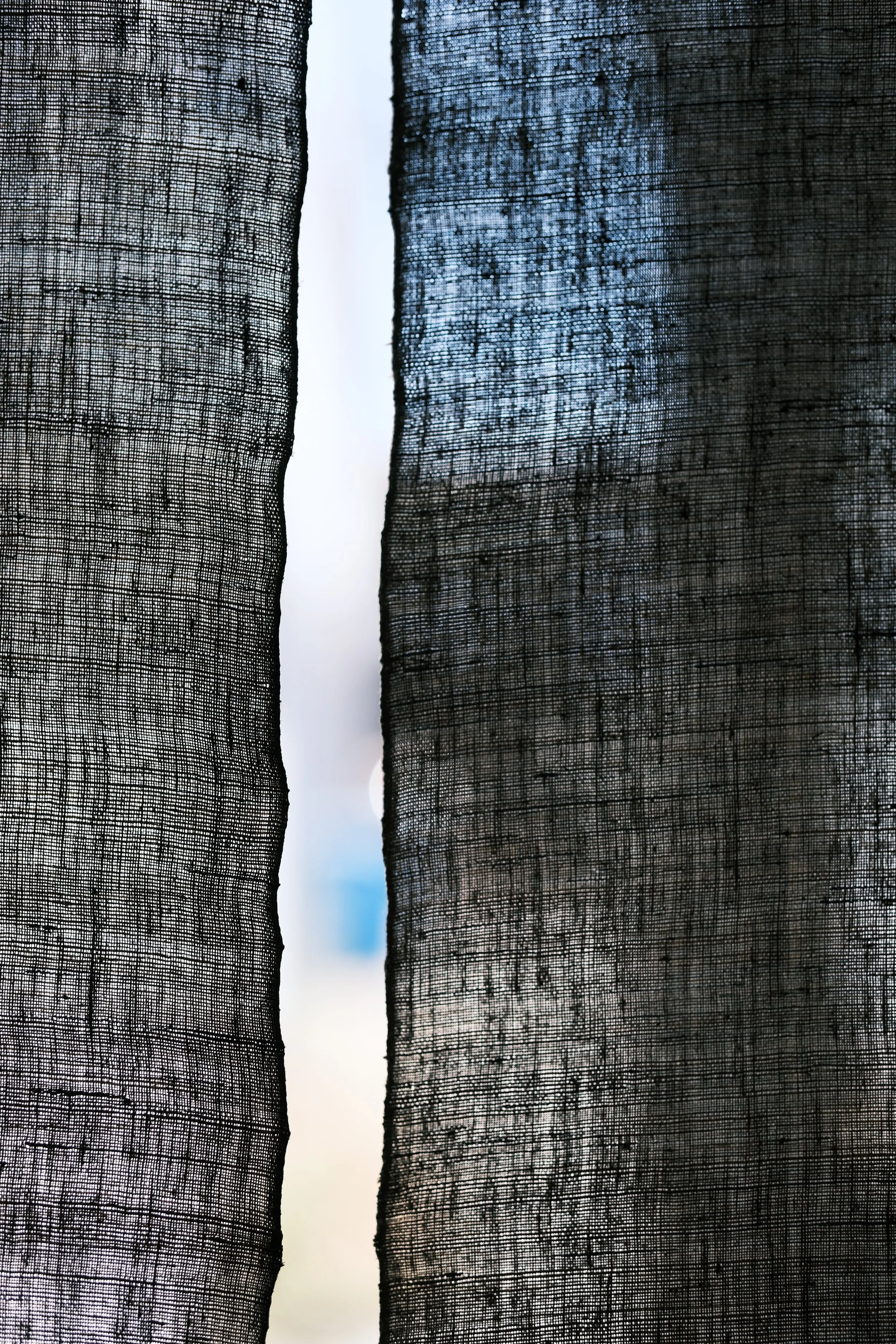
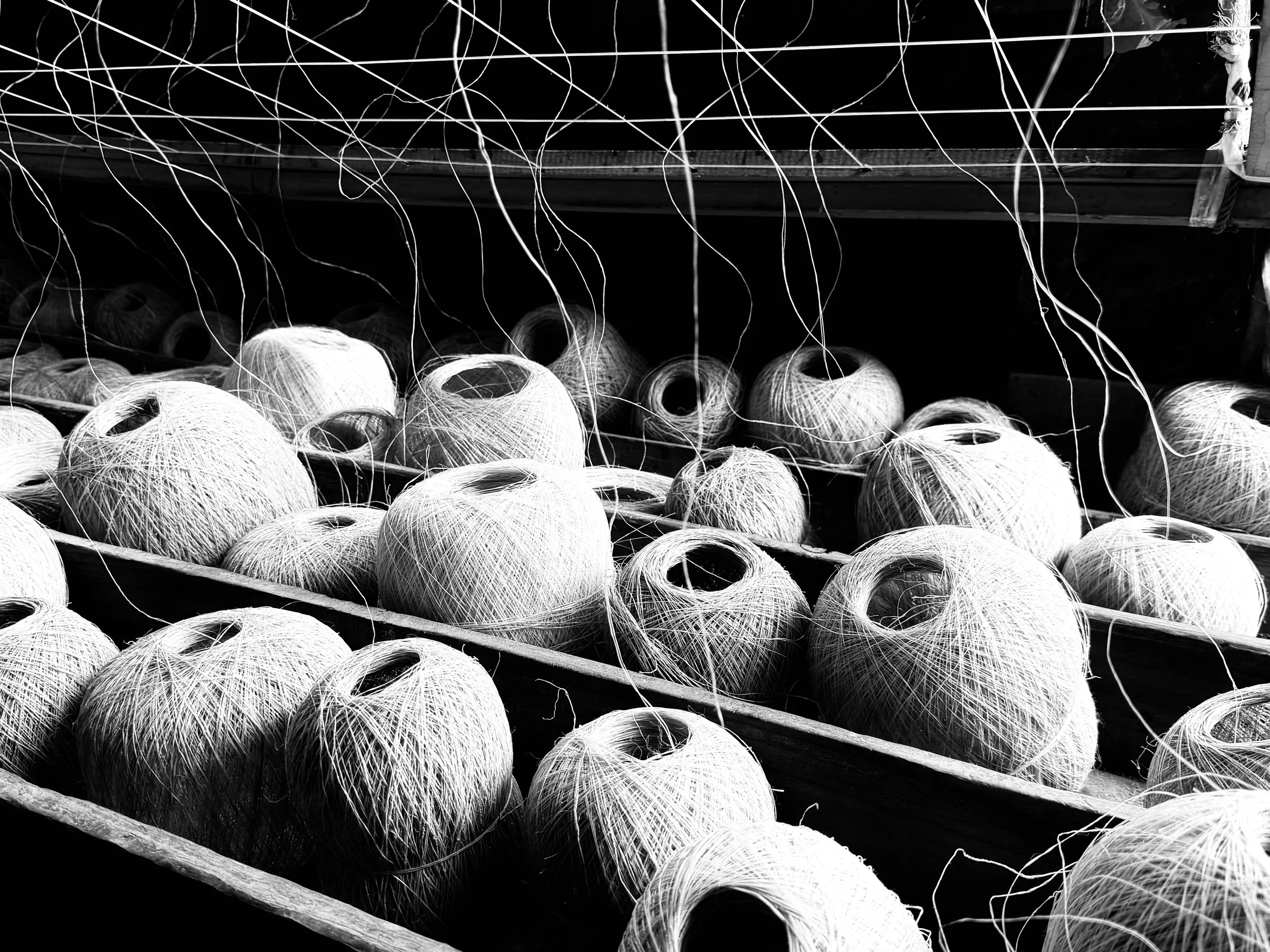
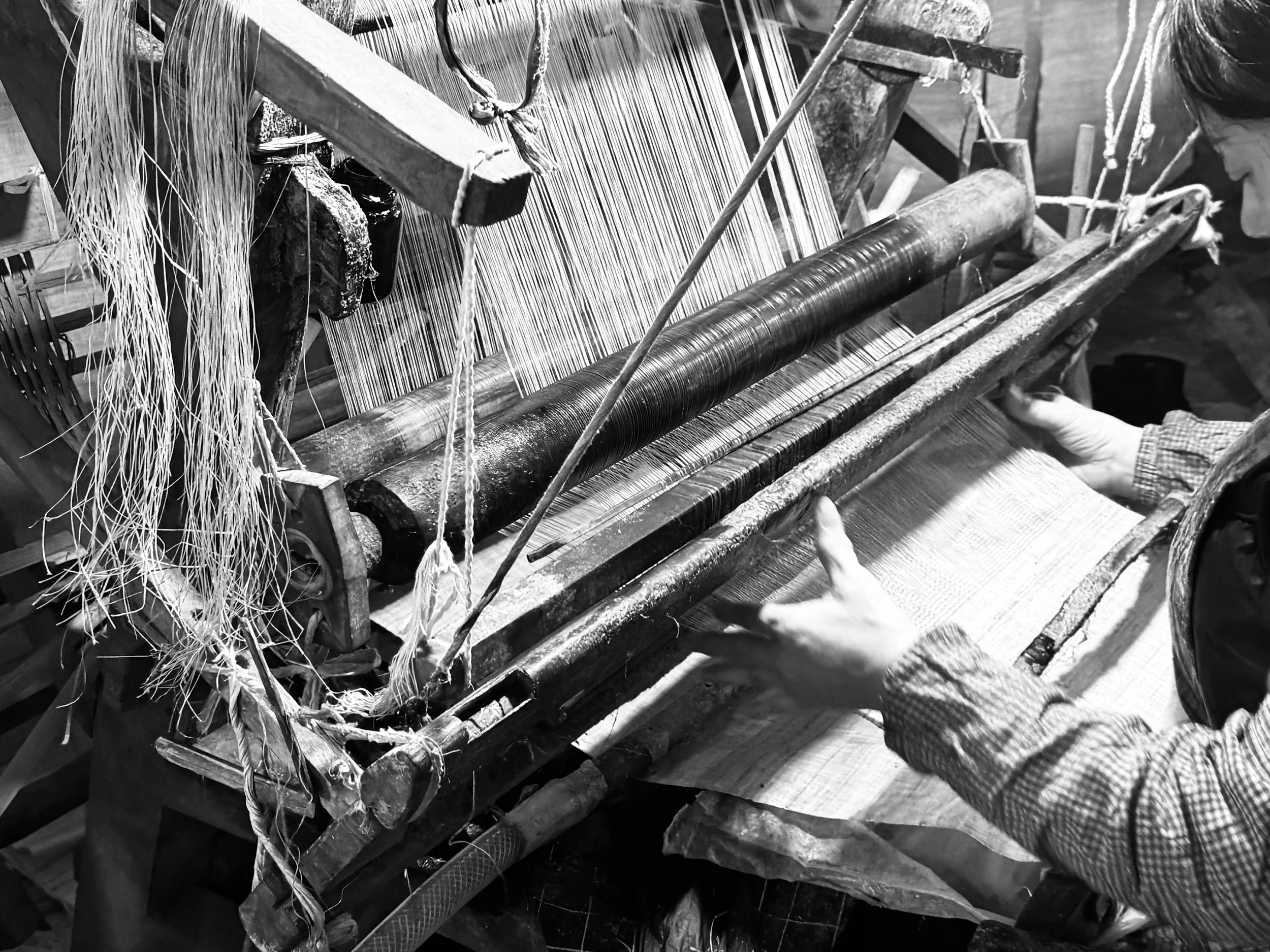
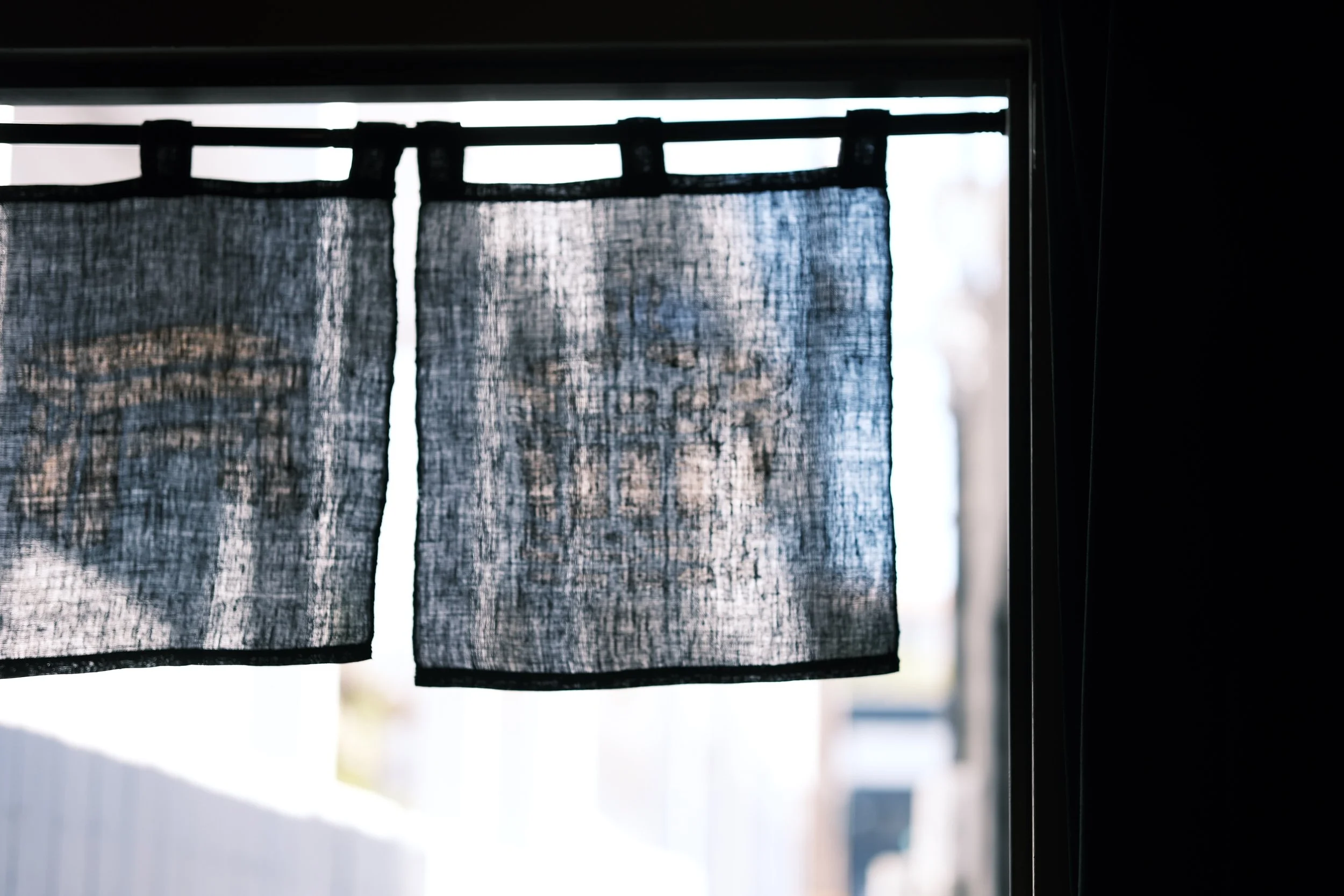
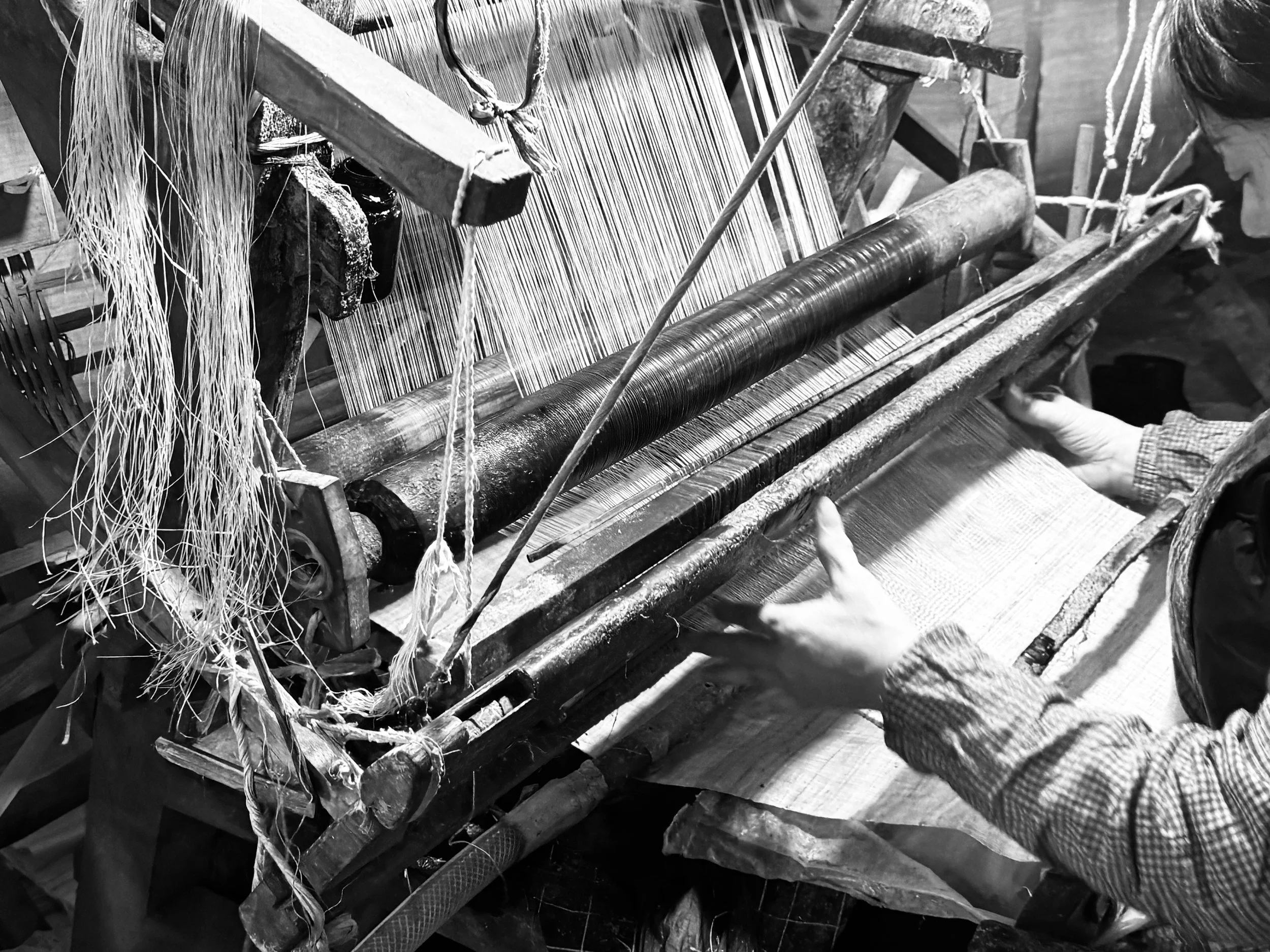
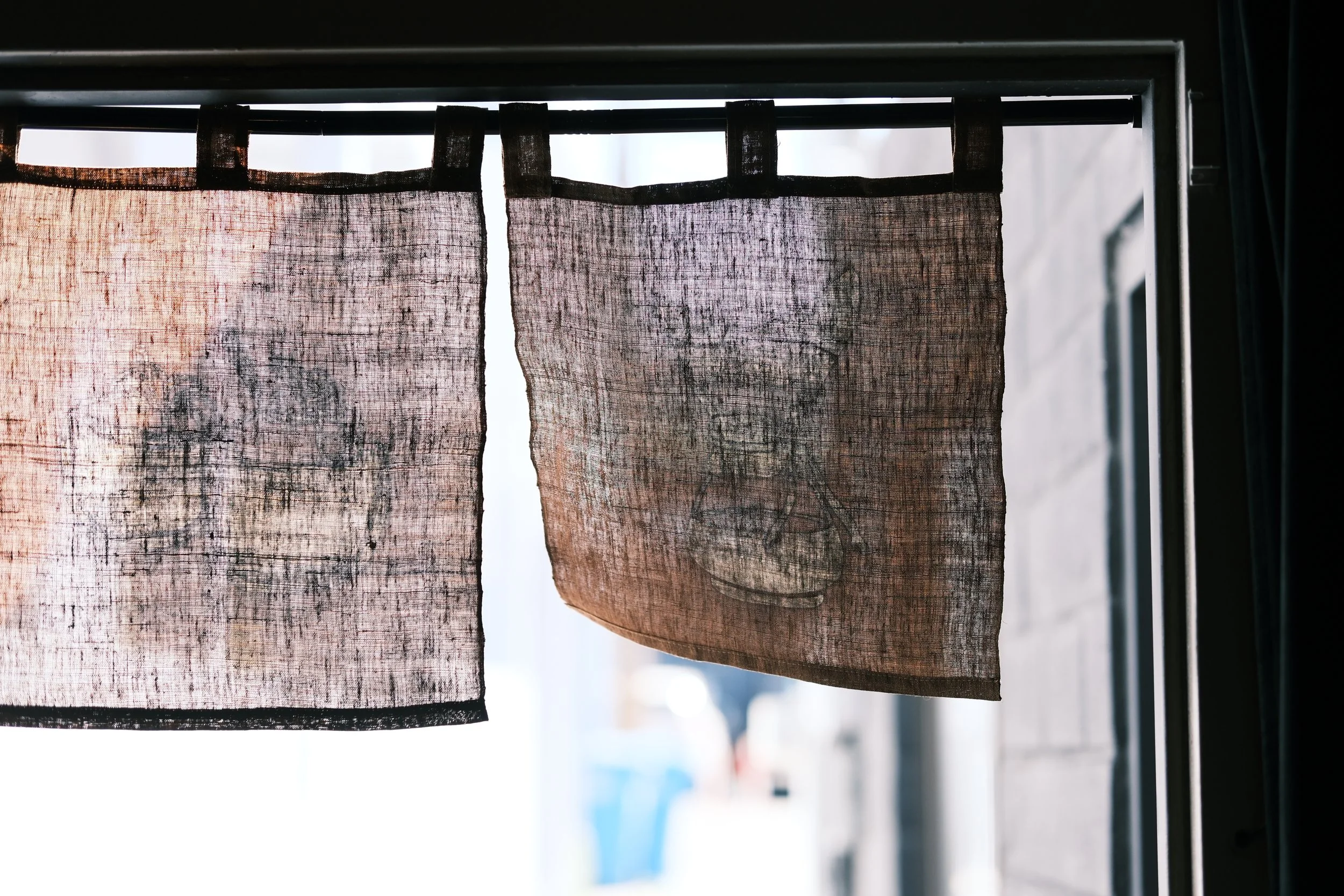
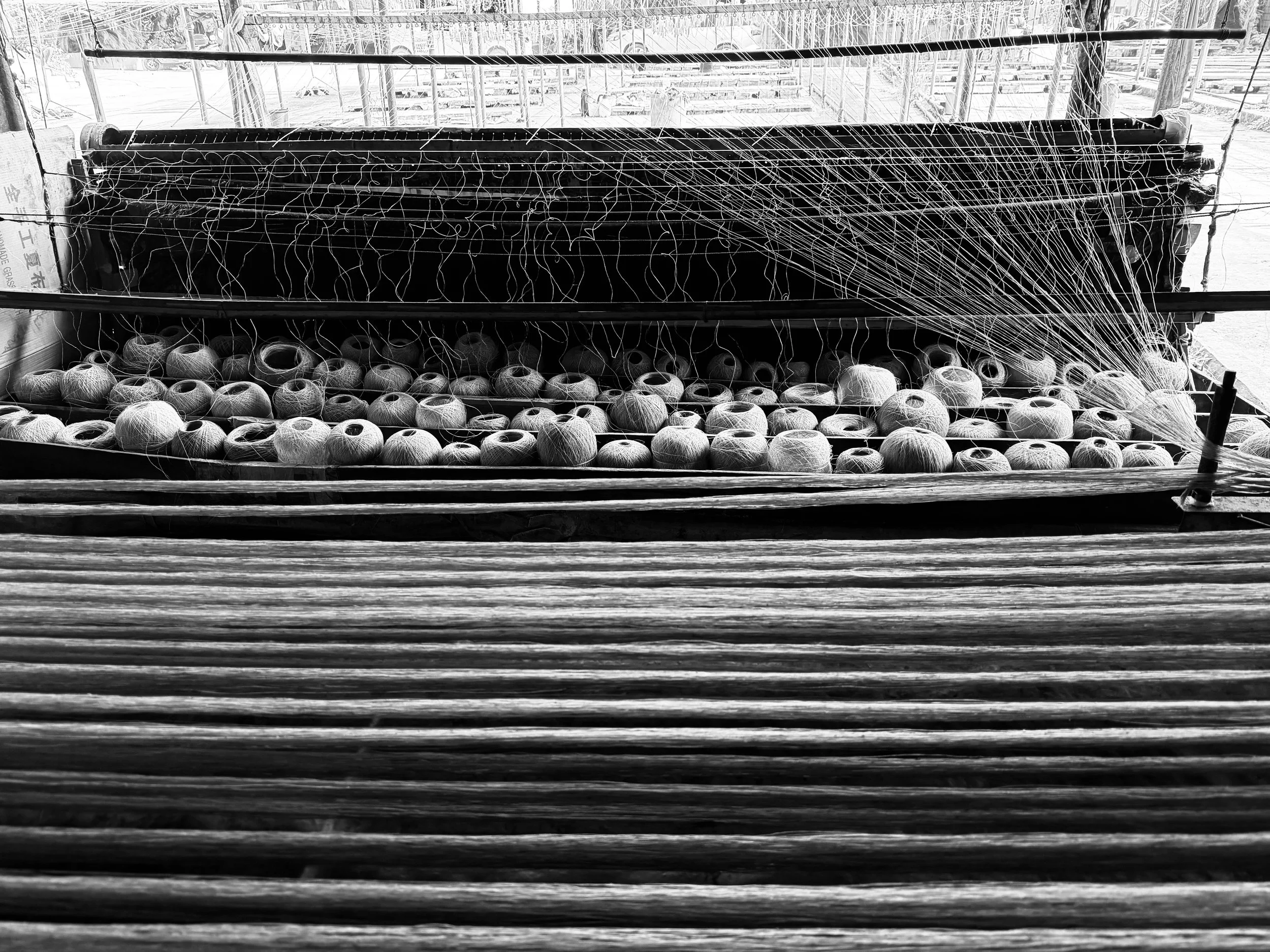
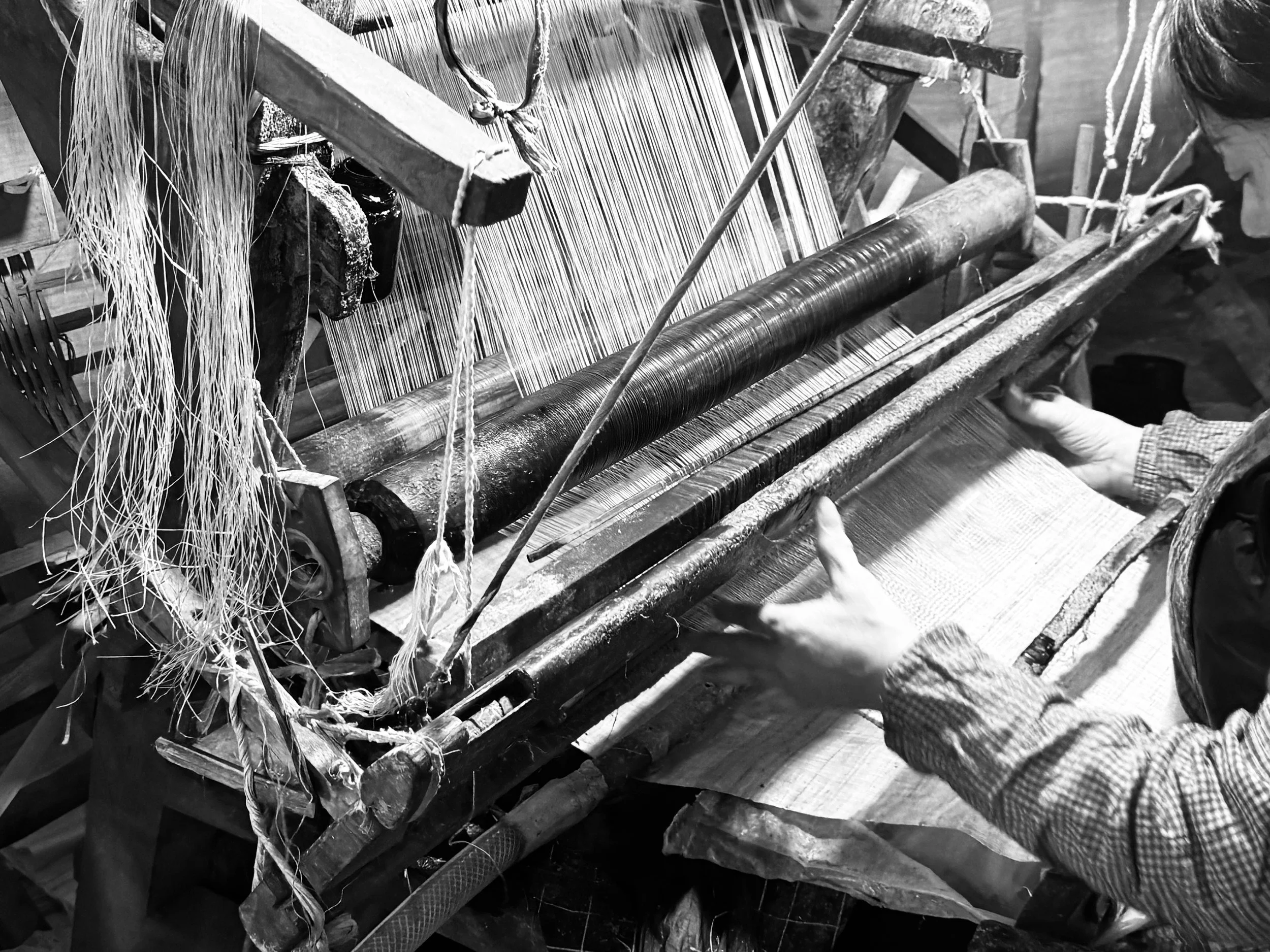
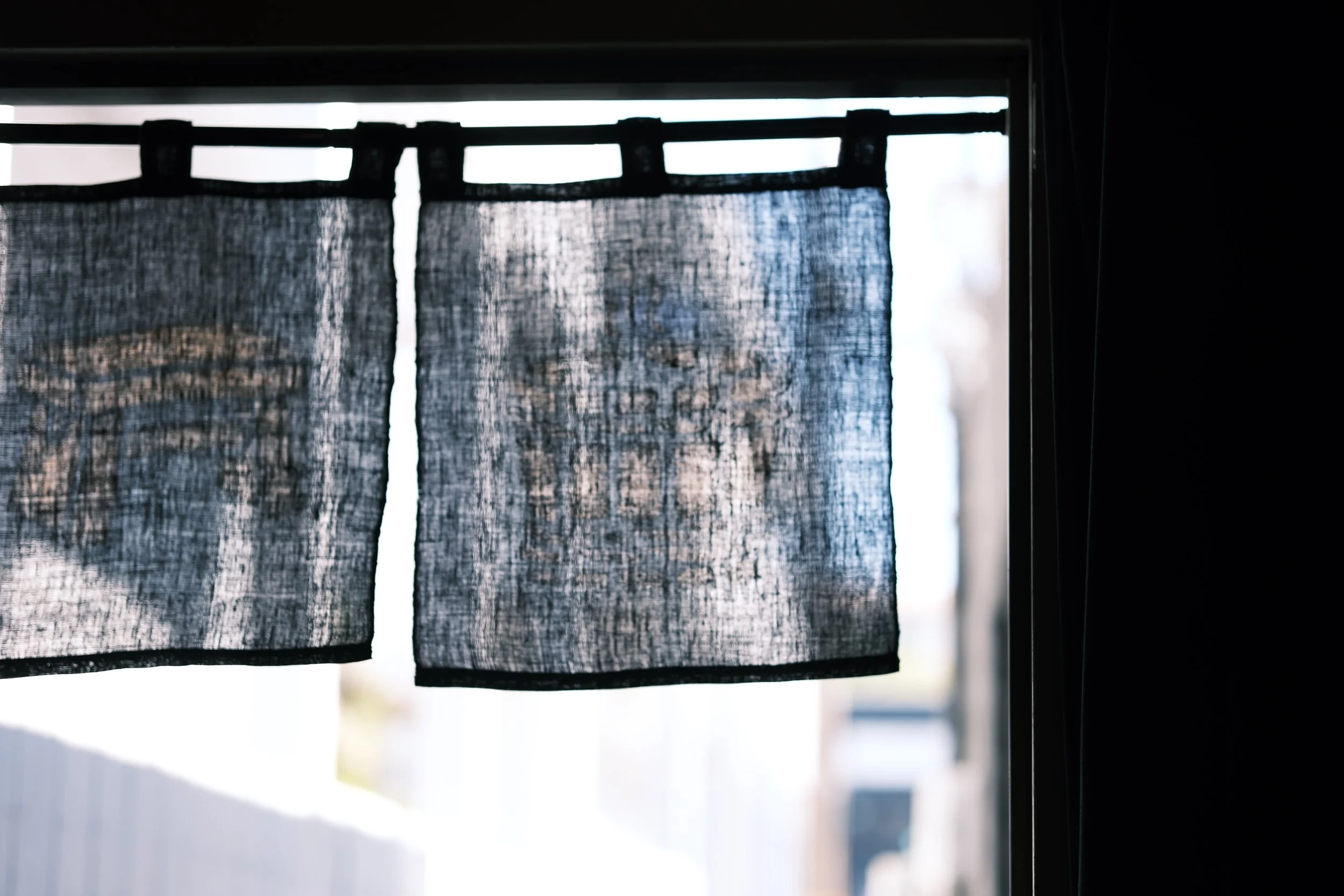
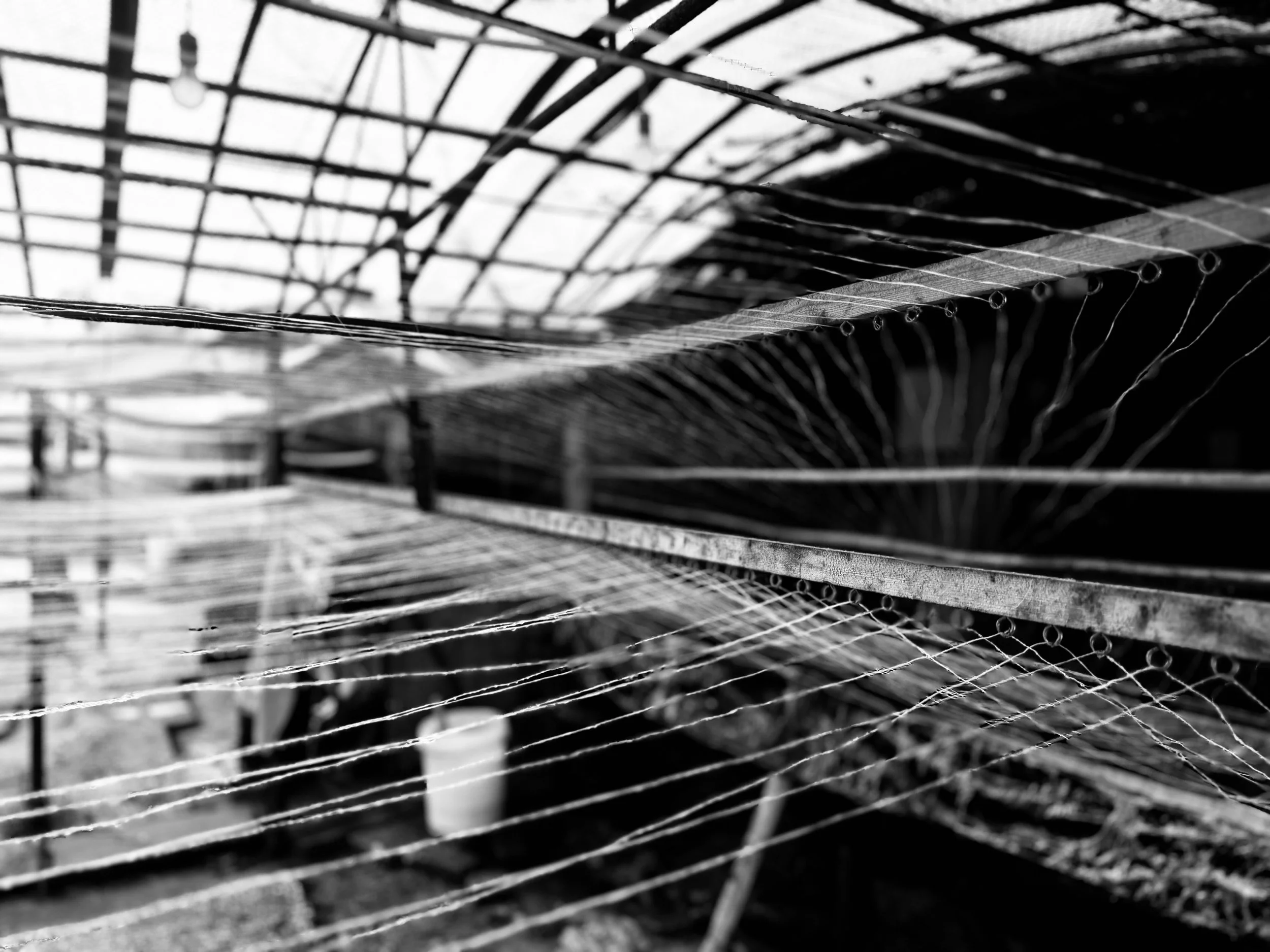
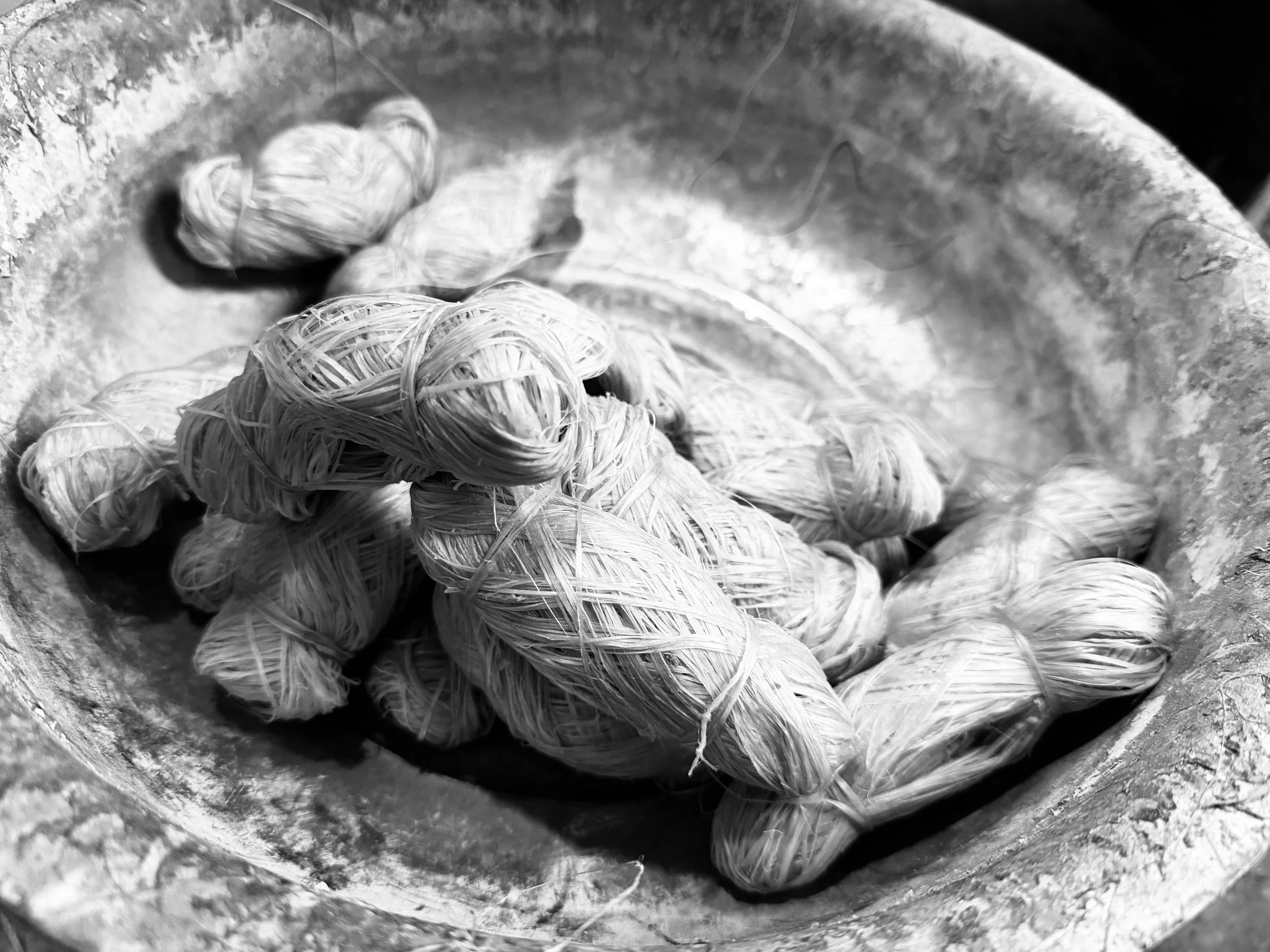
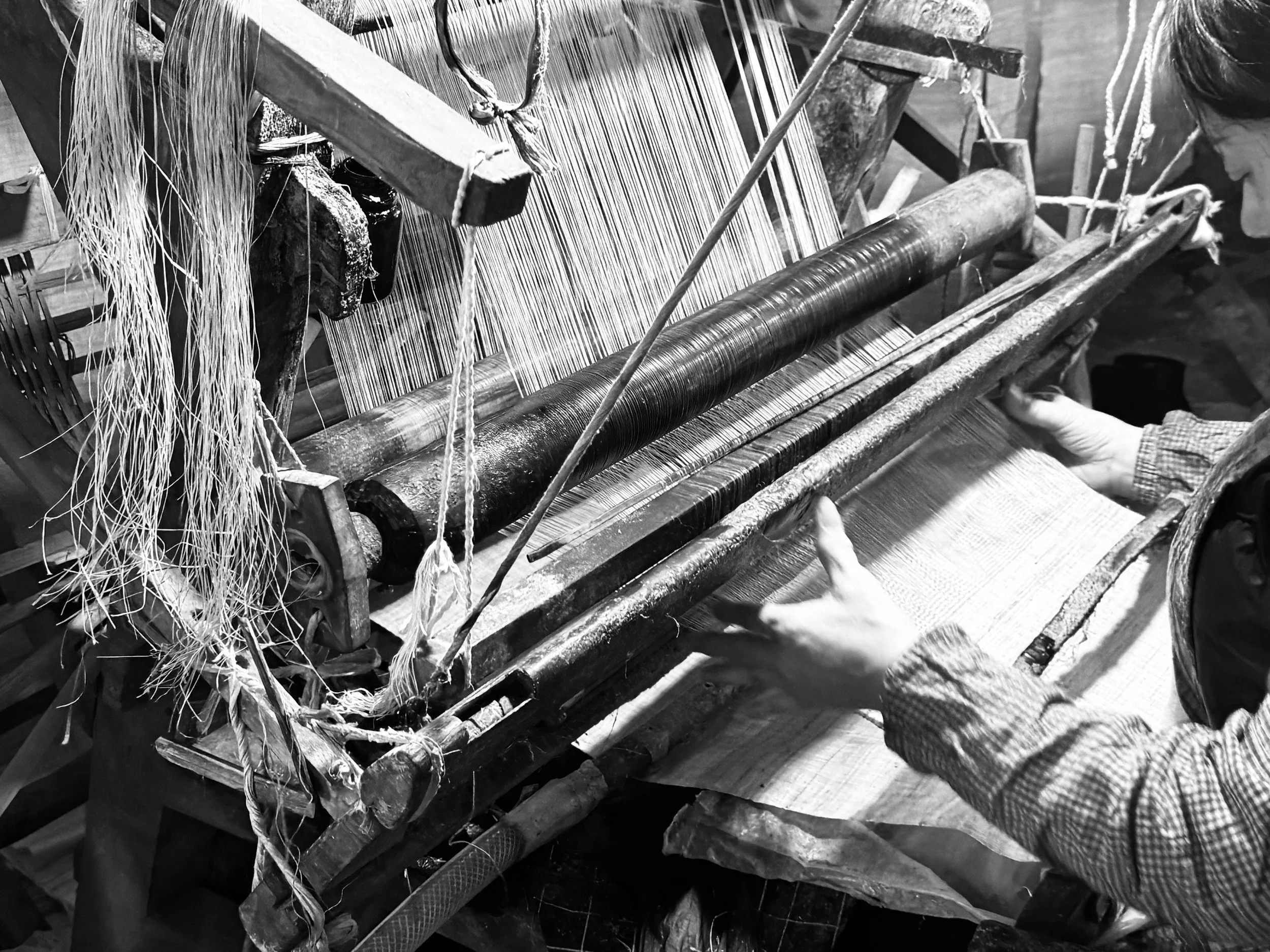
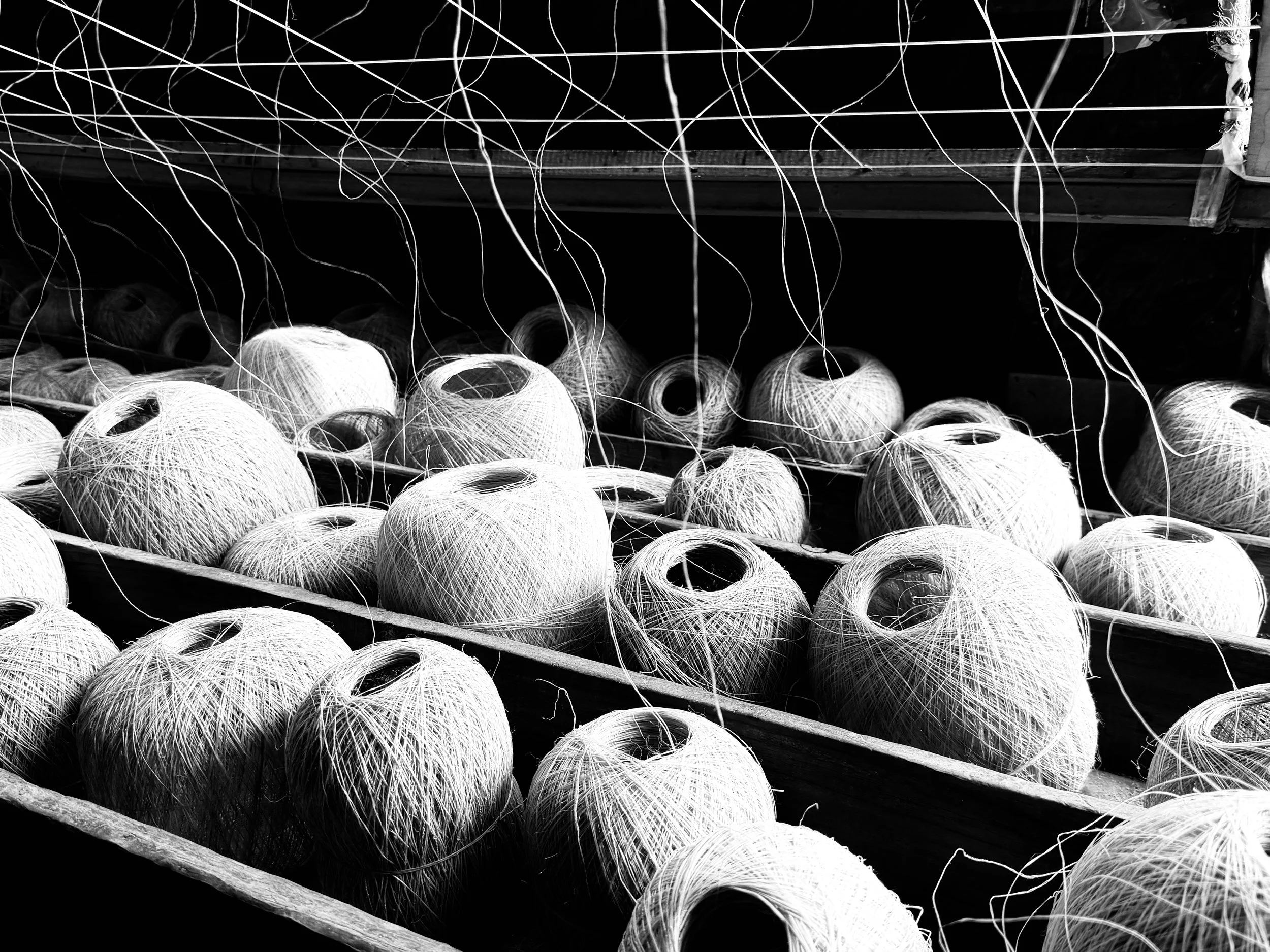
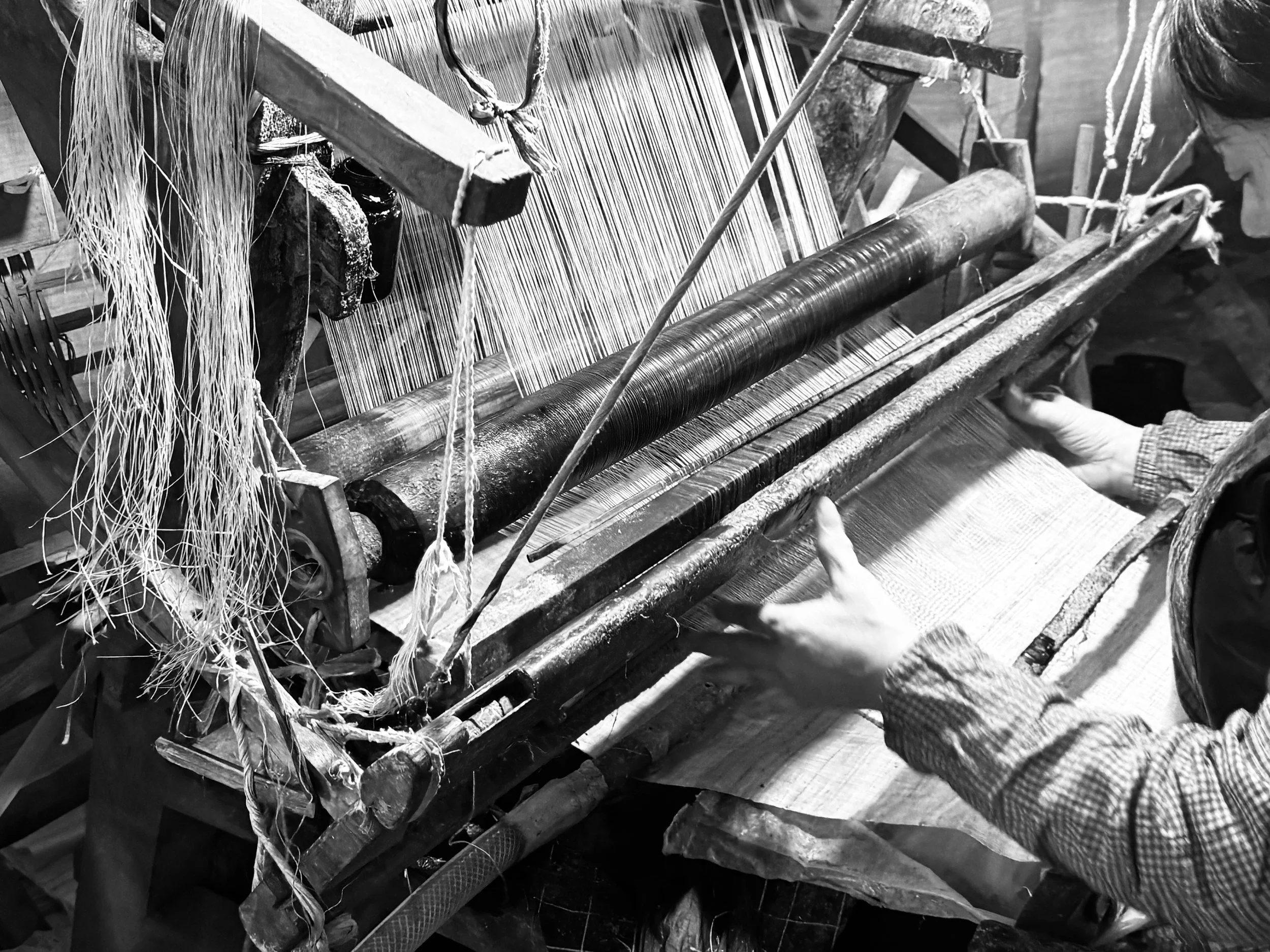
Made from Handwoven Natural Ramie No.75, the fabric has a breathable, semi-sheer weave that gently filters light and provides partial visual privacy. Although lightweight, it retains a naturally structured body rather than falling like a soft, loose curtain.
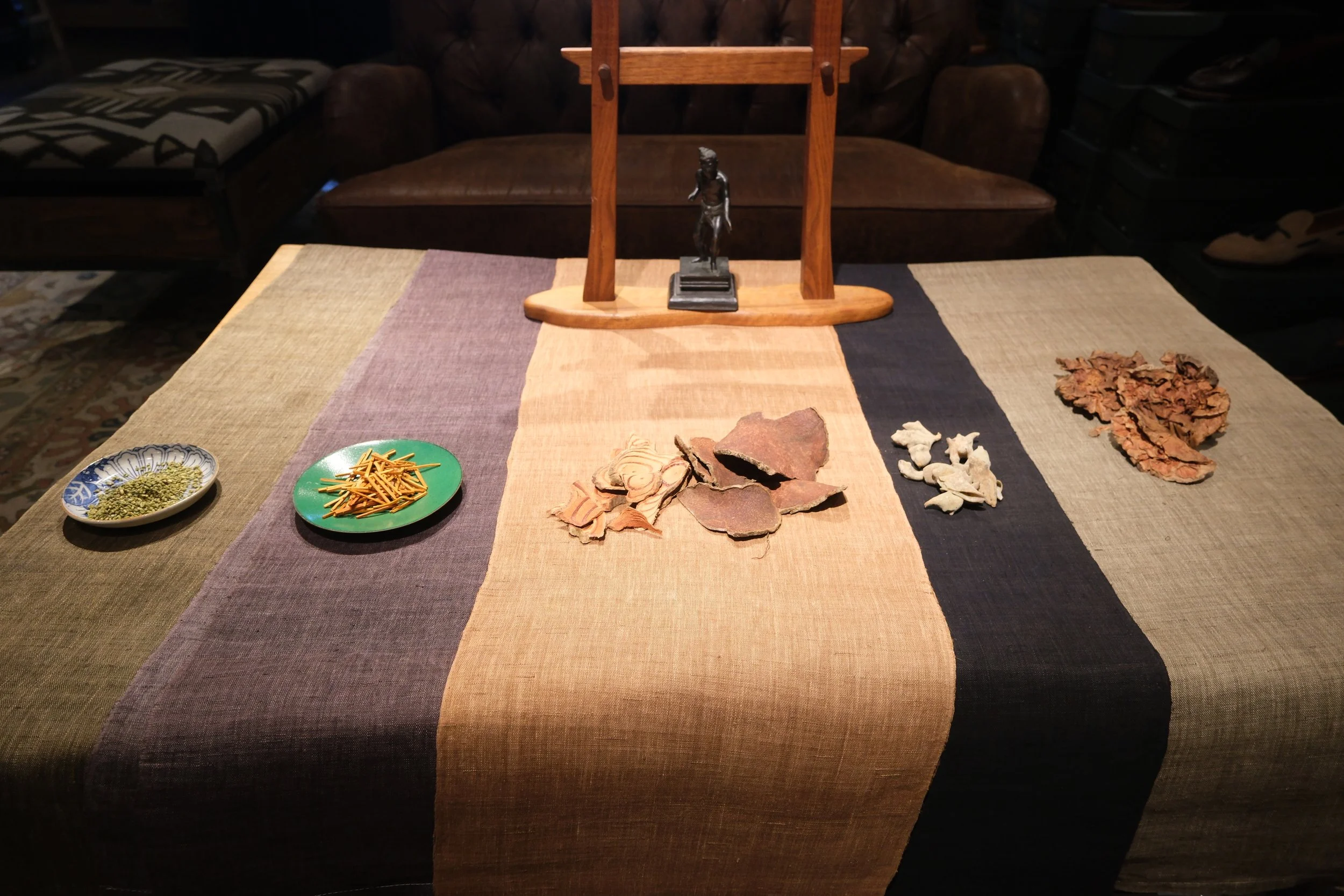
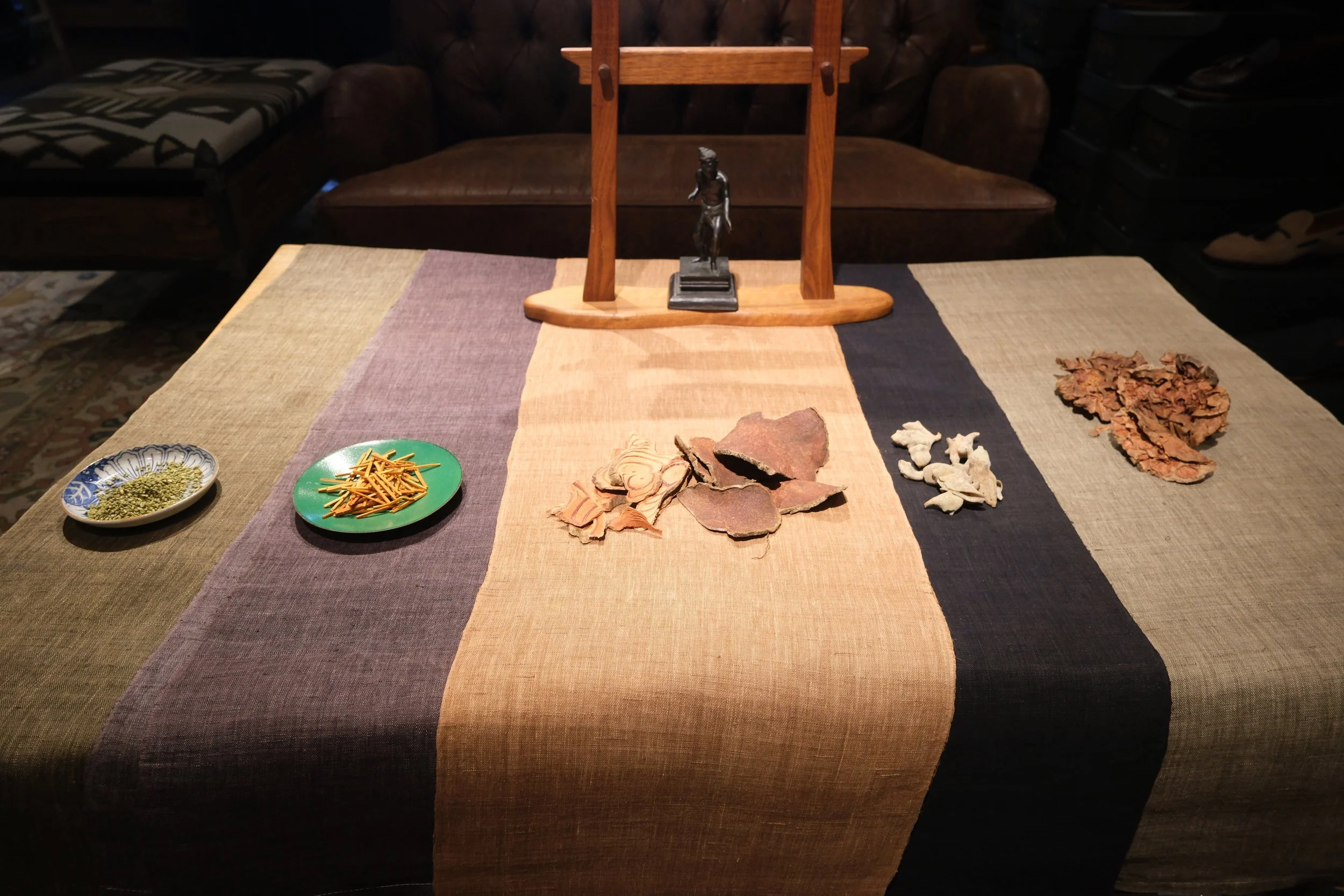
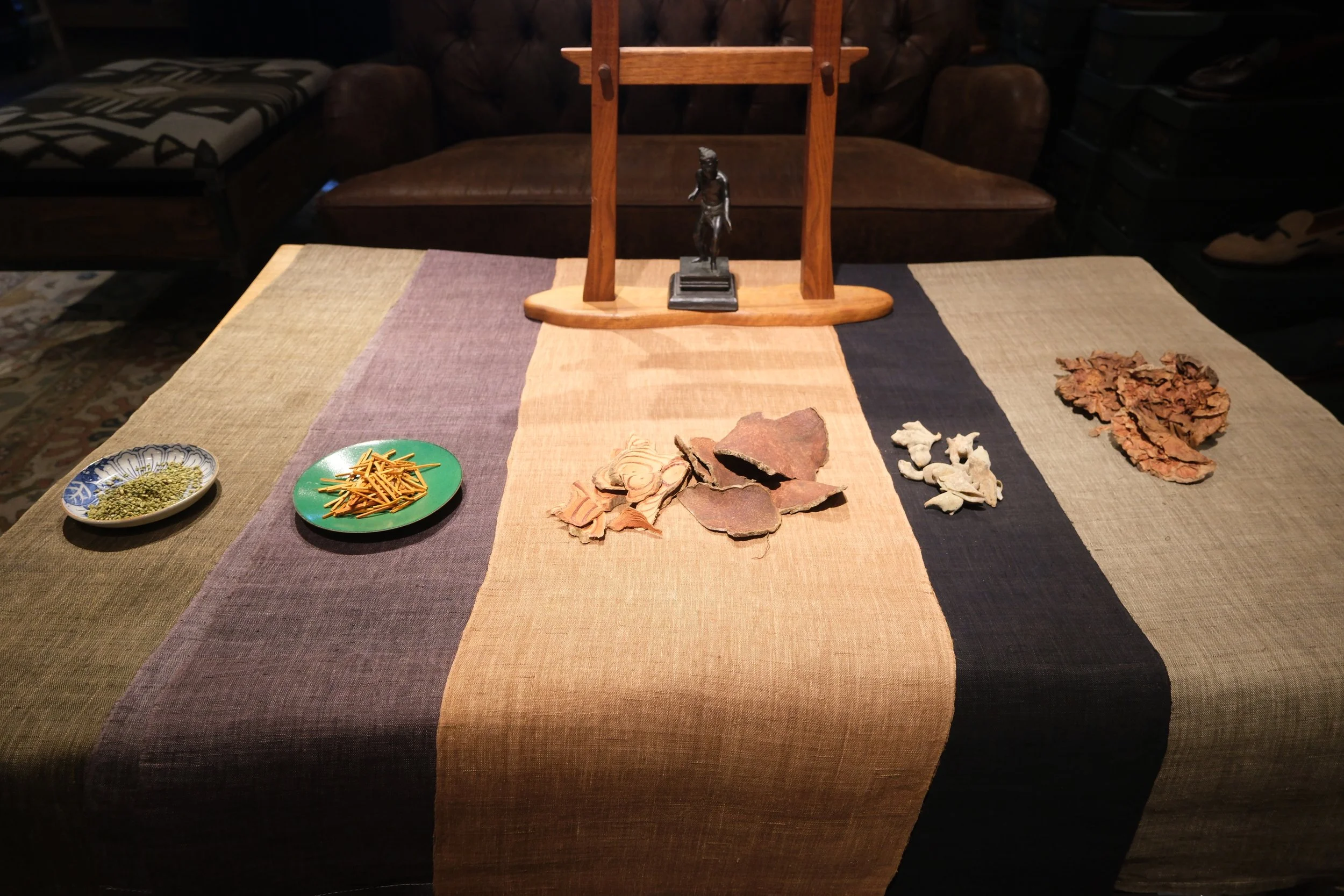
Available Plant-Dyed Colors
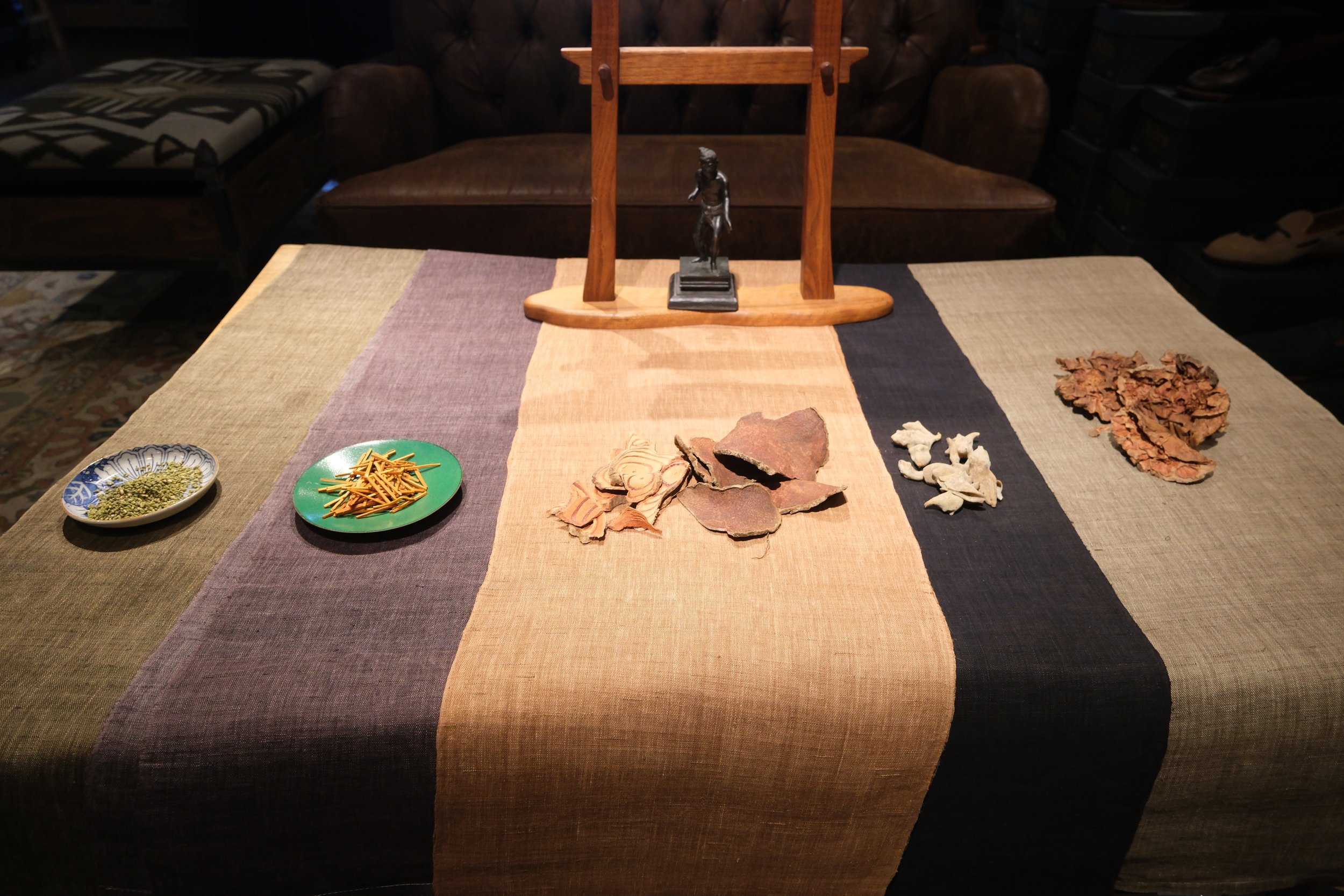
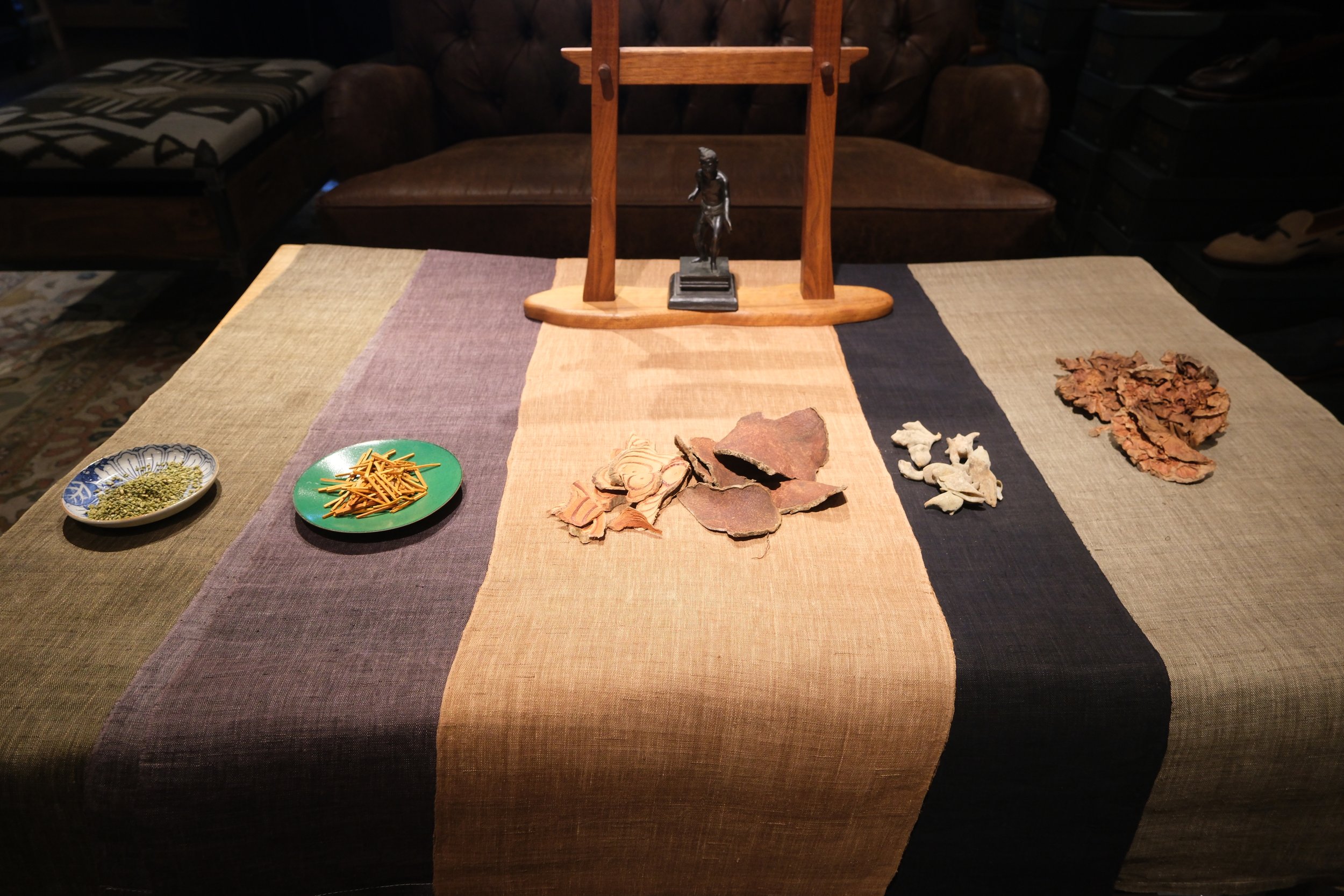
Each botanical material interacts differently with the handwoven ramie, creating subtle variations in tone, texture, and dye movement.
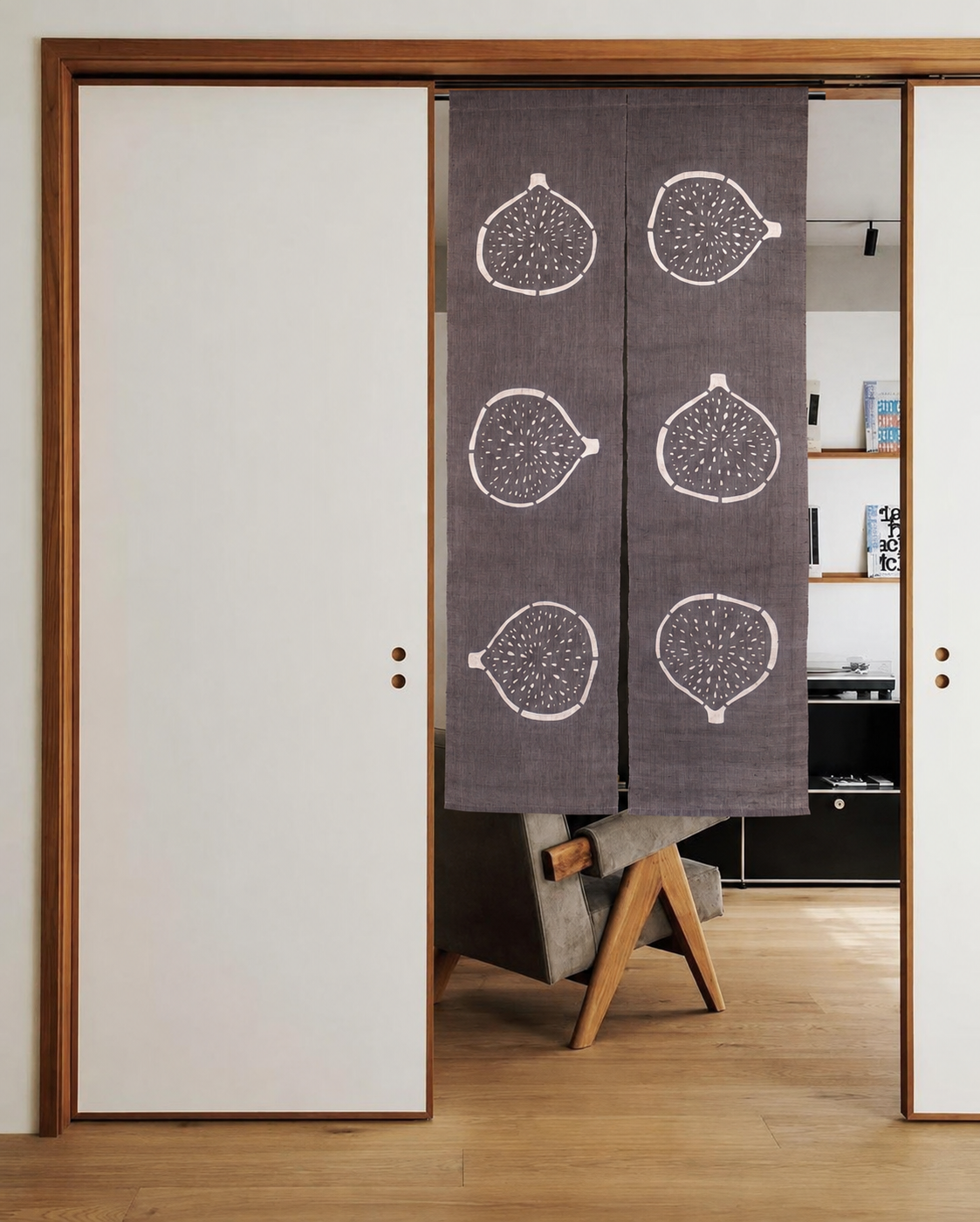
Gallnut — Deep Indigo
A dark, smoky indigo with near-black undertones. Its strong contrast gives the natural ramie garlic motifs a bold, architectural presence.
Chicken-Blood Vine — Clay Rose
A muted clay rose with warm, earthy undertones. Gentle without feeling overly sweet, it brings a quiet softness to kitchens, bedrooms, and relaxed living spaces.
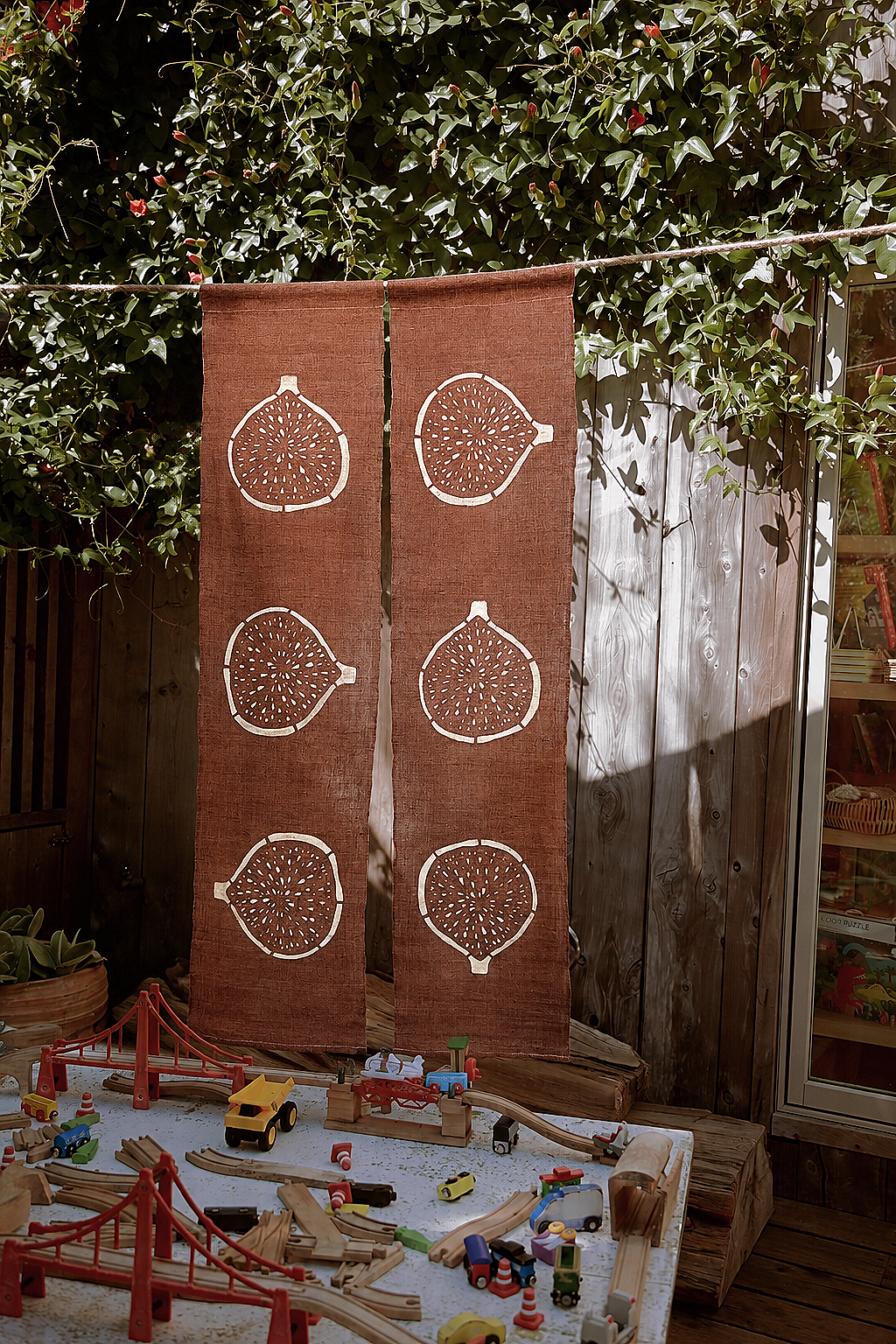
Dyeing Yam — Clay Brown
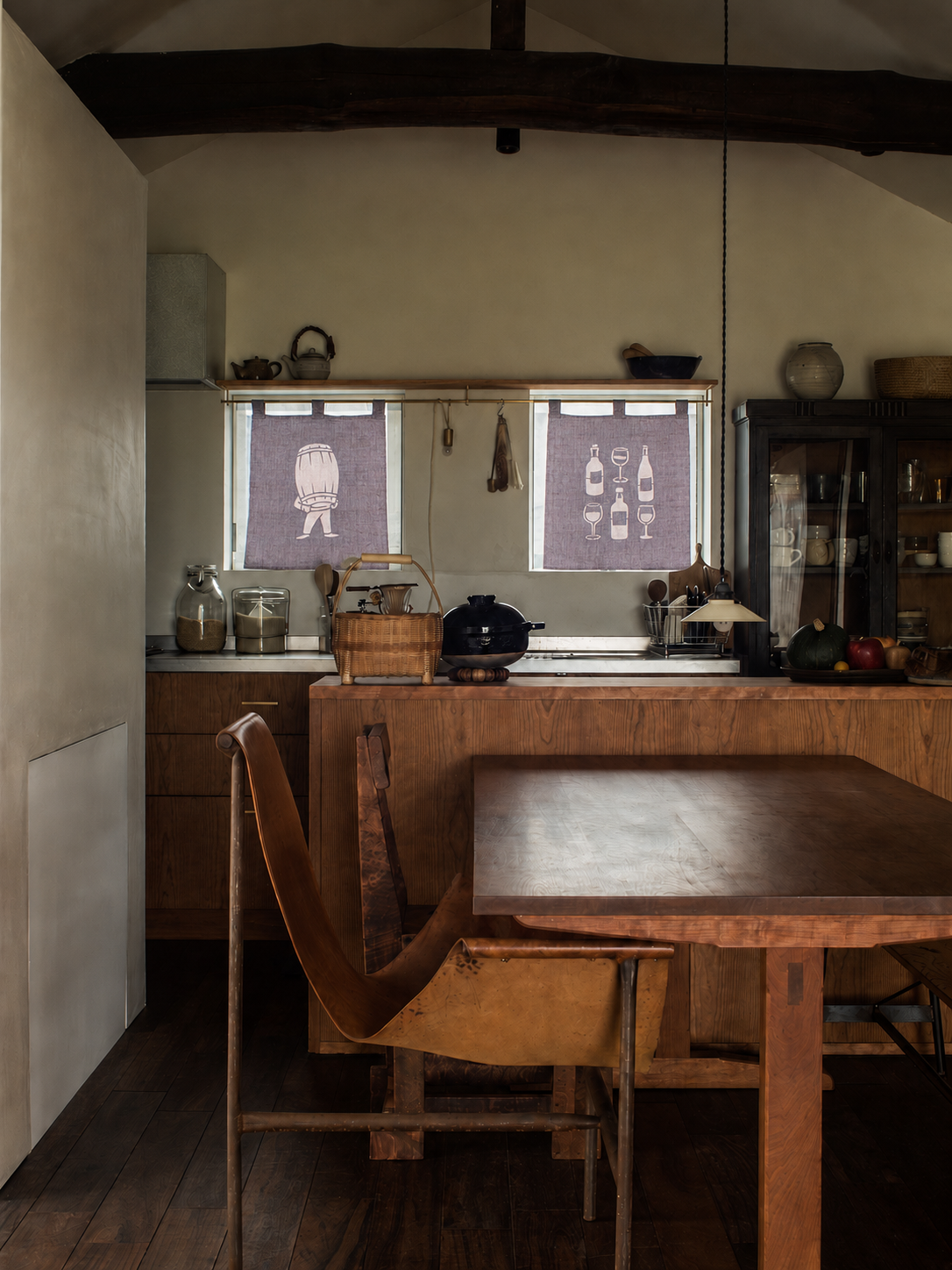
A rich, grounded brown with natural tonal depth. It pairs especially well with wood, plaster, stone, and other organic interior materials.
Five-Year-Aged Kakishibu — Earth Brown
A limited earth-brown color made with five-year-aged persimmon tannin. Through exposure to sunlight and natural oxidation, the color gradually deepens, developing a richer and more complex surface over time.
Persimmon tannin also settles into the ramie fibers, giving the fabric a firmer hand and an additional protective finish. It is the most durable of our current plant-dyed colorways and is especially well suited to kitchens, entryways, covered patios, garden rooms, and other sheltered semi-outdoor settings.
Five-year-aged kakishibu is available only in limited quantities. It is not waterproof and should not be exposed to prolonged rain or severe weather.
Suggested Uses
Place it at a kitchen or pantry entrance to soften the transition between cooking and living spaces.
Use it outside a bathroom opening to add gentle privacy while maintaining airflow.
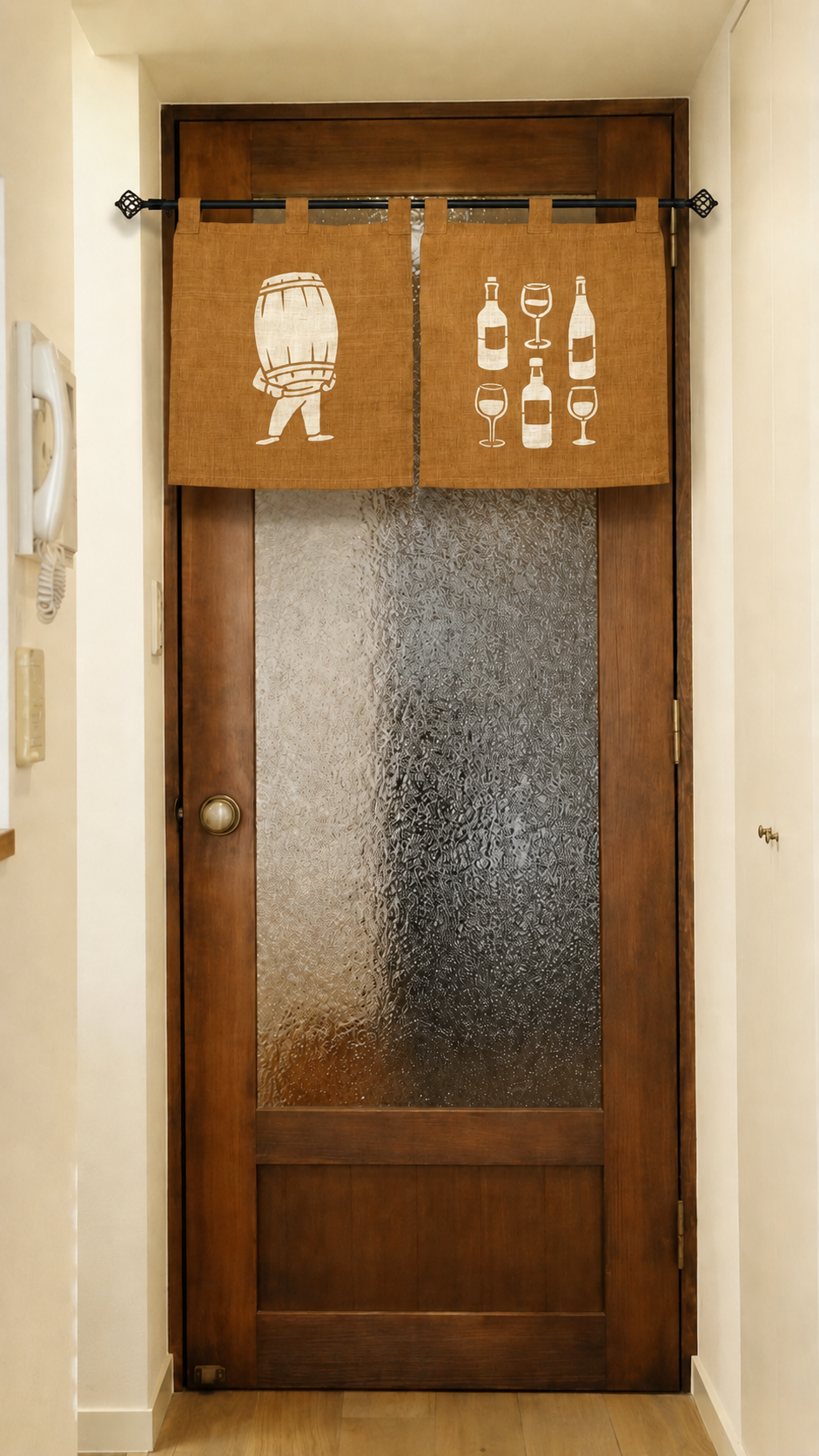
Hang it at a bedroom, guest-room, closet, dressing-area, laundry-room, or home-office entrance where a solid door feels too enclosed.
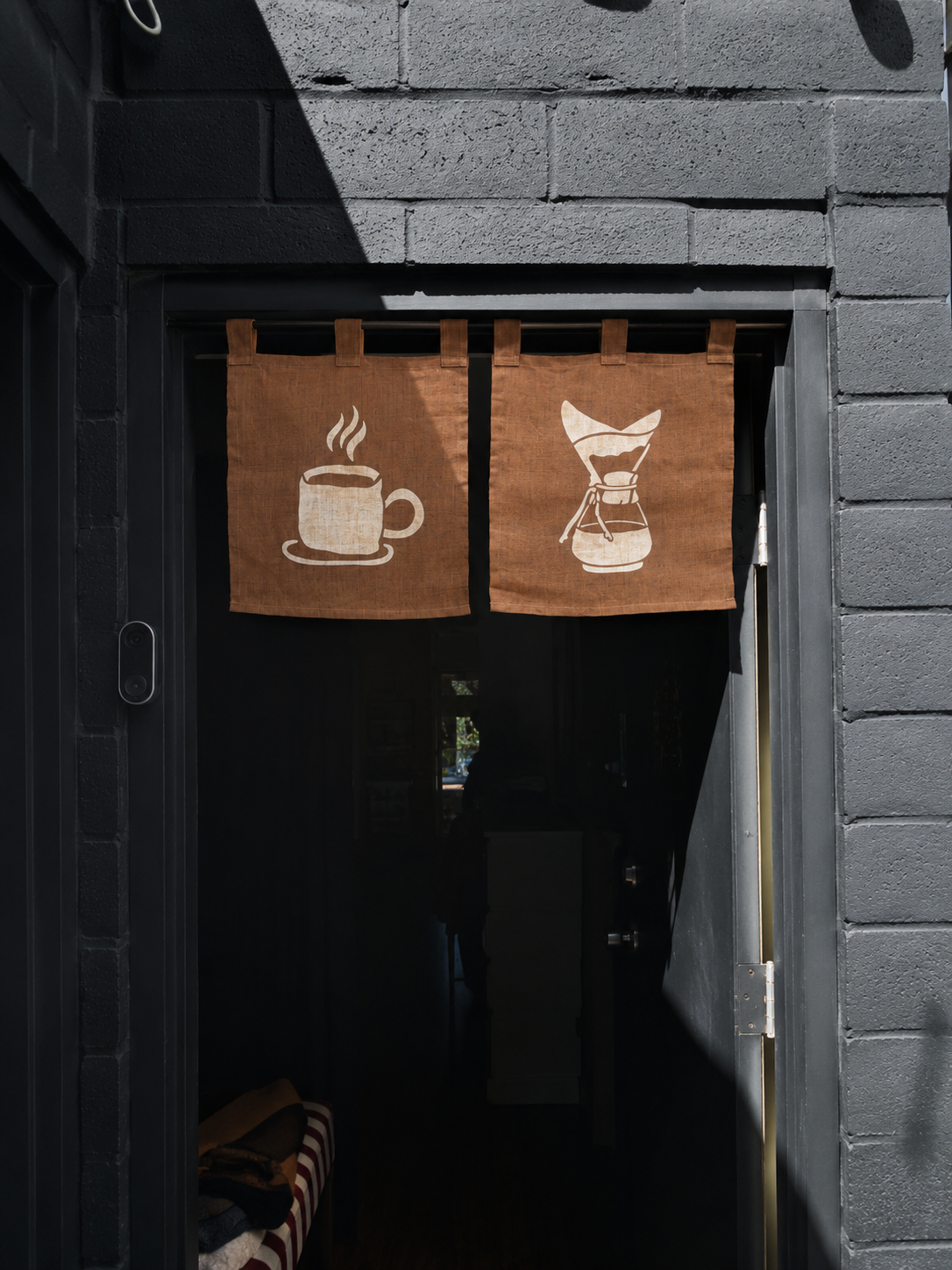
It can also soften the end of a hallway, conceal a storage area, divide an open-plan room, or create a welcoming entrance for a café, restaurant, studio, retail shop, or treatment space.
The five-year-aged kakishibu color is particularly suitable for covered entrances, sheltered porches, garden rooms, and semi-outdoor dining areas.
When not used in a doorway, the noren may be displayed as a decorative wall textile.
Installation
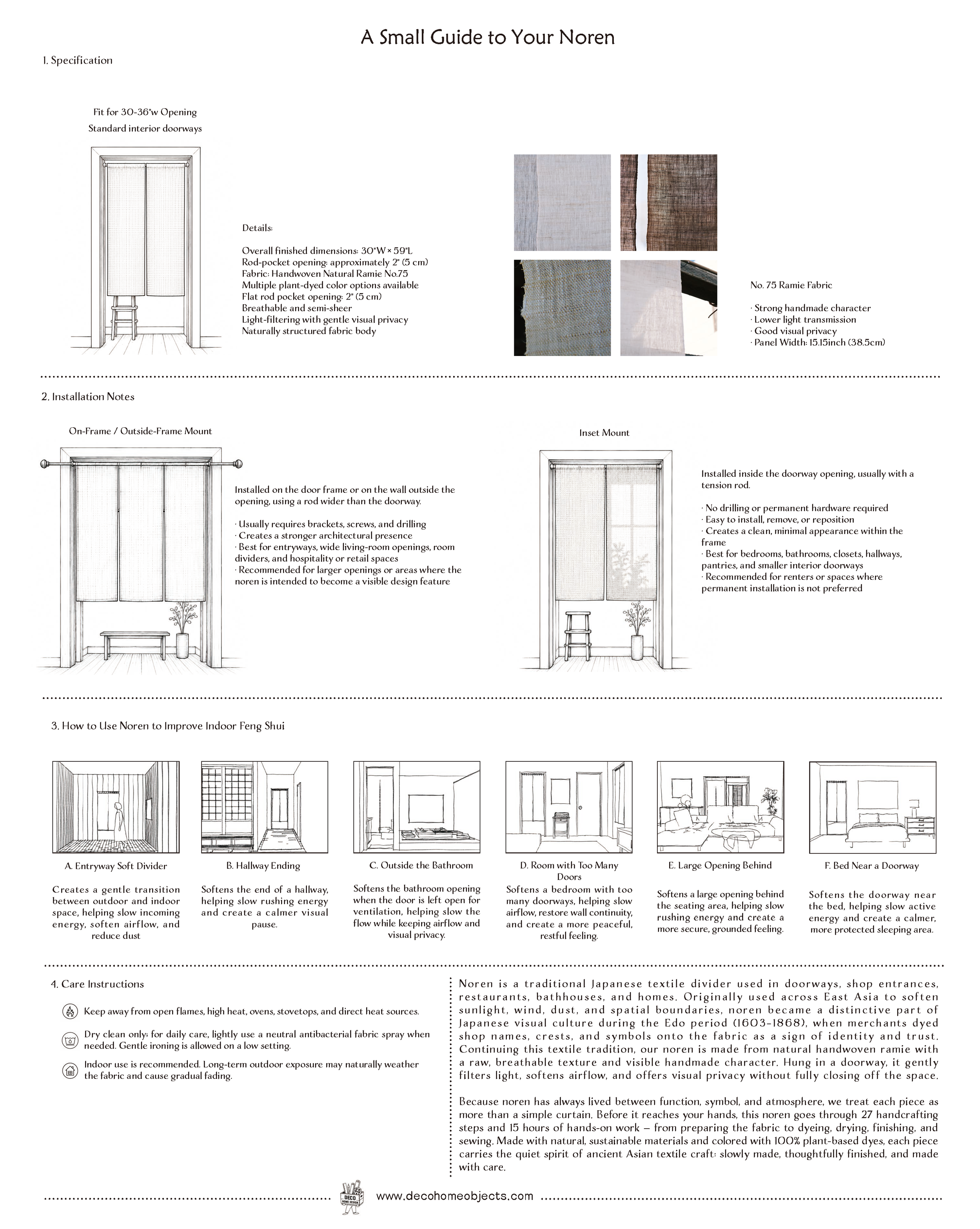
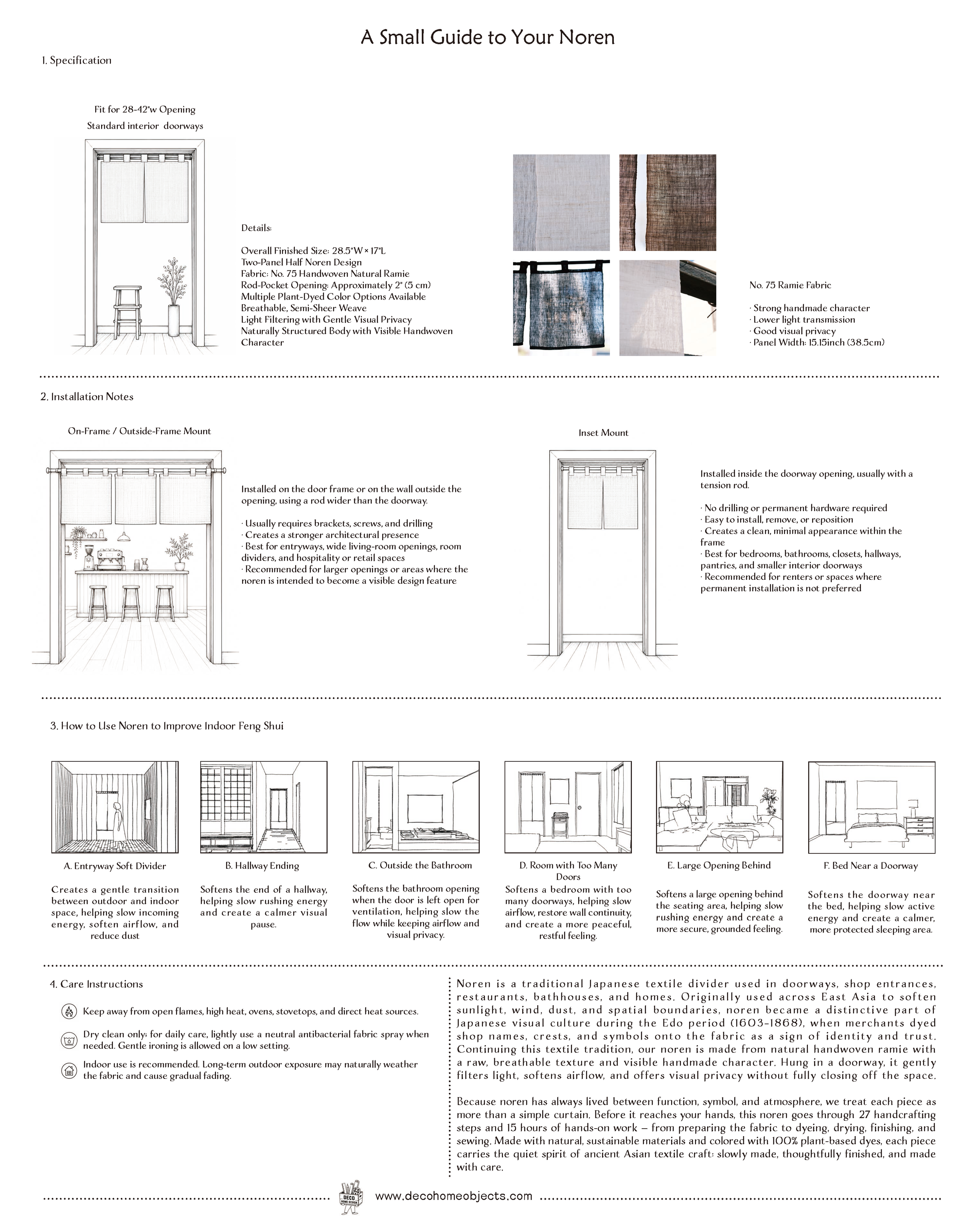
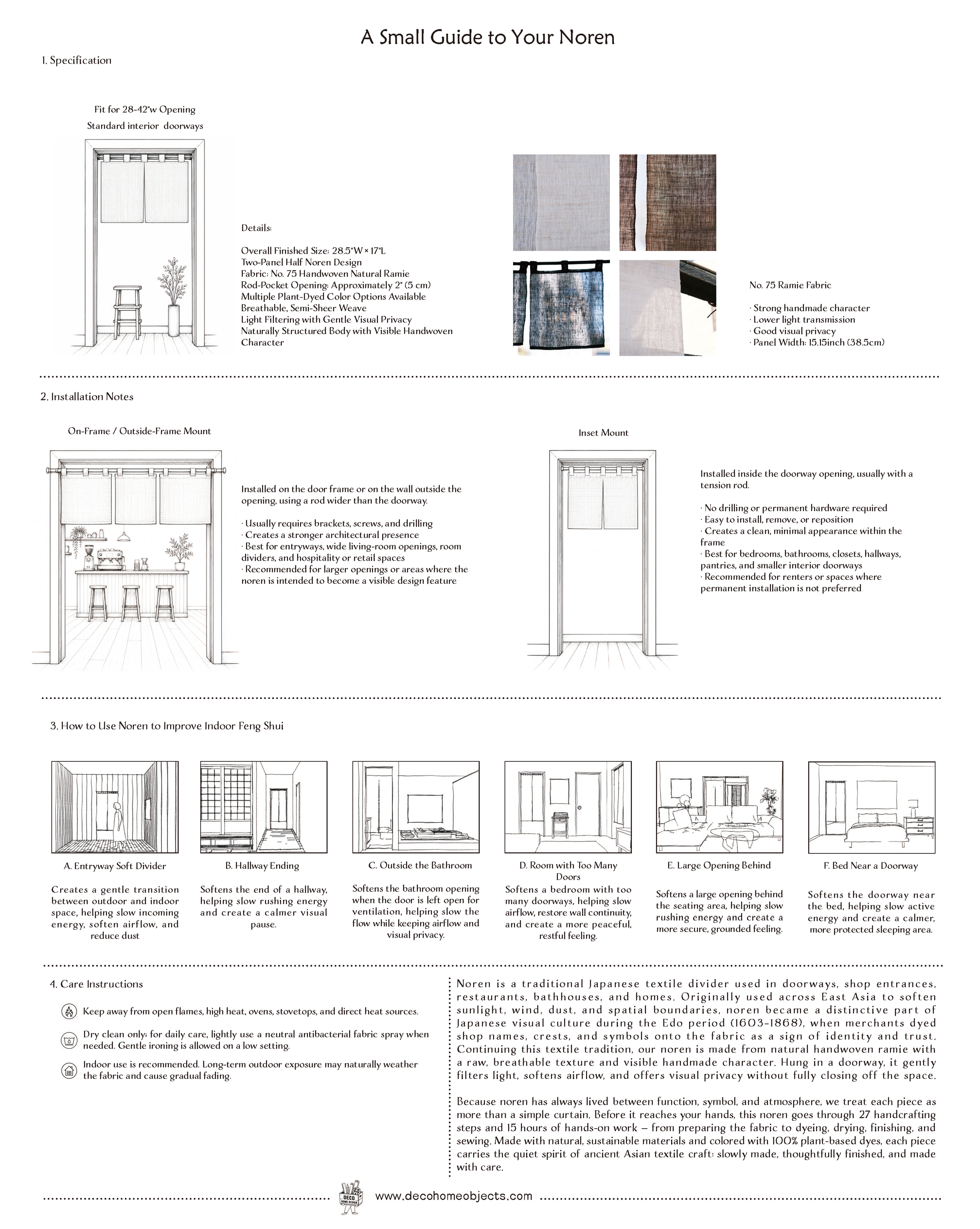
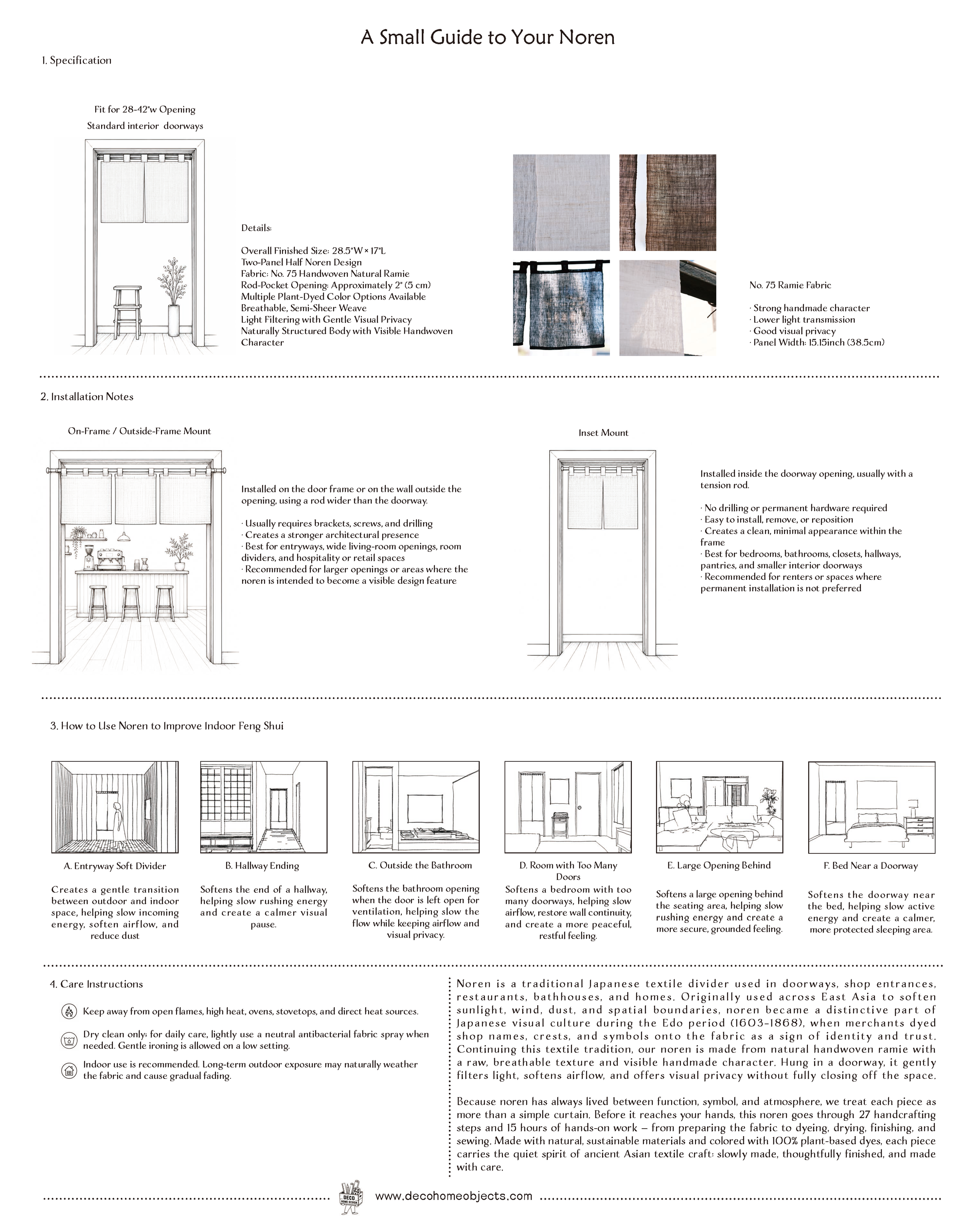
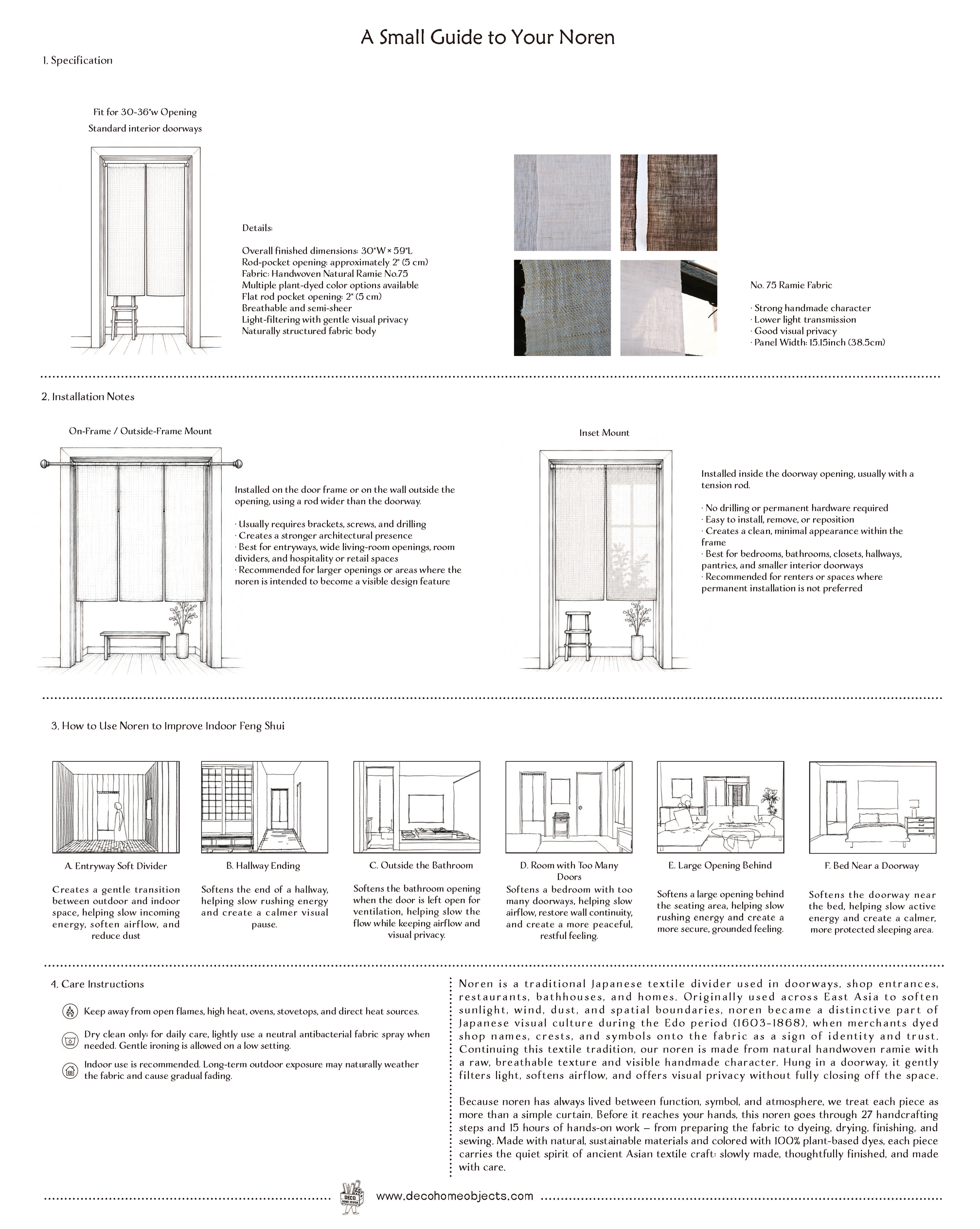
For a clean, minimal appearance, install the noren inside the doorway with a tension rod.
For wider coverage or a stronger architectural presence, mount a curtain rod above or outside the opening.
Rod and installation hardware are not included.
Details
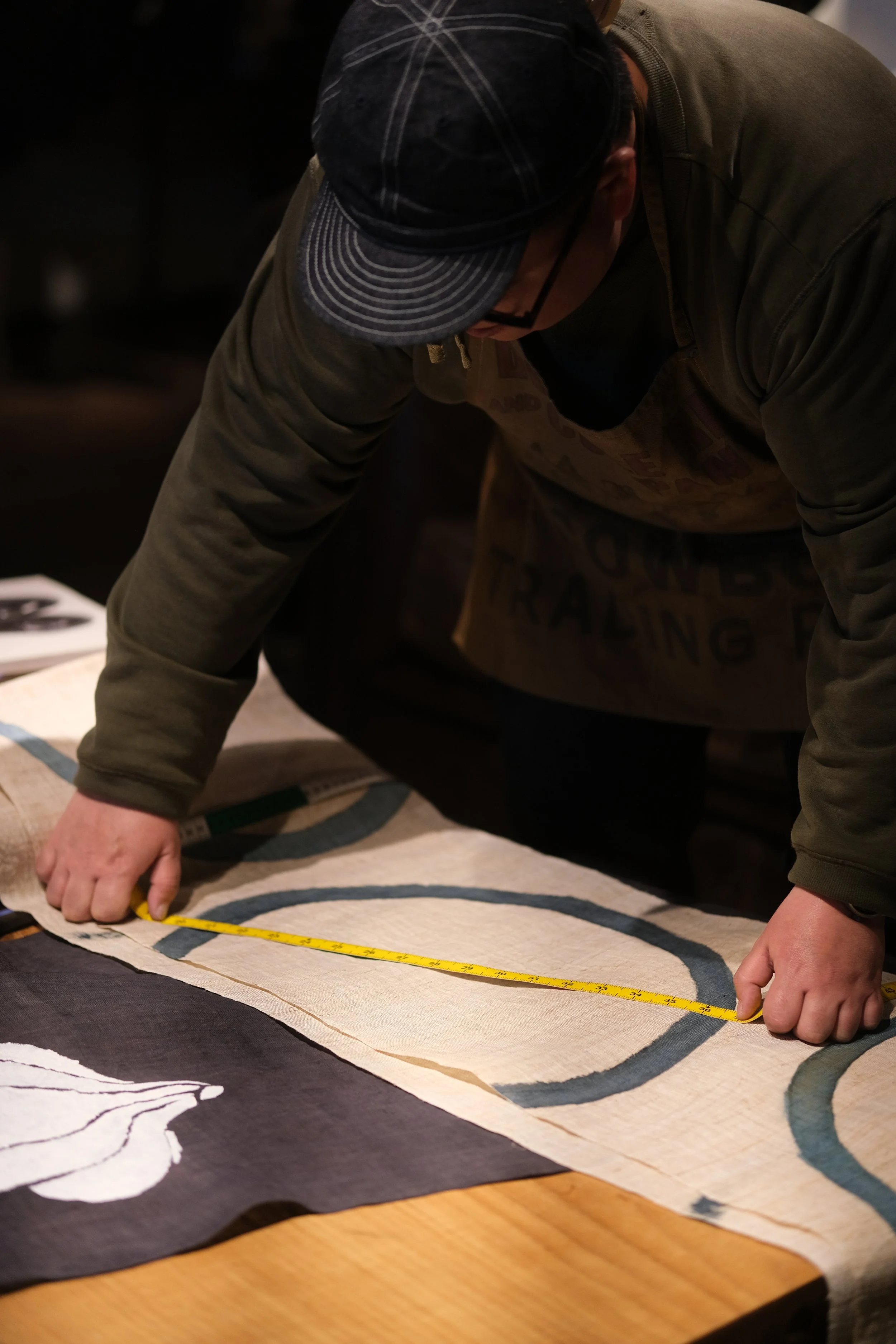
Overall finished size: 28.25"W × 59"L across both panels
Dimensions refer to the complete curtain, not each individual panel
Two-panel split design
Approximately 14"W per panel
Handwoven Natural Ramie No.75A
Traditional katazome paste-resist garlic motif
Available colors: Gallnut Deep Indigo, Chicken-Blood Vine Clay Rose, Dyeing Yam Clay Brown, and Five-Year-Aged Kakishibu Earth Brown
Flat rod pocket
Breathable, semi-sheer, and light-filtering
Provides gentle visual privacy
Naturally structured fabric body
Indoor use recommended
Five-year-aged kakishibu is also suitable for sheltered semi-outdoor use
Color Options
Gallnut - Deep Indigo
A deep indigo-charcoal with a calm, grounded presence.
Blood Vine - Hinoki Brown
A warm, sun-softened brown with golden wood and subtle amber undertones.
Blood Vine - Hinoki Brown
A soft, earthy rose with clay-beige depth and subtle sun-faded blush undertones.
5-Year-Aged Persimmon Tannin — Earth Brown · Limited Edition
A rich, weathered brown created with aged persimmon tannin. The dye gives the fabric a firmer, more substantial character and greater resistance to weathering than the other color options.
This version may be used in covered outdoor or semi-outdoor spaces, although direct rain, prolonged moisture, and extreme weather should be avoided. Availability is limited due to the small quantity of properly aged persimmon tannin.
Care
Professional dry clean only.
Do not machine wash, tumble dry, soak, scrub, or use chemical detergents. Keep away from open flame and high heat. Remove surface dust gently and iron only on a low setting.
For the five-year-aged kakishibu color, gradual darkening and tonal change caused by sunlight and oxidation are natural characteristics of the dye and should not be considered defects.
Handmade Character
Variations in dye depth, weave, texture, natural edges, motif outlines, and panel alignment are inherent to handwoven and plant-dyed ramie.
Botanical colors may continue to shift subtly with light, time, and use. Five-year-aged kakishibu will naturally deepen through sunlight and oxidation, allowing each noren to develop its own character over time.
A handmade two-panel noren featuring a garlic motif on handwoven natural ramie.
Inspired by the familiar ingredients and quiet rituals of the kitchen, the repeated garlic form brings a warm, graphic character to a doorway. It works especially well in kitchens, pantries, dining spaces, cafés, and other interiors shaped by food and everyday gathering.
The motif is created through a traditional katazome paste-resist process. Resist paste protects selected areas of the cloth during dyeing, allowing the lighter natural tone and woven texture of the ramie to remain visible against the plant-dyed background.
Made from Handwoven Natural Ramie No.75, the fabric has a breathable, semi-sheer weave that gently filters light and provides partial visual privacy. Although lightweight, it retains a naturally structured body rather than falling like a soft, loose curtain.
Available Plant-Dyed Colors
Each botanical material interacts differently with the handwoven ramie, creating subtle variations in tone, texture, and dye movement.
Gallnut — Deep Indigo
A dark, smoky indigo with near-black undertones. Its strong contrast gives the natural ramie garlic motifs a bold, architectural presence.
Chicken-Blood Vine — Clay Rose
A muted clay rose with warm, earthy undertones. Gentle without feeling overly sweet, it brings a quiet softness to kitchens, bedrooms, and relaxed living spaces.
Dyeing Yam — Clay Brown
A rich, grounded brown with natural tonal depth. It pairs especially well with wood, plaster, stone, and other organic interior materials.
Five-Year-Aged Kakishibu — Earth Brown
A limited earth-brown color made with five-year-aged persimmon tannin. Through exposure to sunlight and natural oxidation, the color gradually deepens, developing a richer and more complex surface over time.
Persimmon tannin also settles into the ramie fibers, giving the fabric a firmer hand and an additional protective finish. It is the most durable of our current plant-dyed colorways and is especially well suited to kitchens, entryways, covered patios, garden rooms, and other sheltered semi-outdoor settings.
Five-year-aged kakishibu is available only in limited quantities. It is not waterproof and should not be exposed to prolonged rain or severe weather.
Suggested Uses
Place it at a kitchen or pantry entrance to soften the transition between cooking and living spaces.
Use it outside a bathroom opening to add gentle privacy while maintaining airflow.
Hang it at a bedroom, guest-room, closet, dressing-area, laundry-room, or home-office entrance where a solid door feels too enclosed.
It can also soften the end of a hallway, conceal a storage area, divide an open-plan room, or create a welcoming entrance for a café, restaurant, studio, retail shop, or treatment space.
The five-year-aged kakishibu color is particularly suitable for covered entrances, sheltered porches, garden rooms, and semi-outdoor dining areas.
When not used in a doorway, the noren may be displayed as a decorative wall textile.
Installation
For a clean, minimal appearance, install the noren inside the doorway with a tension rod.
For wider coverage or a stronger architectural presence, mount a curtain rod above or outside the opening.
Rod and installation hardware are not included.
Details
Overall finished size: 28.25"W × 59"L across both panels
Dimensions refer to the complete curtain, not each individual panel
Two-panel split design
Approximately 14"W per panel
Handwoven Natural Ramie No.75A
Traditional katazome paste-resist garlic motif
Available colors: Gallnut Deep Indigo, Chicken-Blood Vine Clay Rose, Dyeing Yam Clay Brown, and Five-Year-Aged Kakishibu Earth Brown
Flat rod pocket
Breathable, semi-sheer, and light-filtering
Provides gentle visual privacy
Naturally structured fabric body
Indoor use recommended
Five-year-aged kakishibu is also suitable for sheltered semi-outdoor use
Color Options
Gallnut - Deep Indigo
A deep indigo-charcoal with a calm, grounded presence.
Blood Vine - Hinoki Brown
A warm, sun-softened brown with golden wood and subtle amber undertones.
Blood Vine - Hinoki Brown
A soft, earthy rose with clay-beige depth and subtle sun-faded blush undertones.
5-Year-Aged Persimmon Tannin — Earth Brown · Limited Edition
A rich, weathered brown created with aged persimmon tannin. The dye gives the fabric a firmer, more substantial character and greater resistance to weathering than the other color options.
This version may be used in covered outdoor or semi-outdoor spaces, although direct rain, prolonged moisture, and extreme weather should be avoided. Availability is limited due to the small quantity of properly aged persimmon tannin.
Care
Professional dry clean only.
Do not machine wash, tumble dry, soak, scrub, or use chemical detergents. Keep away from open flame and high heat. Remove surface dust gently and iron only on a low setting.
For the five-year-aged kakishibu color, gradual darkening and tonal change caused by sunlight and oxidation are natural characteristics of the dye and should not be considered defects.
Handmade Character
Variations in dye depth, weave, texture, natural edges, motif outlines, and panel alignment are inherent to handwoven and plant-dyed ramie.
Botanical colors may continue to shift subtly with light, time, and use. Five-year-aged kakishibu will naturally deepen through sunlight and oxidation, allowing each noren to develop its own character over time.

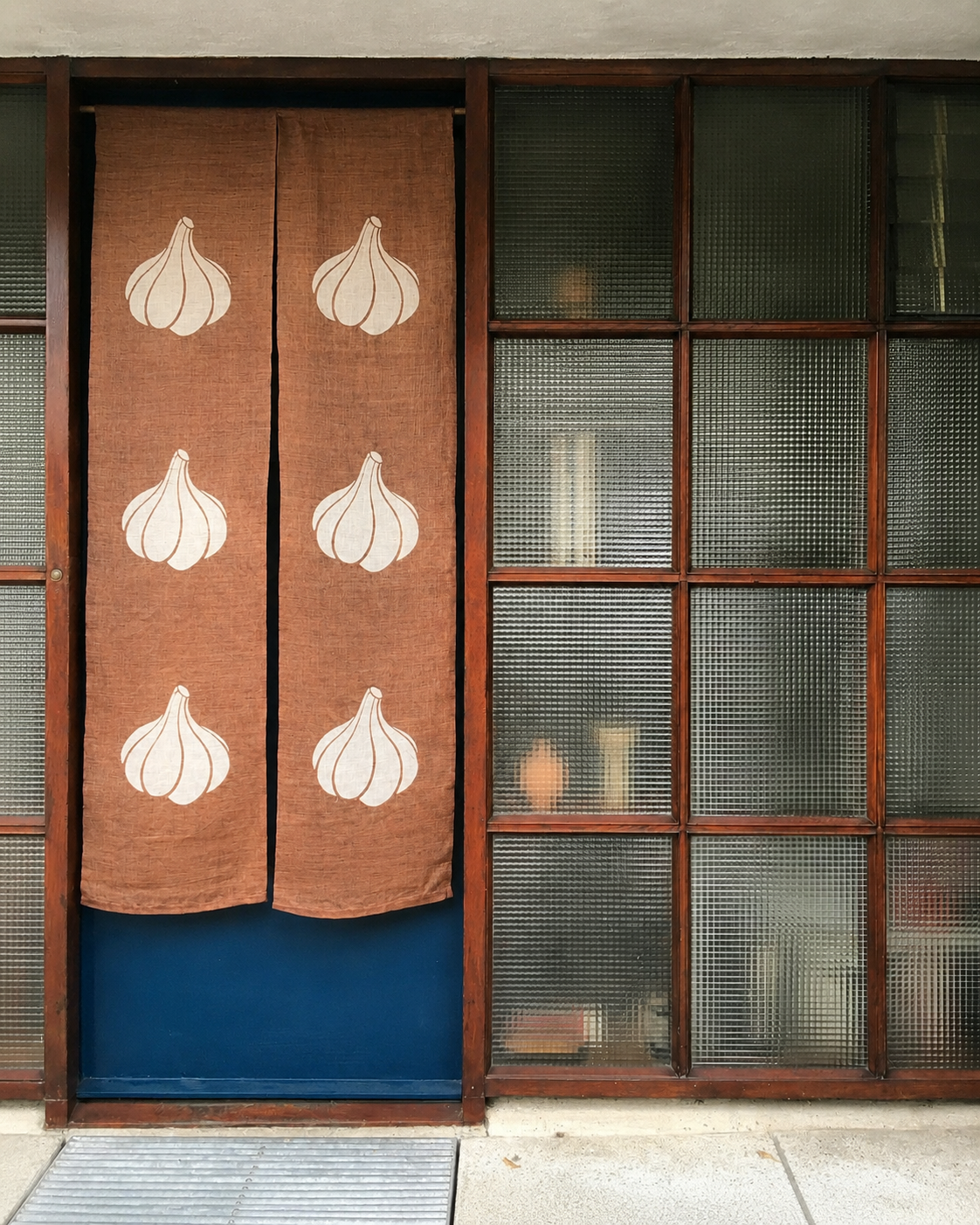 Image 1 of 15
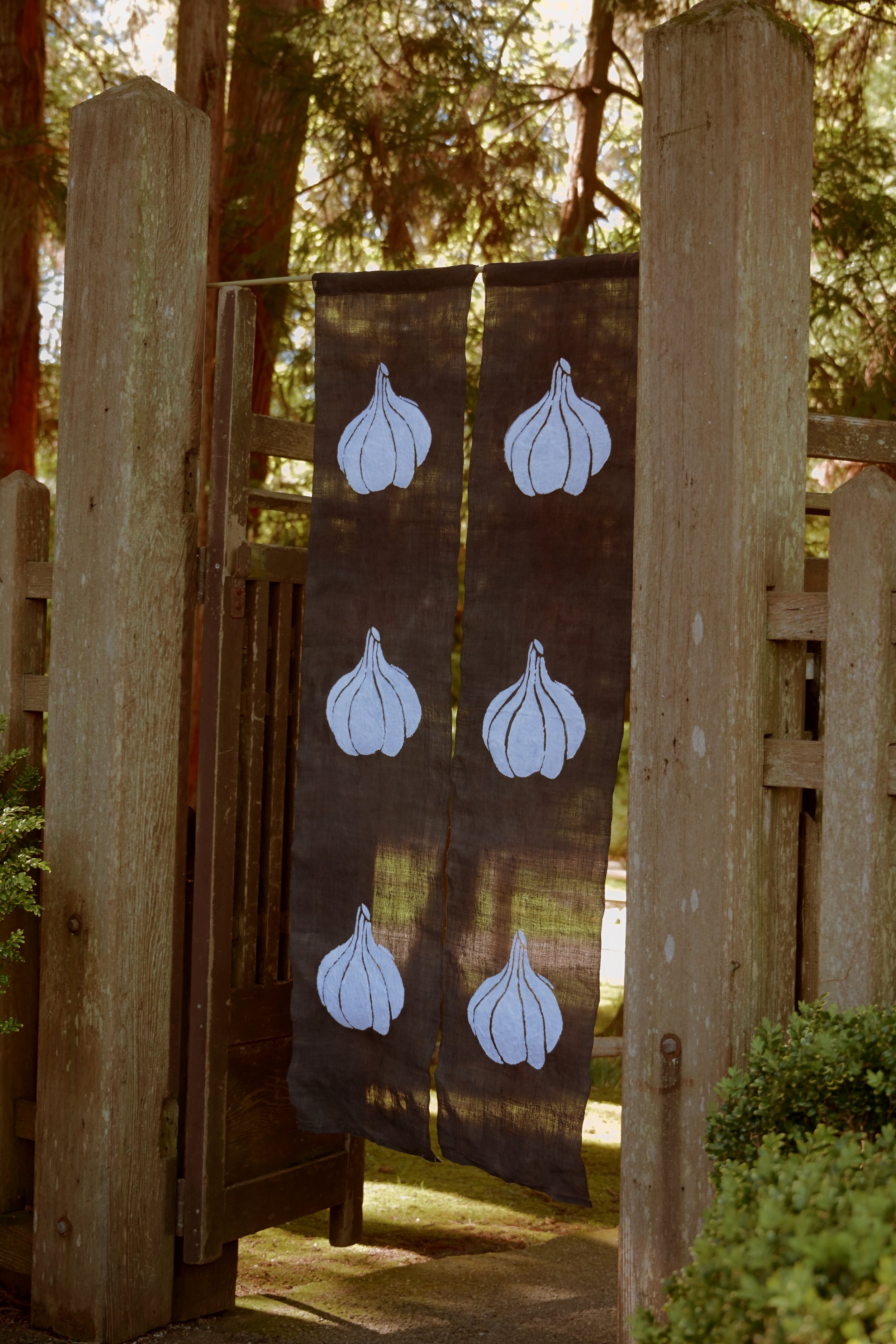 Image 2 of 15
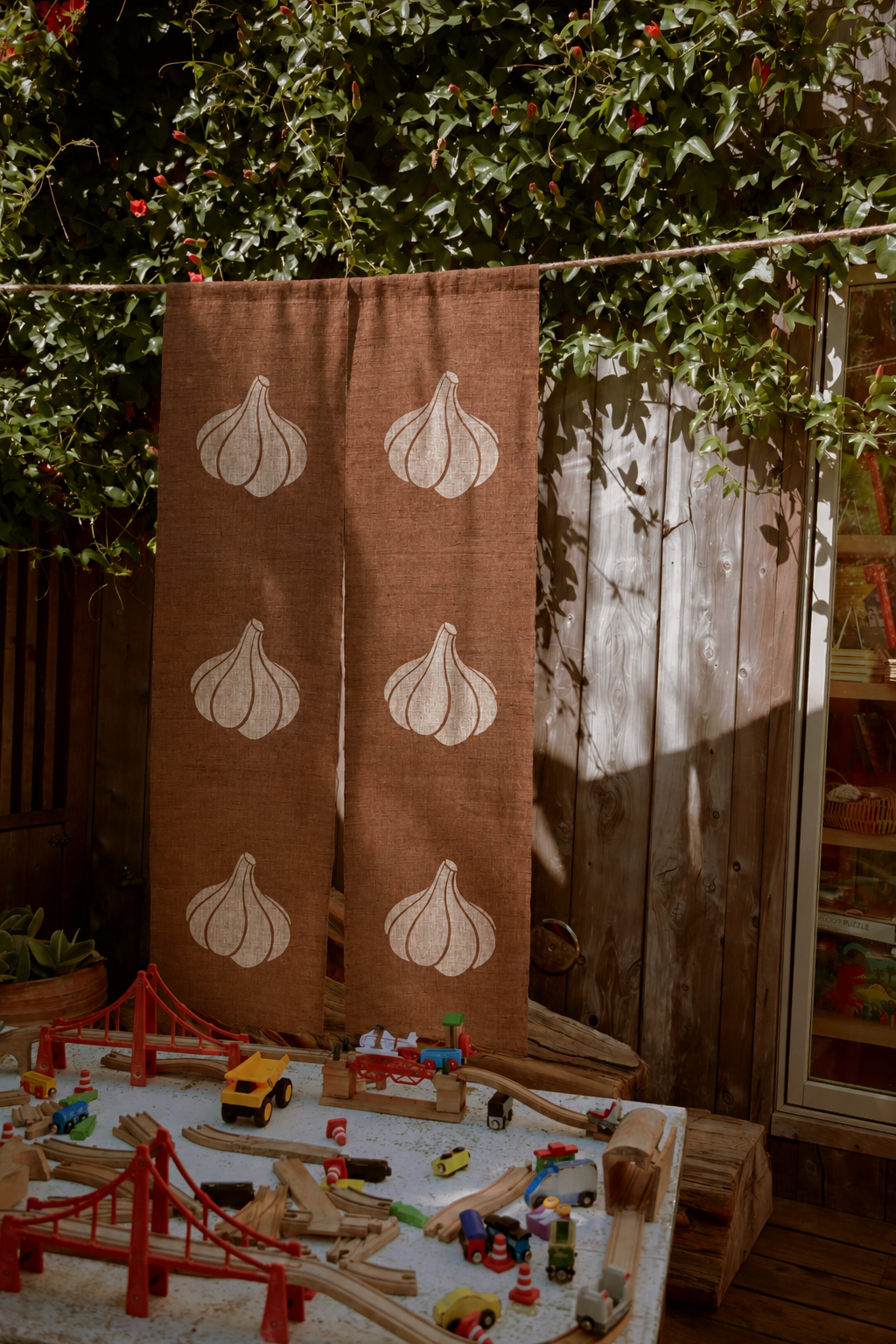 Image 3 of 15
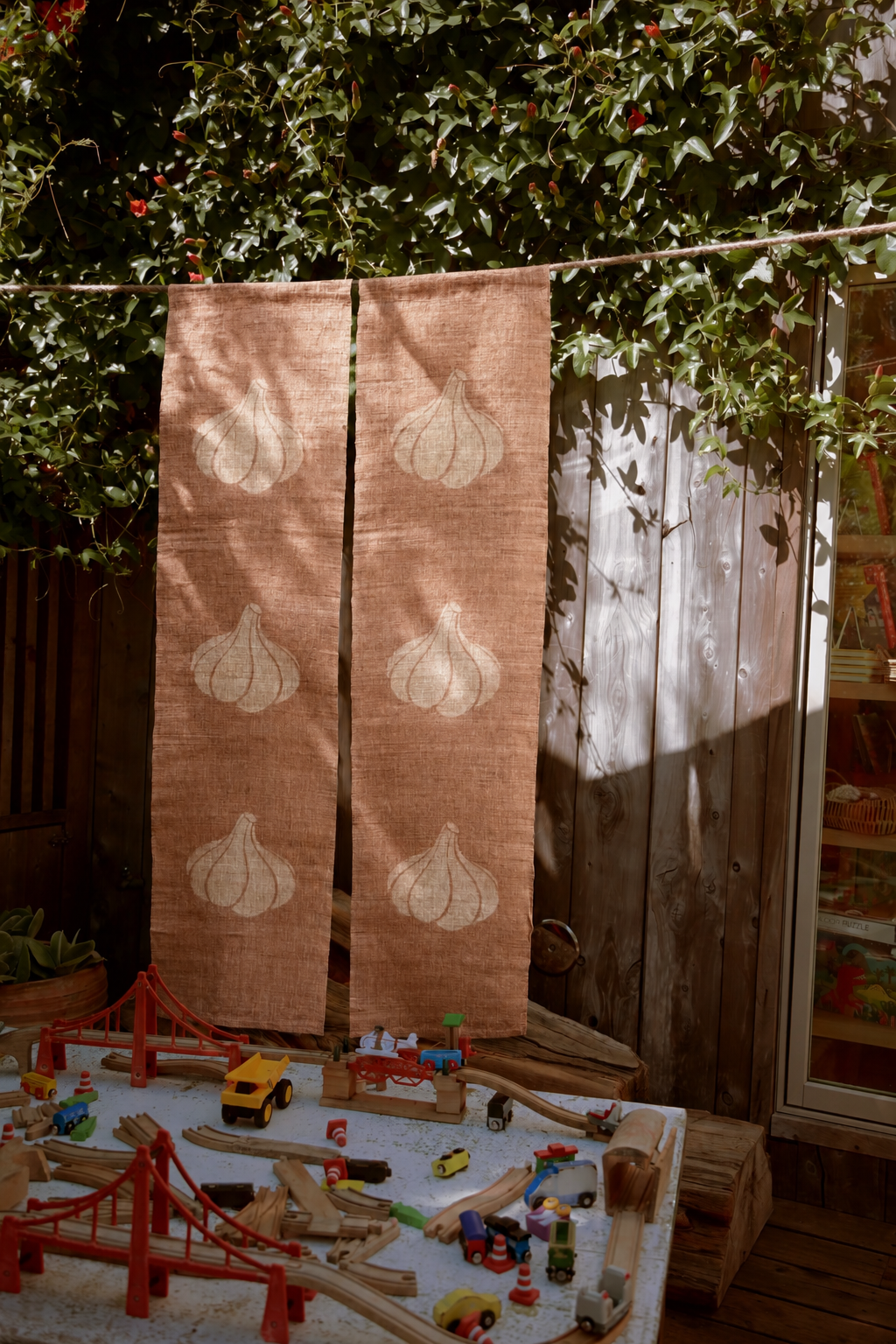 Image 4 of 15
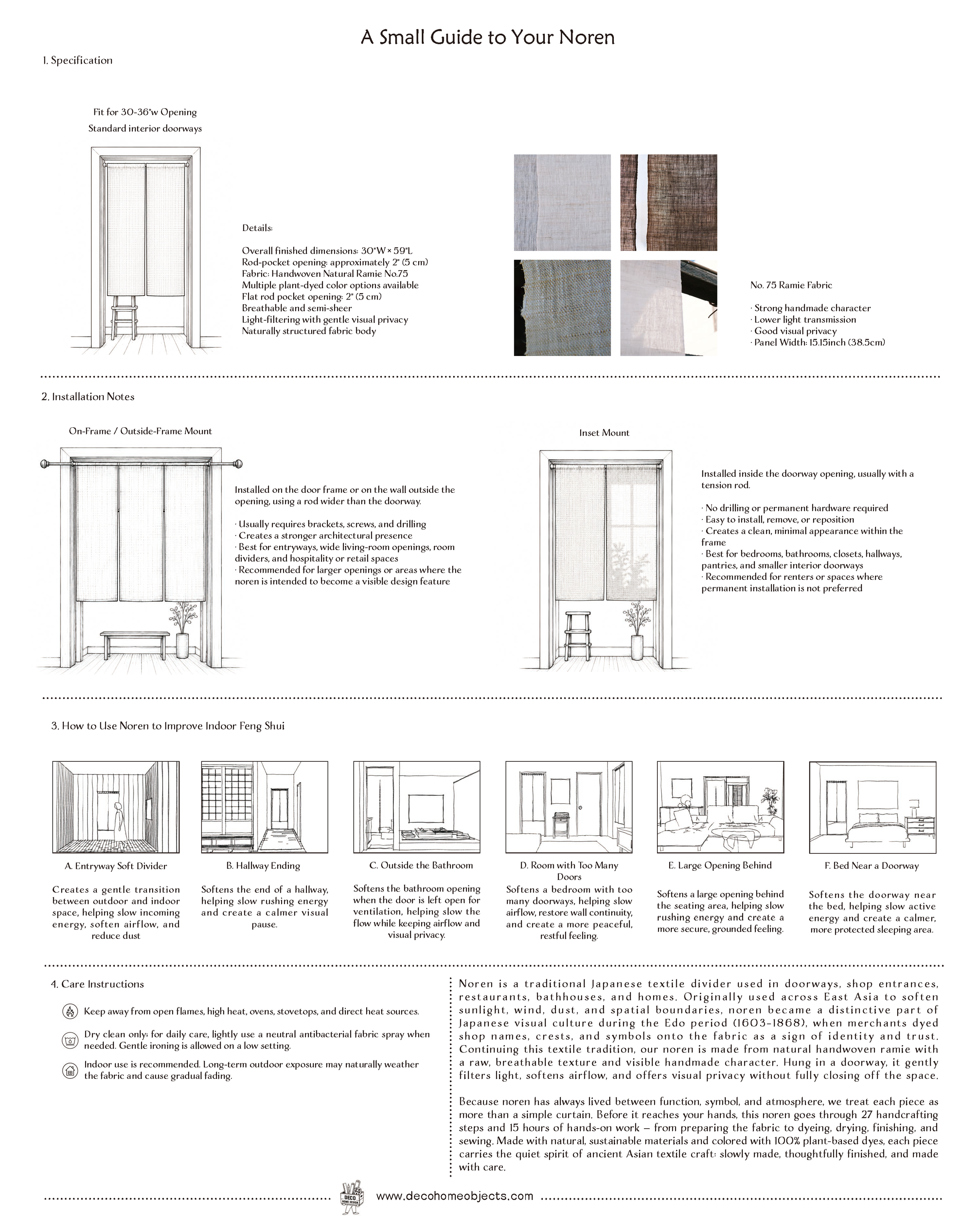 Image 5 of 15
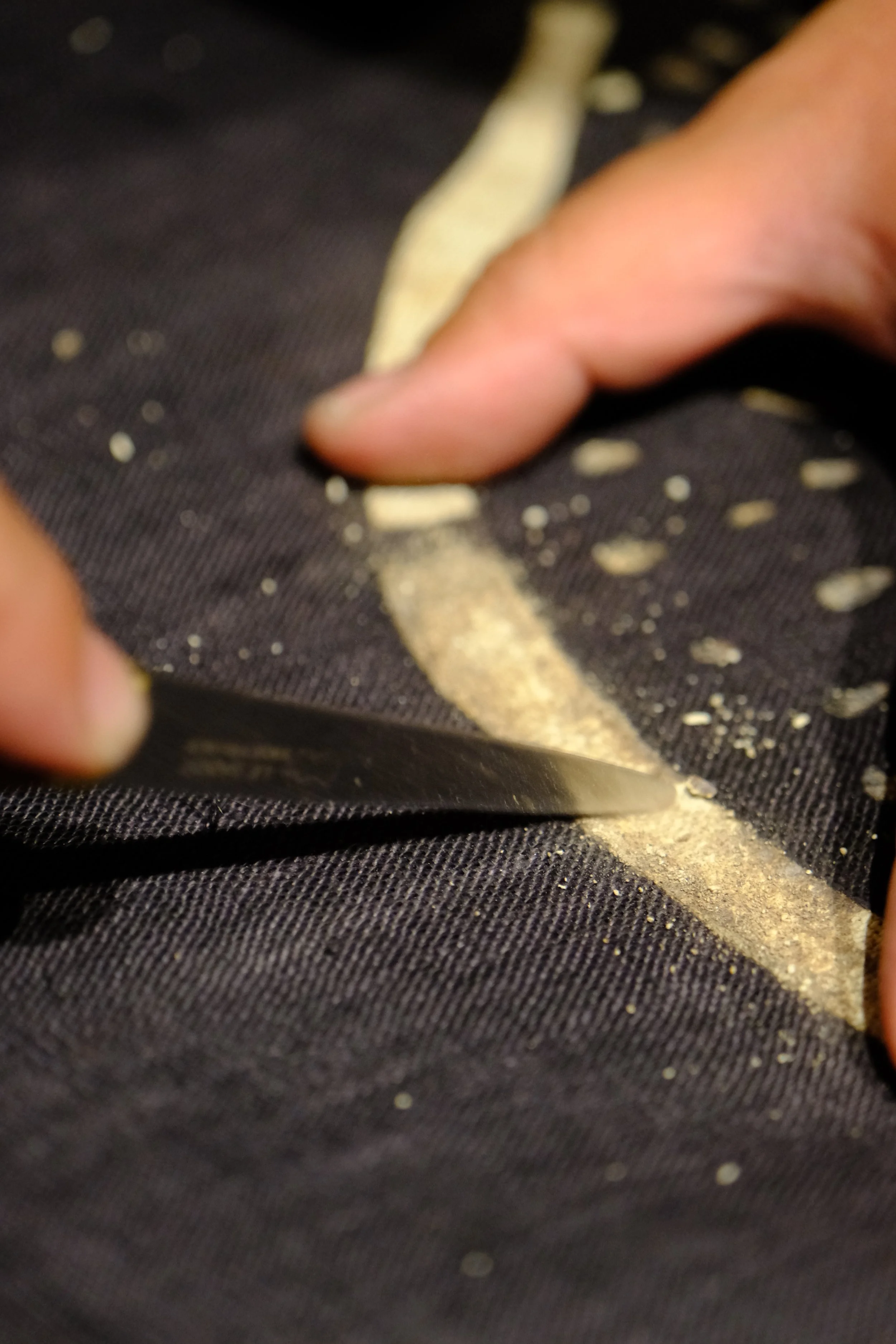 Image 6 of 15
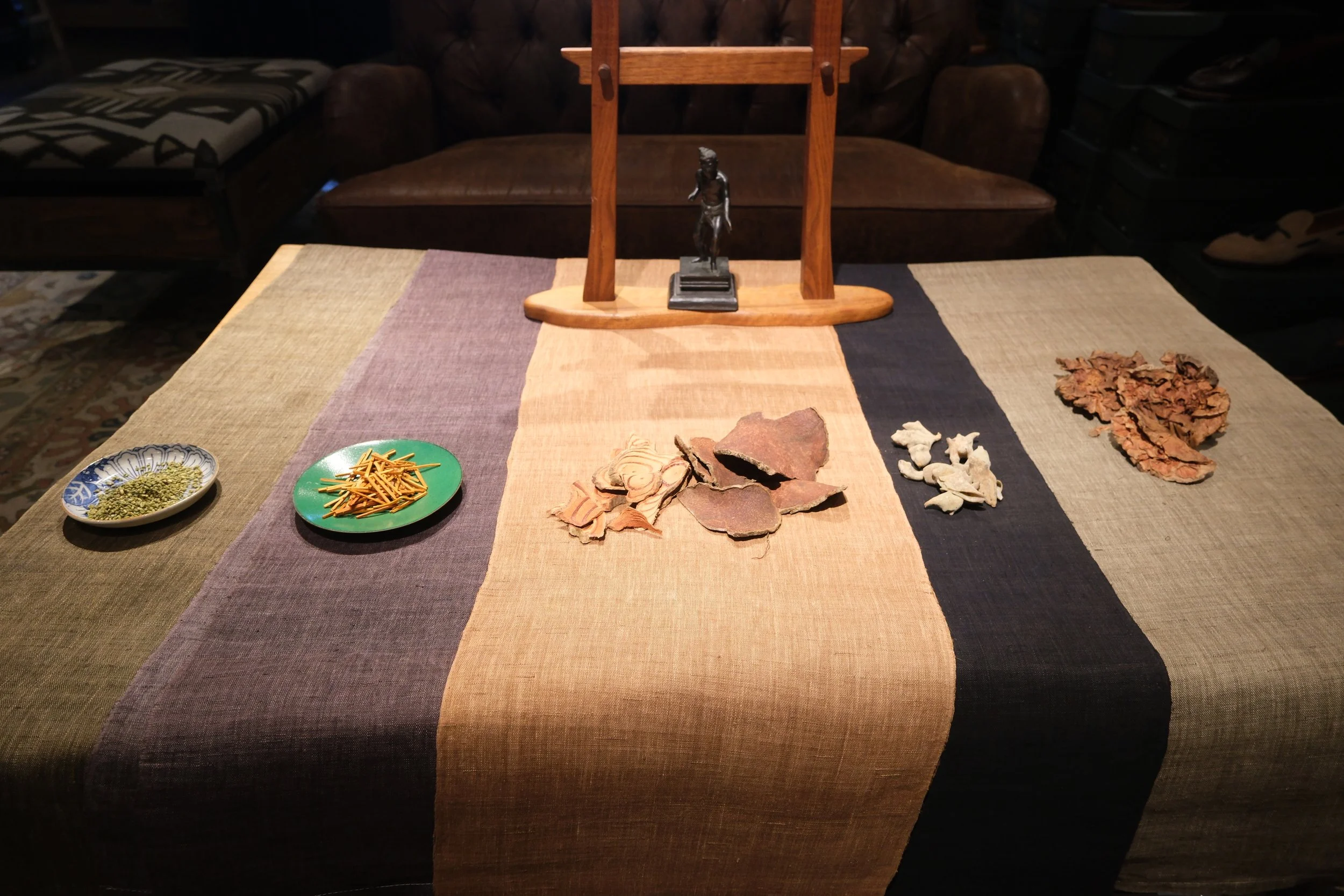 Image 7 of 15
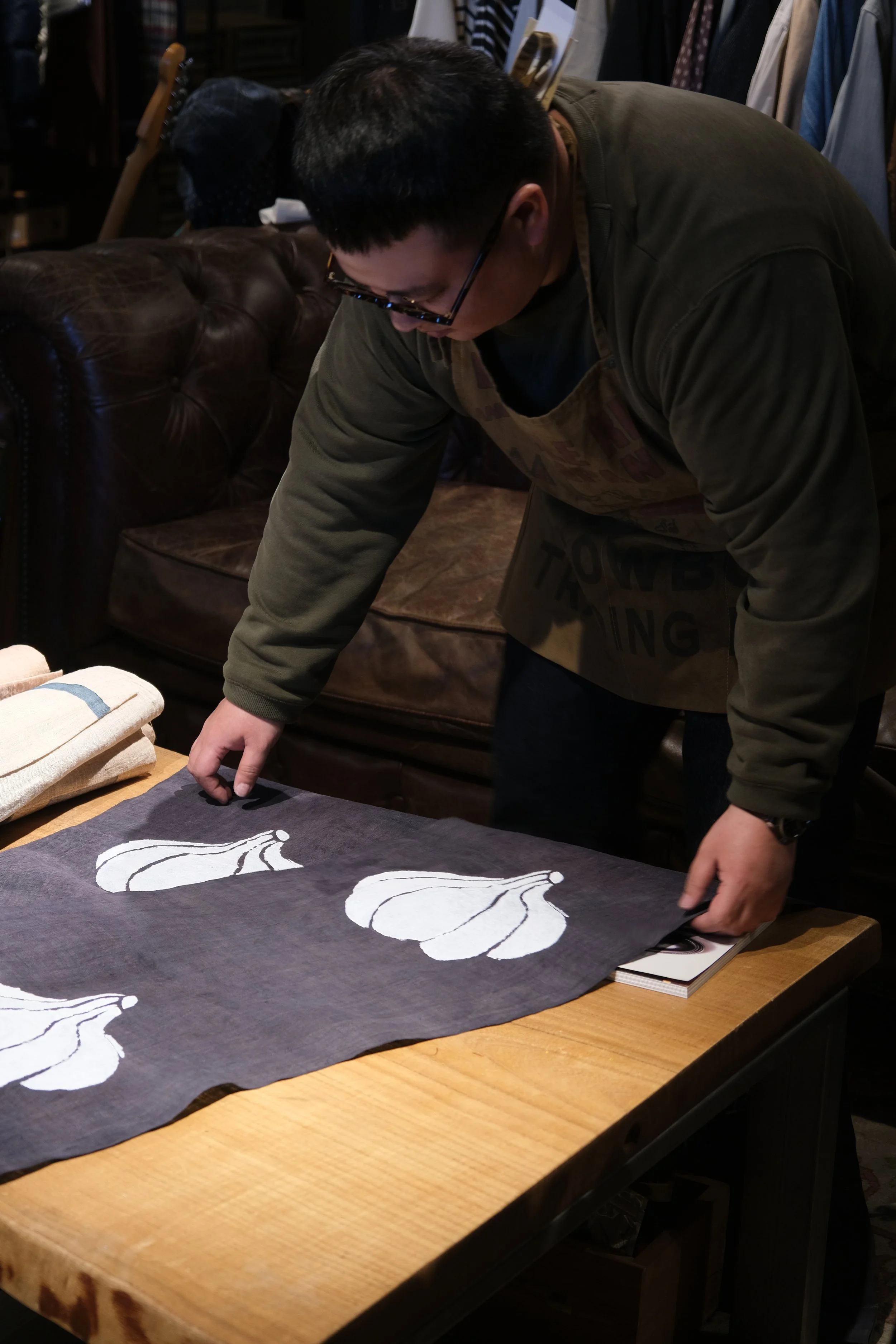 Image 8 of 15
 Image 9 of 15
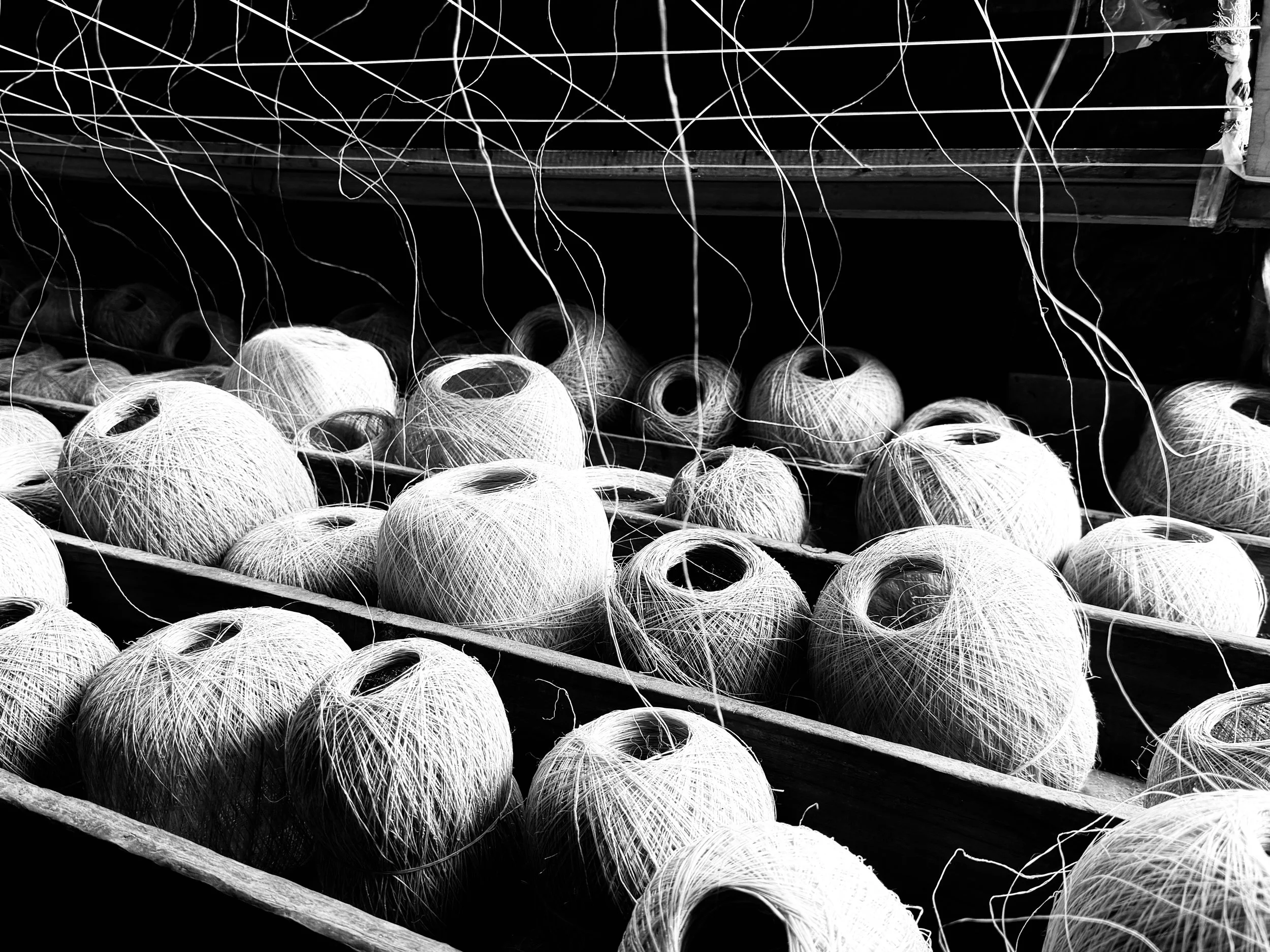 Image 10 of 15
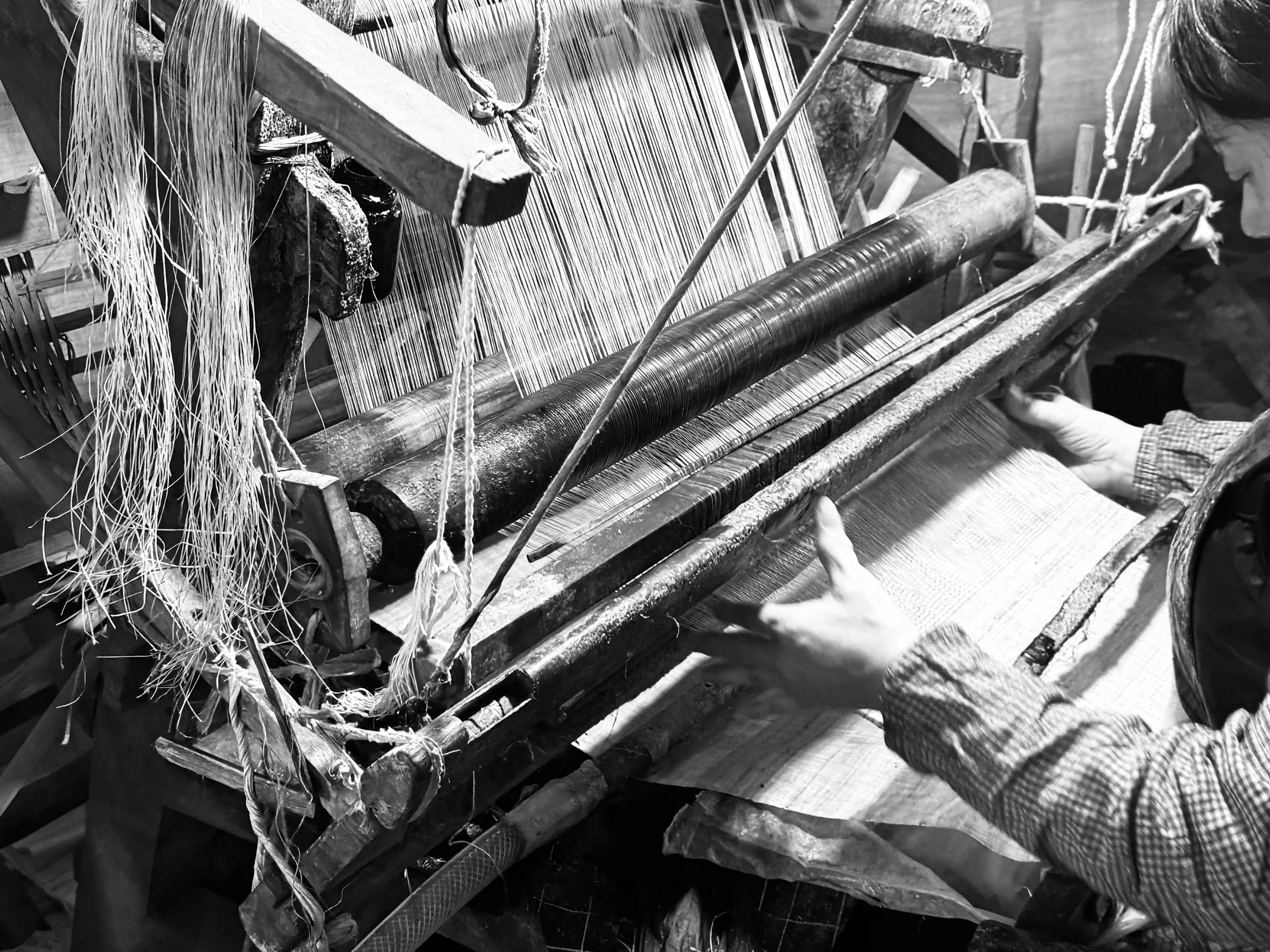 Image 11 of 15
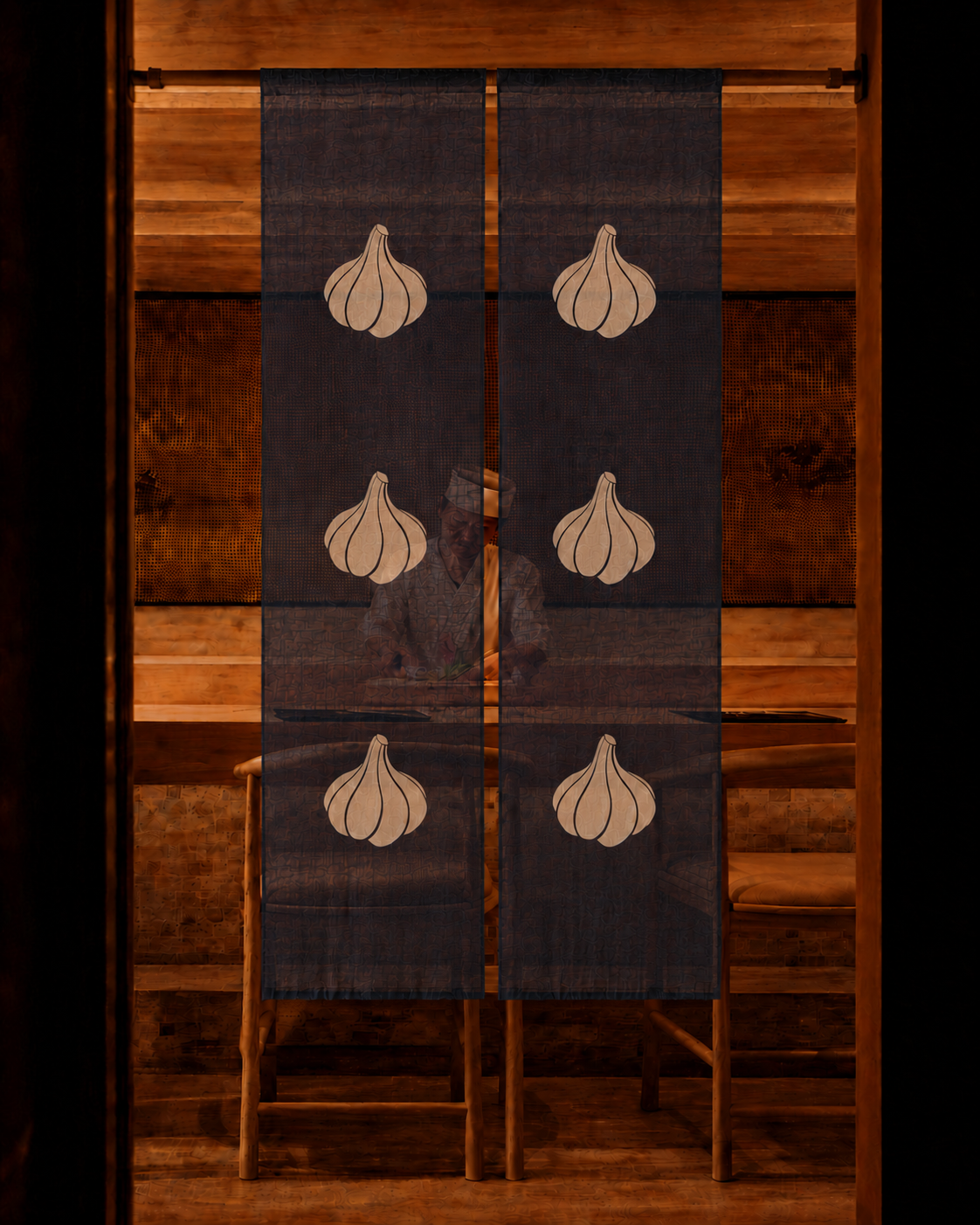 Image 12 of 15
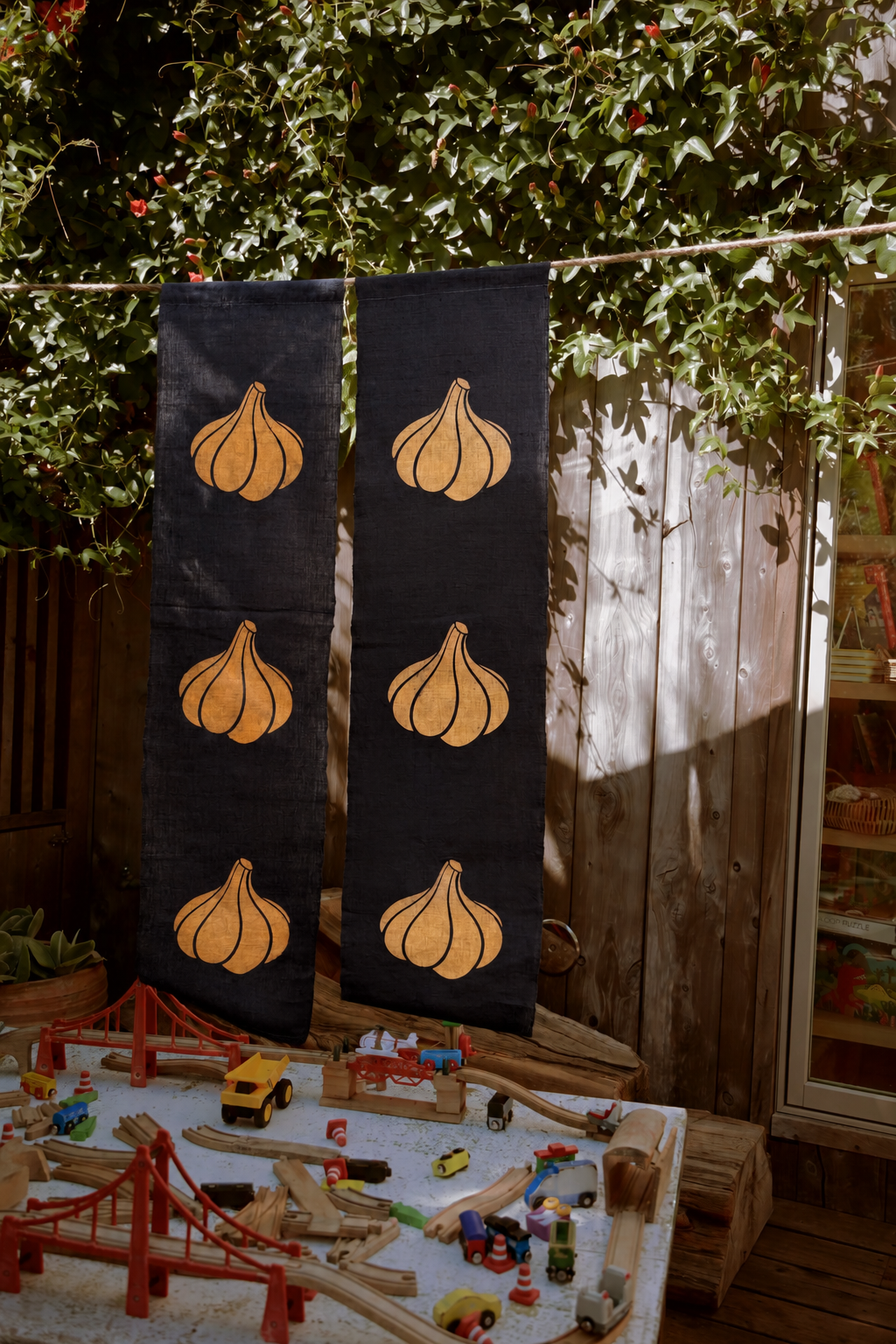 Image 13 of 15
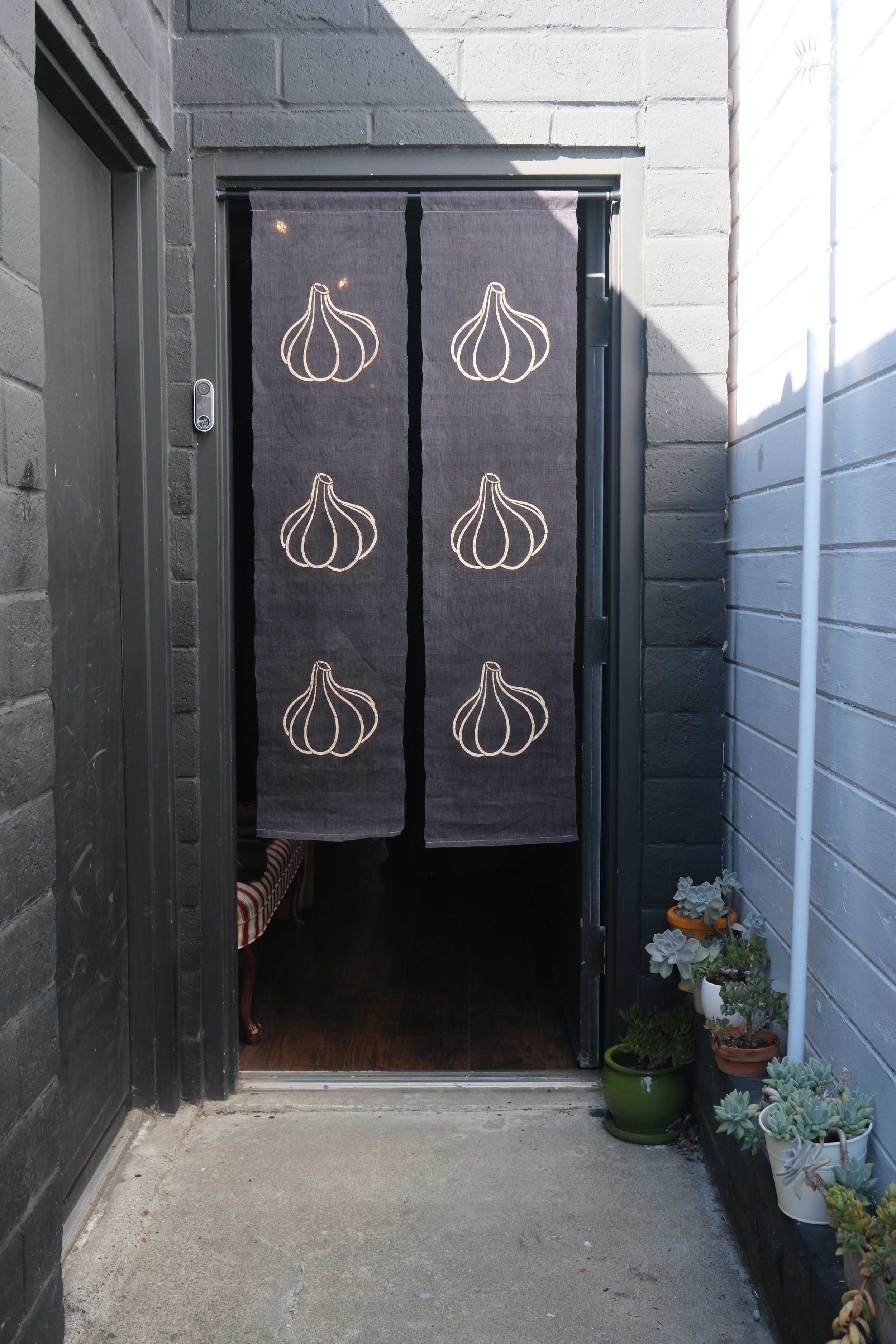 Image 14 of 15
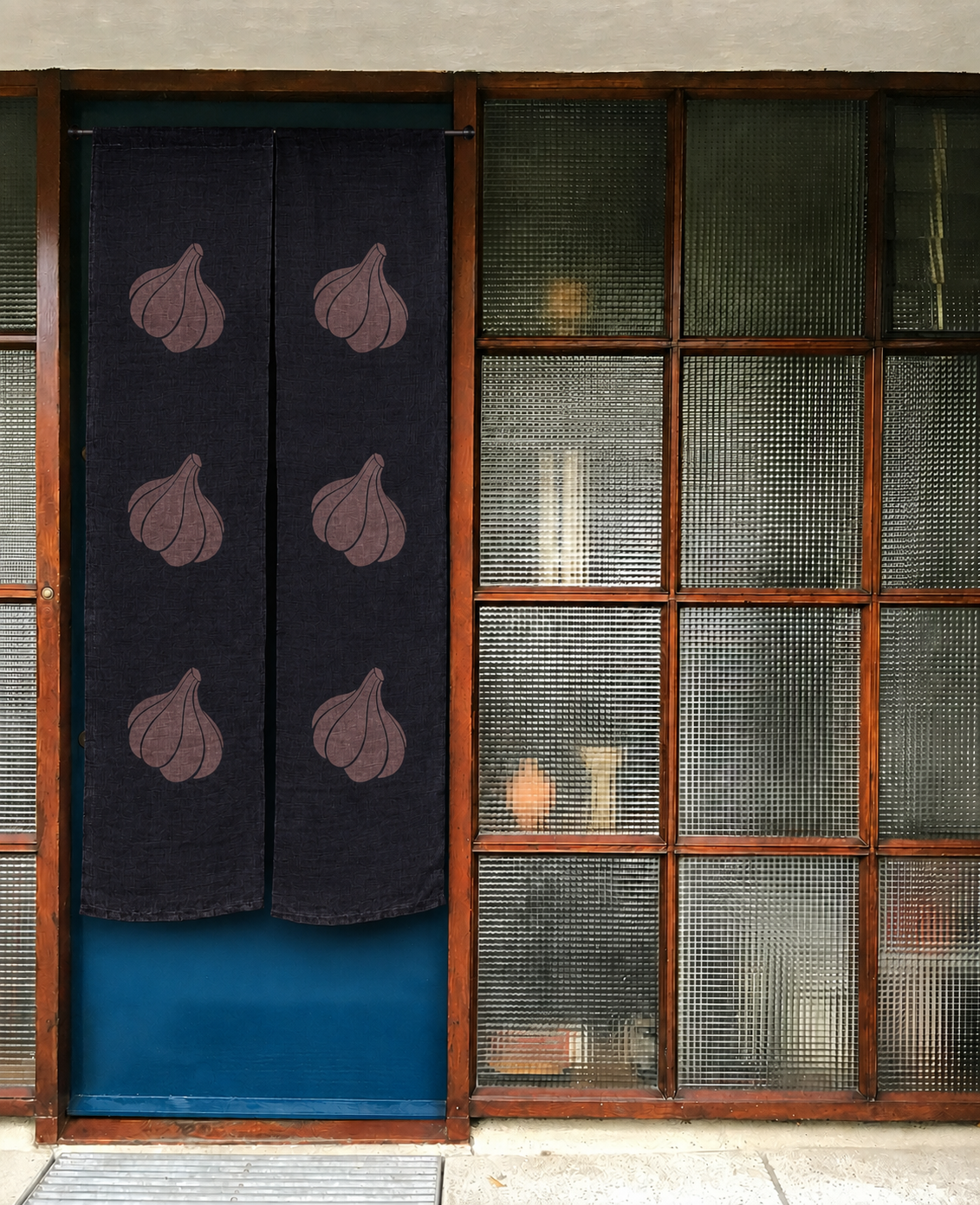 Image 15 of 15